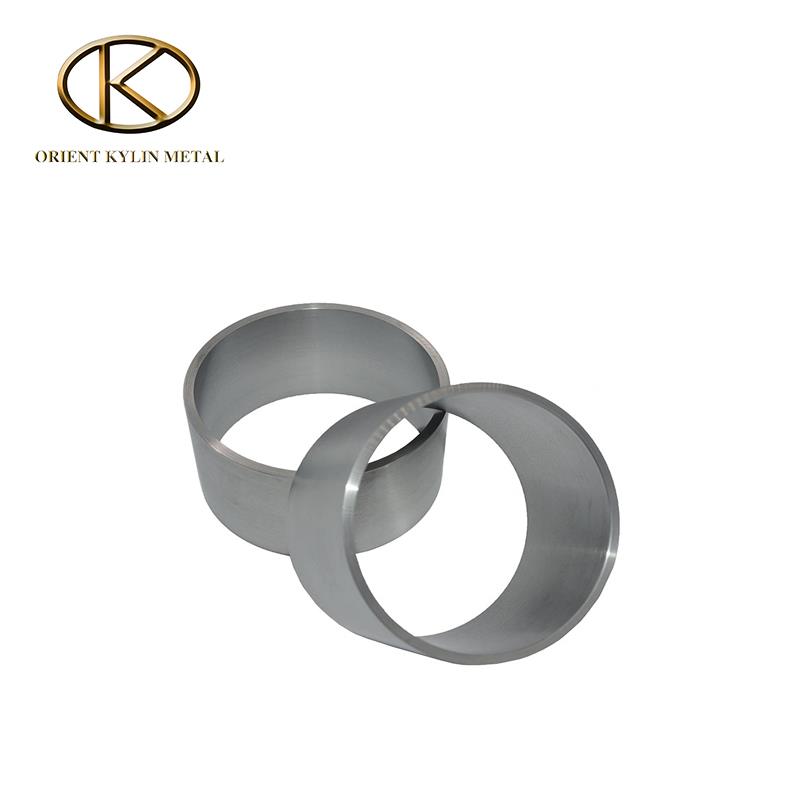
Tungsten Pipes
Source high-purity tungsten pipes from vetted suppliers and manufacturers across Asia. Designed for importers, industrial distributors, and procurement managers buying in bulk, our network delivers precision-machined, high-density tungsten tubing for aerospace, semiconductor, and high-temperature furnace applications.
Tungsten pipes are critical components for high-temperature vacuum furnaces, sapphire crystal growth, and semiconductor manufacturing. Sourcing these components in volume requires strict adherence to purity and density specifications. Because tungsten has the highest melting point of all metals, it cannot be traditionally cast or extruded. Instead, it relies entirely on advanced powder metallurgy. Any impurities or micro-voids introduced during pressing or sintering will cause catastrophic thermal failure when the pipe is deployed at extreme operating temperatures.
Understanding Tungsten Pipe Manufacturing
The structural integrity of a tungsten pipe is dictated by the factory's powder metallurgy capabilities. Evaluating a manufacturer means assessing their pressing equipment, sintering furnace capacity, and machining precision.
Isostatic Pressing
High-purity tungsten powder (minimum 99.95 percent) is loaded into molds and subjected to cold isostatic pressing (CIP) to form a fragile 'green' tube. Uniform pressure is critical to prevent density gradients.
High-Temperature Sintering
The green tube is sintered in a hydrogen atmosphere or vacuum furnace at temperatures exceeding 2,000 degrees Celsius. This fuses the powder particles and shrinks the tube to its near-final density.
Precision Machining
Because sintered tungsten is exceptionally hard and brittle, achieving final outer diameter (OD) and inner diameter (ID) tolerances requires specialized diamond tooling, turning, and grinding.
Many trading companies claim to manufacture tungsten pipes but only possess basic machining equipment. They purchase sintered blanks from larger mills and machine them down. To ensure full traceability and control over the metallurgical process, serious buyers rely on comprehensive factory audits to verify that a supplier actually operates the necessary CIP and high-temperature sintering infrastructure.
Navigating tungsten metallurgy and supplier capabilities is complex. Let our experts handle the vetting and technical negotiation to secure reliable production.
Talk to our teamQuality Control and Defect Prevention
Tungsten's inherent brittleness makes it susceptible to internal fracturing during the machining phase if the initial sintering was flawed. Standard visual inspections are insufficient for high-stakes applications.
When establishing your quality control protocols, insist on the following verifications before shipment:
Essential Tungsten Pipe QC Checks
- Density Verification: Must achieve a minimum density of 19.2 g/cm3. Lower density indicates internal porosity.
- Ultrasonic Flaw Detection: Non-destructive testing (NDT) to identify micro-cracks or voids hidden beneath the machined surface.
- Chemical Composition Analysis: Verification of 99.95 percent minimum purity, with strict limits on Mo, Fe, Ni, and O trace elements.
- Dimensional Tolerance: Precise OD, ID, and wall thickness measurements using coordinate measuring machines (CMM), especially critical for furnace heating elements.
Pricing, MOQs, and Sourcing Realities
China dominates the global supply of raw tungsten, with primary production hubs located in Hunan, Shaanxi, and Henan provinces. Sourcing directly from these regions offers significant cost advantages, provided you can navigate the technical communication and quality assurance requirements.
Pricing for tungsten pipes is highly volatile. It is tied directly to the global commodity price of APT (Ammonium Paratungstate) and tungsten powder. Furthermore, the cost scales non-linearly with size. Large-diameter or thick-walled pipes require massive isostatic presses and extended sintering times, drastically increasing the manufacturing cost. Because these items are exceptionally heavy and dense, coordinating specialized shipping and freight is also a major factor in your landed cost.
Need accurate pricing and lead times for your custom tungsten pipe dimensions? We can source and negotiate directly with top-tier metallurgical mills.
Get a free consultationFrequently Asked Questions
Successfully sourcing tungsten pipes at scale requires looking past the surface finish to the underlying metallurgy. By partnering with vetted mills that control the process from powder to final polish, buyers can eliminate the risk of catastrophic component failure and secure stable, long-term pricing.
Get Sourcing Help for Tungsten Pipes
Tell us your requirements and our experts will connect you with verified manufacturers.