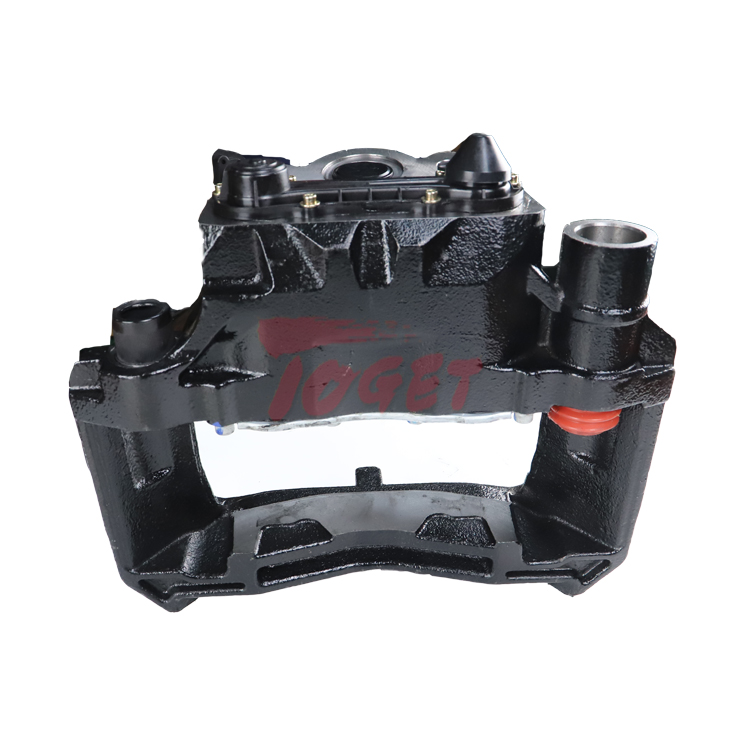
Truck Brake Discs
Source premium Truck Brake Discs from vetted suppliers and manufacturers across Asia. Designed for heavy-duty commercial importers, wholesale distributors, and aftermarket brands requiring OEM or private-label production, our factory network delivers reliable, high-volume braking solutions built to strict international safety standards.
Heavy-duty truck brake discs operate under extreme thermal and mechanical stress, often handling loads exceeding 40 tons. Sourcing these critical safety components in volume requires strict attention to metallurgy, casting precision, and machining tolerances to prevent premature warping, thermal cracking, or catastrophic failure under load.
For commercial vehicle fleets and aftermarket distributors, consistency across production batches is non-negotiable.
Metallurgy and Material Selection
The foundation of a reliable truck brake disc is its chemical composition and microstructure. While standard passenger car discs might rely on basic gray cast iron, heavy commercial applications demand higher carbon content and specific alloy additions to manage heat dissipation and resist thermal fatigue.
| Material Grade | Typical Composition | Best Application |
|---|---|---|
| Standard Gray Iron (HT250 / G3000) | Base carbon, standard silicon | Light to medium-duty commercial trucks |
| High-Carbon Cast Iron | Carbon 3.7-3.9%, optimized graphite flakes | Heavy-duty transit, long-haul freight |
| Alloyed High-Carbon | Added Copper (Cu), Molybdenum (Mo), Chromium (Cr) | Severe duty, mountainous terrain, frequent stopping |
When specifying materials with your foundry, require a predominantly pearlitic microstructure (over 90 percent) with Type A graphite flakes. This structure provides the optimal balance of tensile strength and thermal conductivity.
Critical Manufacturing Tolerances
Casting the blank is only the first step. The CNC machining process dictates how the disc will perform on the axle. Poor machining leads to brake judder, uneven pad wear, and localized hot spots.
Essential Machining Specifications
- Disc Thickness Variation (DTV): Must be kept under 0.015mm to prevent brake judder.
- Lateral Runout: Should not exceed 0.05mm when mounted on the hub.
- Dynamic Balancing: Mill-balancing or clip-balancing is required to prevent high-speed vibration.
- Surface Finish (Ra): Typically specified between 1.6 and 3.2 micrometers for optimal pad bed-in.
- Hardness: Brinell Hardness (HB) should be strictly controlled between 180 and 240.
Need to verify a foundry's automated molding lines and CNC machining capabilities before placing a volume order?
Get a free consultationFactory Validation and Compliance
Not all foundries are equipped to produce heavy-duty commercial vehicle parts. Sand casting for large, heavy truck discs requires robust automated molding lines (such as DISA or equivalent horizontal/vertical lines) to ensure consistent mold density and prevent dimensional shifting.
When evaluating suppliers, look for facilities holding IATF 16949 certification, which governs quality management in the automotive supply chain. Furthermore, if you are importing into regulated markets, the discs must meet specific performance standards. For the European market, ECE R90 certification is mandatory, requiring rigorous dynamometer and on-vehicle testing. For North America, AMECA compliance is often required.
Navigating these regulatory requirements requires strict oversight. Utilizing professional Compliance & Testing services ensures your products meet market standards before they leave the factory floor, while comprehensive Factory Audits verify that the supplier actually holds the certifications they claim.
Wholesale Pricing, MOQs, and Lead Times
Truck brake discs are heavy, low-margin, high-volume items. Pricing is largely driven by raw material costs (pig iron and steel scrap indices) and the sheer weight of the component.
Because truck discs frequently weigh between 20kg and 45kg each, logistics planning is as critical as the unit price. A 20ft container will typically max out its weight capacity long before it fills its volumetric space. Efficient palletization and anti-rust packaging (VCI bags or oil coating) are vital.
Struggling with high defect rates or inconsistent casting quality from your current brake disc supplier?
Talk to our teamFrequently Asked Questions
Sourcing heavy-duty truck brake discs requires a deep understanding of metallurgy, foundry capabilities, and strict quality control protocols. By partnering with technically capable manufacturers and enforcing rigorous pre-shipment inspections, you can secure a reliable supply chain that protects both your margins and your end-users.
Get Sourcing Help for Truck Brake Discs
Tell us your requirements and our experts will connect you with verified manufacturers.