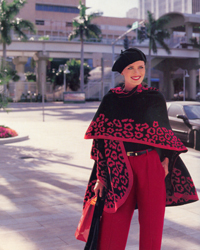
Traditional Scarves & Shawls
Source Traditional Scarves & Shawls from vetted manufacturers and suppliers specializing in high-volume production. Designed for importers, wholesalers, and fashion brands, our network supports bulk wholesale orders and custom OEM/ODM manufacturing, ensuring authentic craftsmanship and reliable supply chain execution.
Sourcing traditional scarves and shawls at scale requires balancing authentic textile craftsmanship with rigorous commercial quality standards. Whether you are procuring pashmina-style wraps, intricate jacquard weaves, or printed silk-blend accessories, the primary challenge lies in maintaining consistent yarn quality, dye fastness, and precise edge finishing across high-volume production runs.
Material Specifications and Yarn Metrics
The foundation of any traditional scarf or shawl is its fiber composition and yarn construction. Professional buyers must move beyond generic fabric descriptions and specify exact metrics to ensure consistency. For silk and silk-blends, weight is measured in momme (mm), with 12mm to 16mm being standard for lightweight scarves. For wool, cashmere, and synthetic blends, grams per square meter (GSM) dictates the drape and thermal properties of the shawl.
Yarn count is equally critical. A higher yarn count (e.g., 60s, 80s, or 100s) yields a finer, softer fabric with superior drape, but it requires tighter weaving tolerances and higher-grade raw materials. When sourcing natural fibers or specific blends, independent Compliance & Testing is essential to verify composition claims and ensure the factory is not substituting expensive natural fibers with synthetic alternatives like viscose or acrylic.
Manufacturing Techniques and Pattern Execution
Traditional motifs—such as paisley, ikat, or geometric tribal designs—can be executed through various manufacturing methods, each impacting cost, minimum order quantities (MOQs), and the final aesthetic.
Pattern Application Methods
Advantages
- Yarn-dyed jacquard offers a premium tactile feel, excellent durability, and a reversible design.
- Digital printing allows for unlimited colors, precise motif replication, and lower MOQs per design.
- Traditional screen printing provides deep color penetration and vibrant saturation for solid or limited-color patterns.
Disadvantages
- Yarn-dyed weaving requires higher MOQs per colorway due to complex loom setup.
- Digital printing can sometimes result in lower dye penetration on the reverse side of thicker shawls.
- Screen printing incurs high setup costs (screen charges) for multi-color traditional patterns.
Edge Finishing
The edge finish is a primary indicator of a scarf's quality and significantly impacts labor costs.
| Finish Type | Production Method | Best For |
|---|---|---|
| Hand-Rolled | Manual stitching (typically 3-4 stitches per inch) | Premium silk scarves and luxury lightweight blends |
| Machine Hemmed | Automated lockstitch or overlock | High-volume commercial lines and synthetics |
| Eyelash Fringe | Warp yarn extraction and twisting | Woven winter shawls and pashmina-style wraps |
Need a supplier capable of intricate jacquard weaves or hand-rolled finishes at scale? Let us match you with vetted textile manufacturers.
Talk to our teamQuality Control Checkpoints
Textile manufacturing is prone to specific defects during the weaving, dyeing, and finishing stages. Implementing robust Quality Control & Inspection on the factory floor is non-negotiable to prevent unsellable inventory from shipping.
Pre-Shipment Inspection Focus Areas
- Color fastness testing (resistance to washing, light, and crocking/rubbing)
- Visual inspection for weaving defects (dropped picks, slubs, warp streaks, or snags)
- Dimensional stability checks to ensure the fabric does not skew or shrink excessively
- Edge finish integrity (checking for uneven hems or fraying resistance)
- Verification of AZO-free dyes to meet REACH (EU) and Prop 65 (US) compliance
- Accurate fiber composition and care labeling
OEM Customization and Product Development
For brands developing private-label collections, utilizing comprehensive OEM/ODM Services allows for complete control over the product. This includes specifying custom dimensions, developing proprietary traditional motifs, and integrating branded woven labels or custom packaging.
During product development, always require "lab dips" for solid colors to approve dye accuracy under standardized lighting, and "strike-offs" (printed fabric swatches) to verify pattern scale and registration before authorizing bulk production.
MOQs, Lead Times, and Pricing Dynamics
Pricing is heavily dictated by fiber composition, fabric weight, the complexity of the pattern application, and the edge finishing method. A hand-rolled edge will significantly increase the per-unit labor cost compared to a standard machine hem.
Struggling with inconsistent fabric quality or high defect rates? We manage the entire sourcing, negotiation, and QA process.
Get a free consultationFrequently Asked Questions
Procuring traditional scarves and shawls in bulk demands a rigorous approach to textile engineering, from yarn selection and dye formulation to the final hem. By partnering with manufacturers who understand the nuances of drape, color fastness, and fiber integrity, you can scale your accessory lines without compromising on authentic appeal. If you need expert oversight on your next production run, our team is ready to assist.
Get Sourcing Help for Traditional Scarves & Shawls
Tell us your requirements and our experts will connect you with verified manufacturers.