Tool Holder
Source wholesale Tool Holders from vetted manufacturers and suppliers in China and Asia. Designed for importers, industrial distributors, and machinery brands seeking reliable OEM production, our network delivers precision accessories with strict runout tolerances and dynamic balancing for high-speed CNC applications.
Sourcing tool holders in volume requires balancing strict tolerance requirements with cost-effective manufacturing. As the critical interface between a machine spindle and the cutting tool, a tool holder's runout and dynamic balance directly impact spindle life, tool wear, and the final surface finish of the machined part. Inconsistent manufacturing at the factory level can lead to catastrophic spindle failure or rejected production runs for the end user.
Critical Specifications for Bulk Procurement
When negotiating with overseas manufacturers, specifying the correct dimensions is only the baseline. High-performance machining requires strict adherence to material science and precision finishing.
Most industrial tool holders are manufactured from alloy steels like 20CrMnTi, which offers an excellent balance of surface hardness and core toughness after carburizing and quenching. The critical specifications you must define for your supplier include taper precision, internal bore runout (Total Indicator Reading, or TIR), and the dynamic balancing grade.
| Taper Standard | Primary Market | Key Characteristic |
|---|---|---|
| BT (MAS 403) | Asia & Europe | Symmetrical flange, widely used in standard milling |
| CAT (ANSI B5.50) | North America | V-flange with non-symmetrical drive slots |
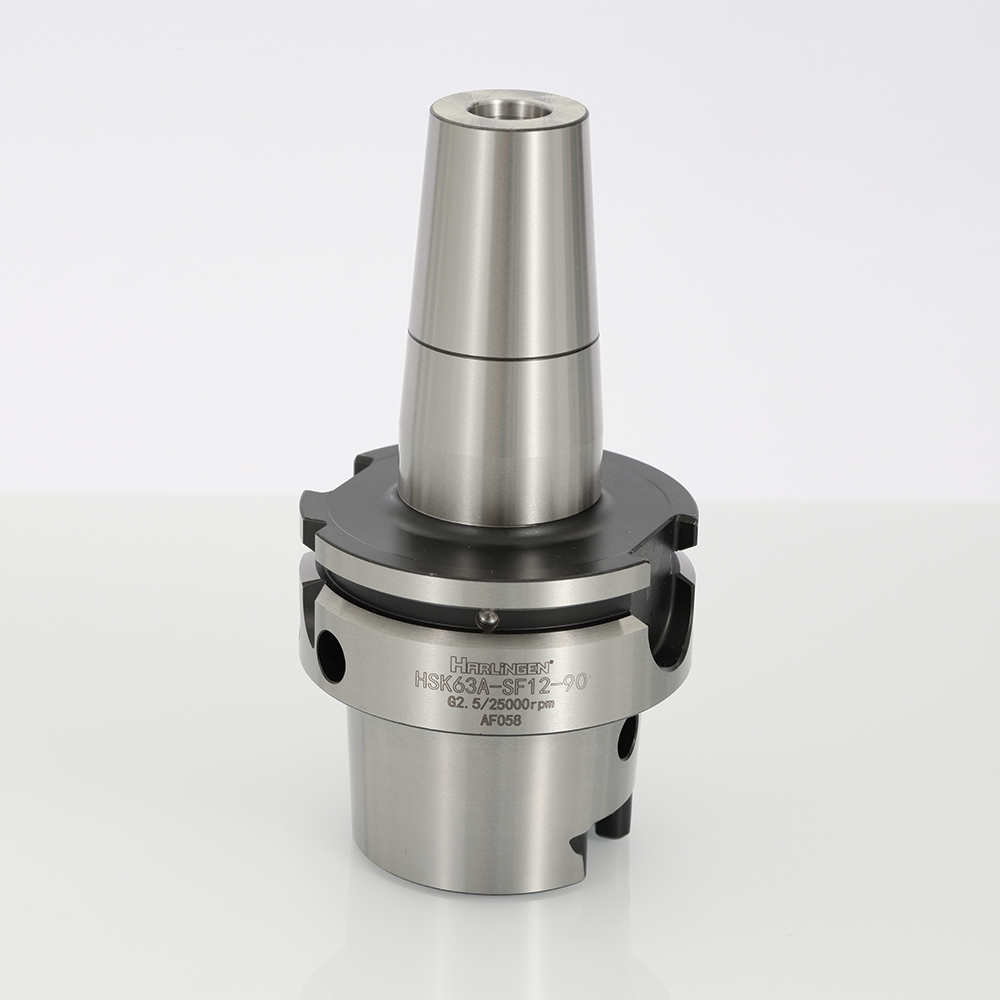
| HSK (DIN 69893) | Global (High-Speed) | Hollow shank, simultaneous face and taper contact |
Runout and Dynamic Balancing
For high-speed CNC applications, unbalance creates centrifugal forces that increase exponentially with spindle speed. Manufacturers must perform dynamic balancing using specialized equipment. You should specify the balancing grade according to ISO 1940-1, typically G2.5 at 20,000 to 25,000 RPM for precision applications. Runout should be specified at a specific distance from the gauge line (e.g., TIR ≤0.003mm at 3D).
Struggling with inconsistent runout or balance issues across bulk orders? We can help stabilize your supply chain.
Talk to our teamManufacturing Process and Quality Control
The difference between a premium tool holder and a budget alternative is won or lost during heat treatment and precision grinding. Poor carburizing can result in a brittle core or a soft surface, leading to rapid wear or premature failure.
After heat treatment, the taper and internal bore must be precision ground. Sub-standard factories often rush the grinding process to increase output, introducing micro-cracks or failing to achieve the required taper contact area.
Critical Factory-Level QC Checks
- Taper contact area (must be ≥85% using a certified taper gauge)
- Runout tolerance verification (TIR ≤0.003mm)
- Dynamic balance certification (verified per batch)
- Surface hardness (HRC 56-60) and carburized depth consistency
- Thread precision on pull stud and collet nut interfaces
To ensure these standards are met before shipment, implementing robust Quality Control & Inspection protocols is essential. Relying solely on the factory's internal testing data is a common pitfall for importers. Conducting independent Factory Audits prior to placing volume orders will verify that the supplier actually owns and calibrates their balancing machines and taper gauges.
Pricing, MOQs, and Production Lead Times
Tool holder pricing is heavily influenced by the required balancing grade, the complexity of the taper (HSK is generally more expensive to produce than BT or CAT), and the raw material costs.
When developing private-label lines, suppliers offering OEM/ODM Services can laser-etch your brand logo, part numbers, and balancing specs directly onto the flange. Be aware that custom dual-contact designs or ultra-high-speed balancing (e.g., G2.5 at 30,000 RPM) will increase both the unit cost and the initial MOQ, as they require longer cycle times on the grinding and balancing machines.
Need to negotiate better pricing or consolidate orders across multiple machine tool accessory suppliers?
Get a free consultationFrequently Asked Questions
Securing a reliable supply of high-precision tool holders requires looking past the initial quotation to understand the manufacturer's grinding capabilities and quality control infrastructure. By focusing on verifiable runout data, strict balancing standards, and proper heat treatment, you can build a procurement strategy that delivers consistent performance to your end users.
Get Sourcing Help for Tool Holder
Tell us your requirements and our experts will connect you with verified manufacturers.