Tool Cabinets
Source professional-grade tool cabinets from vetted suppliers and manufacturers across Asia. Designed for importers, industrial distributors, and brands requiring OEM or private-label production, our network delivers bulk manufacturing with strict quality control and reliable supply chain execution.
Sourcing industrial and professional tool cabinets at scale requires balancing steel thickness, slide durability, and freight efficiency. A cabinet that looks identical on a supplier's spec sheet can perform vastly differently on a workshop floor depending on the cold-rolled steel gauge, the quality of the ball-bearing slides, and the precision of the spot welding. For volume buyers, specifying the right structural components up front is the difference between a lifetime workshop asset and a product that warps under load.
Core Specifications for Volume Buyers
When negotiating with manufacturers, vague specifications lead to cost-cutting on the factory floor. Professional buyers must dictate the exact materials and hardware used in the build. Most high-quality tool cabinets are manufactured using SPCC (cold-rolled carbon steel) or SECC (electro-galvanized steel) for superior rust resistance.
The thickness of the steel dictates the cabinet's structural integrity. While 20-gauge steel might suffice for light-duty retail products, industrial applications demand 18-gauge or 16-gauge steel, particularly for the chassis and bottom panels which bear the entire load.
| Component | Light Duty (Retail) | Heavy Duty (Industrial) |
|---|---|---|
| Steel Gauge (Chassis) | 20-22 AWG (0.8-1.0mm) | 16-18 AWG (1.2-1.5mm) |
| Drawer Slide Capacity | 25-35 kg / pair | 45-100+ kg / pair |
| Caster Material | 4-inch Polypropylene | 5-inch or 6-inch TPR / PU |
| Paint Finish | Standard Liquid Paint | Electrostatic Powder Coat |
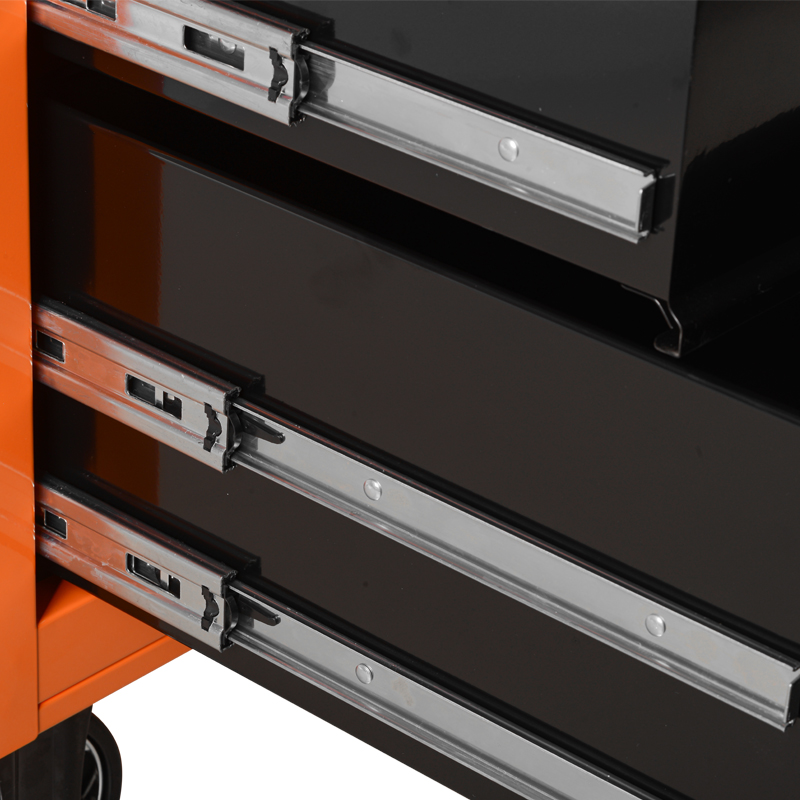
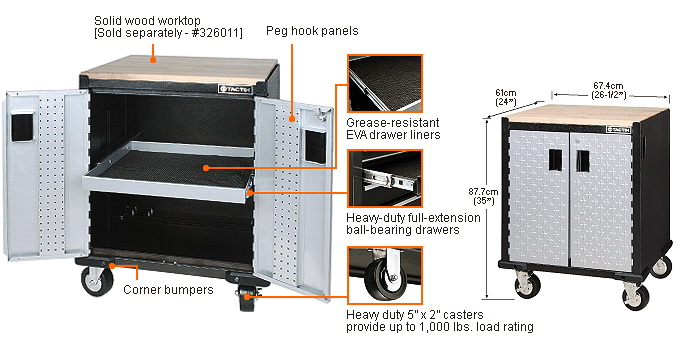
Drawer slides are the highest-failure component in tool storage. Specify full-extension ball-bearing slides, and for deep or bottom drawers, mandate double-slide configurations to support heavy power tools. Additionally, industrial cabinets must include an anti-tilt interlock system that prevents multiple drawers from opening simultaneously, a critical safety compliance feature in many Western markets.
Need help standardizing your tool cabinet specifications across multiple suppliers? Merhein can help you lock in the right technical requirements.
Talk to our teamManufacturing Processes and Quality Control
The manufacturing of steel tool cabinets relies heavily on automated laser cutting, CNC bending, and welding. Fully welded cabinets offer superior rigidity but consume significant shipping volume. Knock-down (KD) or flat-pack designs optimize shipping density but require precise engineering so the end-user can assemble them without alignment issues.
Powder coating is another critical failure point. If the factory skips proper surface preparation (such as phosphating and degreasing), the powder coat will chip and rust prematurely.
To prevent these issues, rigorous quality control and pre-shipment inspections are mandatory.
Factory Floor QC Focus Areas
- Drawer slide cycling test: Minimum 50,000 cycles under full stated load weight.
- Coating thickness check: Target 60 to 80 microns using a digital coating thickness gauge.
- Anti-tilt verification: Attempt to open a second drawer while the first is fully extended.
- Caster load and swivel test: Ensure locking mechanisms engage fully without slippage.
- Weld inspection: Check for burn-through or excessive spatter on spot welds.
If you are developing a custom line, utilizing professional OEM/ODM services ensures your specific dimensions, drawer layouts, and custom extrusions (like aluminum drawer pulls) are engineered correctly before mass production begins.
MOQs, Lead Times, and Pricing Dynamics
Pricing in this category is highly volatile and tied directly to global steel indices and freight rates. Because tool cabinets are high-volume items, shipping efficiency often dictates the final landed cost more than minor factory price variances.
When auditing potential partners, verify their sheet metal processing capabilities. Conducting thorough factory audits ensures the supplier actually owns the CNC and powder-coating lines, rather than outsourcing them to smaller, less controlled workshops.
Struggling with inconsistent quality or rising freight costs? Let Merhein optimize your tool storage supply chain.
Get a free consultationFrequently Asked Questions
Sourcing tool cabinets requires a strict adherence to material specifications and a deep understanding of how structural choices impact freight economics. By locking in your steel gauge, slide ratings, and coating standards early, you protect your brand from costly field failures. If you need experienced boots on the ground to manage your product sourcing and manufacturing, Merhein provides the technical oversight required to scale your hardware lines safely.
Get Sourcing Help for Tool Cabinets
Tell us your requirements and our experts will connect you with verified manufacturers.