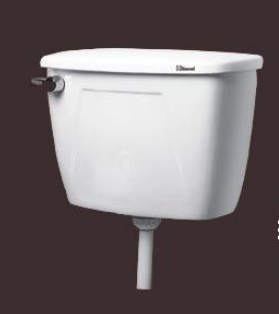
Toilet Tanks
Source high-quality toilet tanks from vetted suppliers and manufacturers across Asia. Designed for importers, distributors, and plumbing hardware brands, our wholesale network provides reliable OEM and private-label production. Secure competitive bulk pricing and strict quality assurance for your next procurement cycle.
Sourcing toilet tanks in volume requires balancing material durability, flush efficiency, and strict market regulatory compliance. Whether you are procuring concealed cisterns for modern wall-hung systems or traditional vitreous china tanks for standard suites, consistency across thousands of units is where supply chains typically face the most friction. Managing dimensional tolerances, valve compatibility, and leak-proof guarantees demands rigorous factory-level oversight.
Material and Manufacturing Specifications
The material and manufacturing process dictate not only the unit cost but also the tooling investment and structural integrity of the tank. Bulk buyers generally source two primary categories: traditional ceramics and engineered plastics.
| Specification | Vitreous China | HDPE / ABS (Plastic) |
|---|---|---|
| Primary Application | Exposed two-piece toilets | Concealed in-wall systems |
| Manufacturing Process | Slip casting and kiln firing | Blow molding or injection molding |
| Key Vulnerability | Warping during firing, micro-cracks | Seam weakness, variable wall thickness |
| Tooling Investment | Low to Moderate | High (Steel molds) |
For vitreous china, the critical manufacturing phase is the firing process. Shrinkage of up to 12 percent occurs in the kiln, making tight dimensional control difficult. If the mating surface between the tank and the bowl is not perfectly planar, the tank will rock, leading to gasket failure and leaks. For concealed plastic tanks, High-Density Polyethylene (HDPE) is the industry standard due to its impact resistance and longevity. These are typically blow-molded in a single piece to eliminate seams that could rupture under pressure.
Quality Control and Compliance
A toilet tank is only as reliable as its ability to hold and release water consistently. Substandard manufacturing often reveals itself in flush valve misalignment, porous ceramic glazing, or structural fatigue in plastic bodies.
Struggling with inconsistent quality from your current sanitaryware supplier? Let us help you implement strict factory-level oversight.
Talk to our teamMarket compliance is non-negotiable. Depending on your target region, tanks and their internal mechanisms must meet standards like WaterSense (US), CE (Europe), or WELS (Australia). This requires rigorous compliance testing for flush volumes (typically dual-flush 3/4.5L or 3/6L) and structural integrity.
Critical Factory-Level Inspections
- 100 percent pneumatic or hydrostatic leak testing on all concealed HDPE tanks.
- Dimensional tolerance checks on ceramic mating surfaces to ensure flush-valve alignment.
- Glaze thickness and coverage verification to prevent water absorption and micro-cracking.
- Cycle testing of pre-installed fill and flush valves (minimum 100,000 cycles for standard compliance).
- Drop and impact testing for plastic tanks to simulate transit and installation stress.
Executing a robust quality control protocol before the goods leave the factory is the only way to prevent costly site failures and product recalls.
Sourcing Realities: MOQ, Tooling, and Lead Times
Procurement managers must account for distinct production timelines and minimum order quantities (MOQs) based on the material and level of customization.
If you are developing a proprietary design, OEM/ODM services will require upfront tooling investments. Ceramic molds are relatively inexpensive and fast to produce, often taking just a few weeks. However, custom steel molds for blow-molded HDPE concealed tanks require significant capital and longer lead times (often 6 to 8 weeks) before pilot runs can begin.
Ready to scale your sanitaryware procurement? Contact us to discuss pricing, tooling, and supply chain strategies.
Get a free consultationFrequently Asked Questions
Reliable sanitaryware sourcing requires more than just negotiating a unit price; it requires validating the manufacturer's technical capability and quality management systems. Conducting thorough factory audits ensures your supplier has the proper kiln controls, molding equipment, and testing infrastructure to deliver defect-free products at scale.
Get Sourcing Help for Toilet Tanks
Tell us your requirements and our experts will connect you with verified manufacturers.