Tire Gauges
Source high-accuracy tire gauges in bulk directly from vetted manufacturers. Built for importers, automotive tool distributors, and brands seeking reliable OEM and private-label production, our supplier network delivers consistent quality, precision calibration, and durable materials at competitive wholesale pricing.
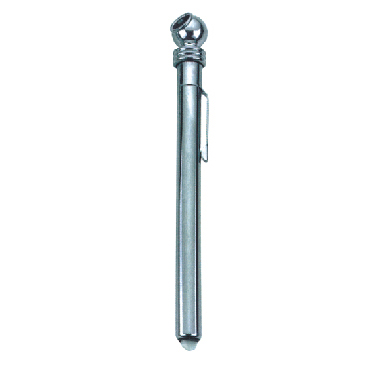
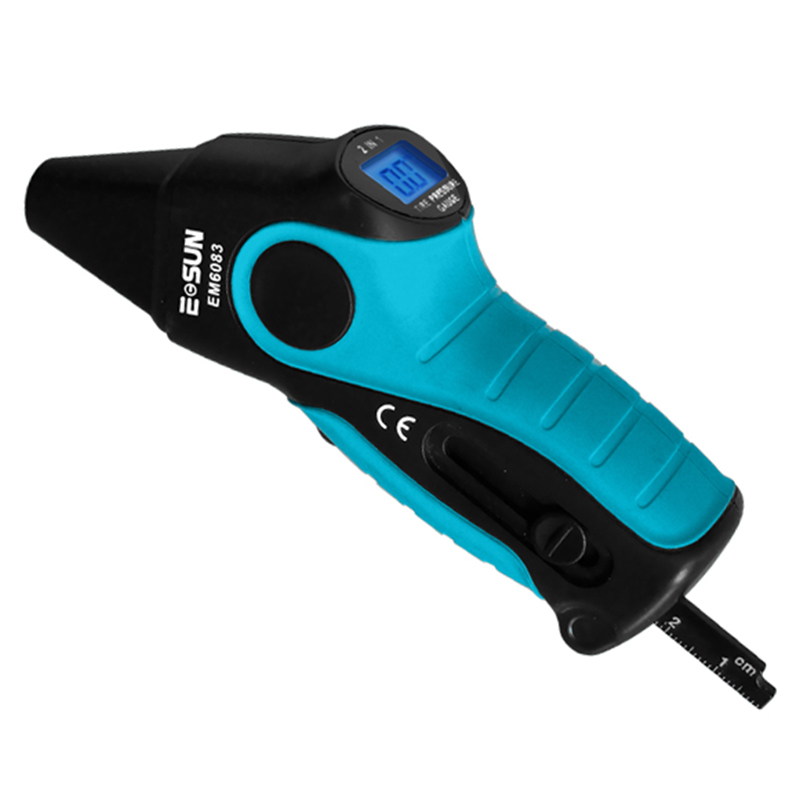
Sourcing tire gauges in volume requires balancing mechanical precision with unit cost. Whether you are procuring basic pencil gauges for promotional kits or heavy-duty digital inflator gauges for professional automotive shops, the primary challenge remains the same: maintaining calibration accuracy across thousands of units. A poorly manufactured gauge will suffer from calibration drift after minor impacts, leading to high return rates and brand damage.
To build a reliable product line, buyers must specify the exact internal mechanisms, housing materials, and industry standards required before production begins.
Core Mechanisms and Specification Standards
The internal mechanism dictates the gauge's accuracy, durability, and cost. Relying on a supplier's "standard" off-the-shelf spec often results in cost-cutting on internal components, such as substituting brass for cheaper alloys in the air chuck or using thin-walled Bourdon tubes in analog models.
| Gauge Type | Core Mechanism | Typical Accuracy | Target Market |
|---|---|---|---|
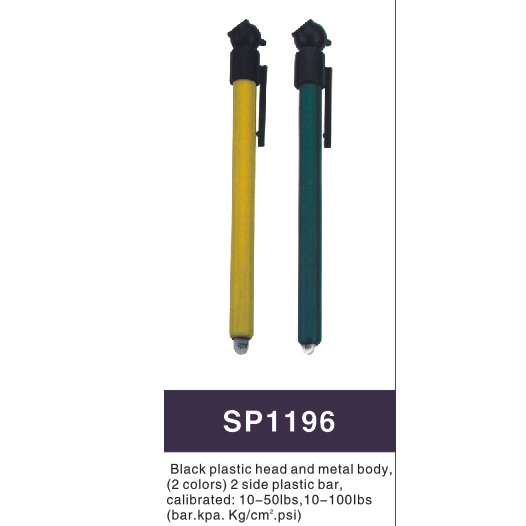
| Pencil / Stick | Spring & Piston | ±3 PSI | Budget retail, promotional, emergency kits |
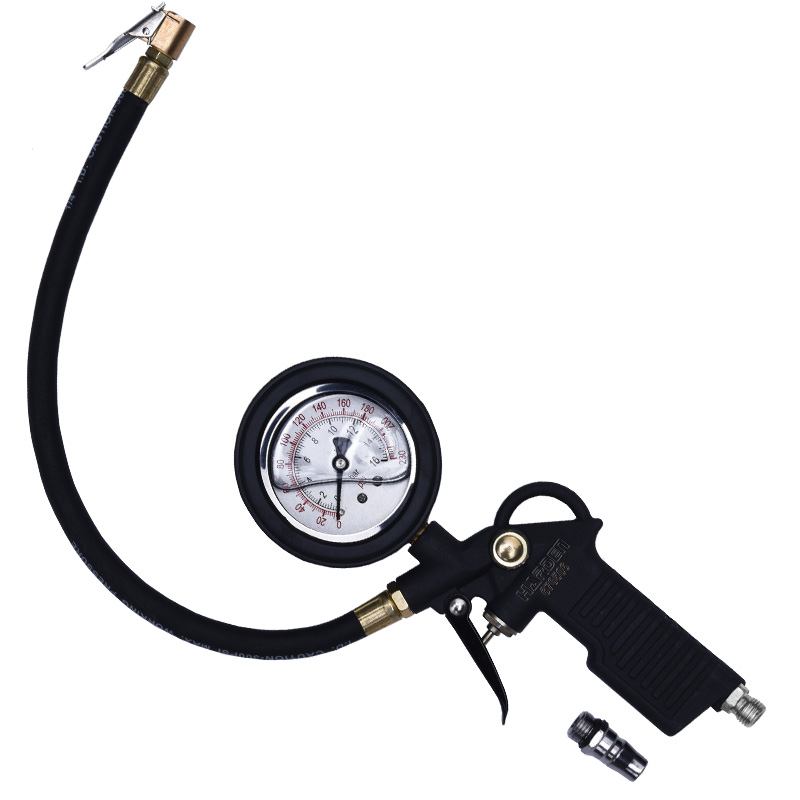
| Analog / Dial | Bourdon Tube | ±1 to 2% (ANSI Grade B/A) | Professional garages, auto enthusiasts |
| Digital | Piezo-resistive sensor | ±1% or better | Consumer retail, high-margin private label |
When defining your specifications, explicitly state the required pressure range. Passenger vehicles typically require 0-60 PSI, while commercial trucks and RVs need 0-150 PSI. Furthermore, specify the accuracy standard. For analog models, referencing ANSI B40.100 (Grade B is ±2% in the middle half of the scale; Grade A is ±1%) sets a clear, measurable baseline for the factory. If you are developing a custom product line, leveraging professional OEM/ODM Services ensures these technical specifications are engineered into your product from day one.
Developing a custom line of automotive tools? Let us match you with a factory capable of precision engineering and consistent output.
Talk to our teamManufacturing Quality and Common Defects
The major manufacturing hubs for automotive hardware and tools are concentrated in China's Zhejiang province (particularly around Ningbo and Wenzhou). While production capacity is massive, quality control varies wildly.
Defects in tire gauges rarely appear as cosmetic flaws; they are hidden inside the unit. In digital gauges, poor soldering on the PCB or cheap piezo-resistive sensors leads to inaccurate readings under varying temperature conditions. In analog models, failure to properly solder or seal the Bourdon tube results in air leaks and "dead" needles.
The Drop Test Failure
The most common failure point for analog dial gauges is the drop test. If the internal gearing is not adequately shock-proofed (either via a geared movement with a hairspring or a liquid-filled dial), a single drop onto a concrete floor will permanently knock the gauge out of calibration. Always specify shock-resistant rubber housings and mandate drop testing in your quality protocols.
To prevent these issues from reaching your warehouse, rigorous Quality Control & Inspection at the factory is mandatory.
Critical Pre-Shipment Inspection Points
- Calibration verification against a master pneumatic gauge at 25%, 50%, and 75% of full scale.
- Leakdown testing on the chuck, hose (if applicable), and bleeder valve assembly.
- Drop testing (typically 1 meter onto a hard surface) to verify housing durability and post-drop accuracy.
- Battery drain analysis and LCD screen contrast checks for digital models under temperature stress.
If you are importing digital gauges into heavily regulated markets like the EU or US, ensure the electronics meet CE or FCC requirements. Working with a partner who manages Compliance & Testing can help verify that the factory's certifications are legitimate and applicable to your specific models.
Typical Pricing, MOQs, and Lead Times
Pricing for tire gauges is highly dependent on the mechanism, the quality of the materials (e.g., solid brass vs. zinc alloy chucks), and the level of customization. Private labeling an existing factory mold requires a lower investment than tooling a completely new ergonomic housing.
Need accurate pricing for your specific tire gauge requirements? We negotiate directly with top-tier manufacturers to secure competitive terms.
Get a free consultationFrequently Asked Questions
Sourcing tire gauges successfully means looking past the outer casing and focusing on the internal mechanisms and calibration standards. By defining strict accuracy tolerances, mandating drop tests, and partnering with factories that understand pneumatic precision, you can build a product line that professionals and consumers trust.
Get Sourcing Help for Tire Gauges
Tell us your requirements and our experts will connect you with verified manufacturers.