Through-Hole Resistors
Source bulk Through-Hole Resistors from vetted suppliers and manufacturers in China and across Asia. Designed for importers, electronics distributors, and OEM brands, this catalog features reliable production partners for high-volume procurement, custom specifications, and competitive wholesale pricing.
Through-hole resistors remain indispensable for power electronics, industrial controls, and applications requiring high mechanical strength and superior power dissipation. When sourcing these passive components in high volumes, the primary challenge is not simply finding a supplier with the lowest unit cost. The true test is ensuring strict lot-to-lot consistency in resistance tolerance, temperature coefficient of resistance (TCR), and lead solderability to prevent costly failures during automated wave soldering and final assembly.
Critical Specifications for Bulk Procurement
Procurement managers must provide exact specifications to avoid receiving components that fail under thermal stress or cannot feed properly into automated insertion equipment.
Essential RFQ Specifications
- Resistance Value & E-Series standard (e.g., E24, E96)
- Tolerance limits (ranging from 0.1 percent for precision to 5 percent for general purpose)
- Power Rating at specific ambient temperatures (e.g., 1/4W, 1/2W, 1W)
- Temperature Coefficient of Resistance (TCR) expressed in ppm/C
- Maximum working voltage and overload voltage
- Packaging format (Ammo pack, Tape & Reel, or Bulk for manual assembly)
If your production line uses automated axial or radial insertion machines, specifying the exact tape pitch and inner tape width is critical. A minor deviation in packaging dimensions will cause machine jams and line downtime.
Manufacturing Precision and Quality Control
The reliability of a through-hole resistor is determined on the factory floor. The process involves depositing a resistive film (carbon, metal, or metal oxide) onto a ceramic core, followed by pressing end caps, laser trimming to achieve the precise resistance value, and applying a protective epoxy coating.
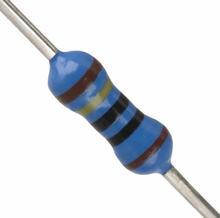
Defects often occur during the laser trimming or lead-welding phases. Micro-cracks in the ceramic core or uneven epoxy coating can allow moisture ingress, leading to premature failure in the field. To mitigate this, rigorous Quality Control & Inspection is required before the reels are sealed. Inspectors should verify the uniformity of the color bands, test lead pull strength, and perform solderability testing to ensure the tin plating has not oxidized.
Struggling with inconsistent component quality or oxidation issues? Let us vet your supply chain and implement rigorous pre-shipment testing.
Talk to our teamVetting Supplier Capabilities
The passive component market in Asia is vast, ranging from highly automated, automotive-grade facilities to smaller workshops with manual quality checks.
When evaluating a manufacturer, look for facilities that utilize automated laser trimming and in-line resistance testing. For demanding applications, the factory should be capable of providing AEC-Q200 qualification reports. Furthermore, RoHS and REACH compliance are non-negotiable for global distribution, requiring the factory to use strictly lead-free solder and compliant coating materials. Conducting comprehensive Factory Audits is the most effective way to verify that a supplier actually possesses these automated capabilities and does not outsource to substandard secondary workshops.
| Capability | Standard Supplier | Tier 1 / Automotive Supplier |
|---|---|---|
| Quality Certifications | ISO 9001, RoHS | IATF 16949, AEC-Q200 |
| Trimming Process | Sample-tested batch trimming | 100 percent in-line automated laser trimming |
| Lead Plating | Standard tin plating | Pure matte tin with strict thickness control |
Pricing, MOQs, and Lead Times
Because through-hole resistors are low-cost, high-volume commodities, purchasing mechanics are driven by economies of scale.
Custom resistance values or specialized high-voltage coatings will push MOQs significantly higher. Given the volatile nature of raw material costs (such as copper for the leads and specific metals for the film), pricing can fluctuate. Securing stable pricing and aligning component delivery with your PCB assembly schedule requires proactive Supply Chain Management to prevent line stoppages.
Need to secure stable pricing and reliable lead times for your passive component BOM? Our sourcing experts can help.
Get a free consultationFrequently Asked Questions
Sourcing through-hole resistors at scale demands strict attention to factory automation levels and quality control protocols. By partnering with vetted manufacturers who maintain tight tolerances and pristine lead solderability, you protect your downstream assembly yields and long-term product reliability.
Get Sourcing Help for Through-Hole Resistors
Tell us your requirements and our experts will connect you with verified manufacturers.