Thermal Cookers
Source premium Thermal Cookers from vetted suppliers and manufacturers across Asia. Designed for importers, wholesalers, distributors, and cookware brands seeking reliable OEM and private-label production. Secure bulk orders with verified factory partners for superior vacuum insulation and global food-grade compliance.
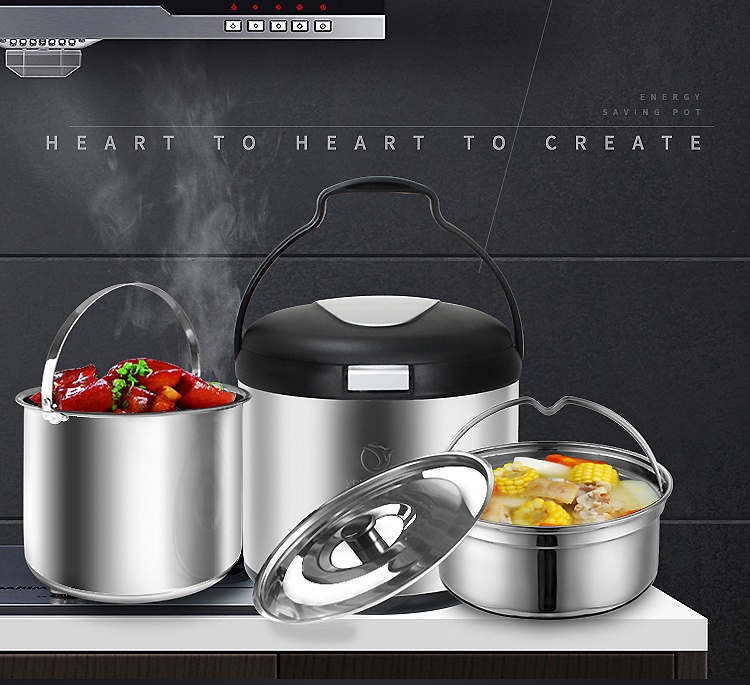
Sourcing thermal cookers (often called non-electric slow cookers or magic cookers) requires navigating a unique intersection of heavy-duty cookware manufacturing and vacuum-flask engineering. Because these products rely entirely on thermal mass and vacuum insulation to cook food safely over several hours, the sourcing challenge goes far beyond aesthetics. Success depends on the consistency of the factory's vacuum sealing process, the metallurgical quality of the inner pot, and rigorous pre-shipment testing to ensure heat retention standards are met across thousands of units.
Core Specifications and Materials
When negotiating with manufacturers, the bill of materials (BOM) dictates both the performance of the cooker and your unit cost. Buyers must specify exact grades and thicknesses, as default factory configurations often prioritize cost over thermal efficiency.
Inner Pot Construction
The inner pot is the active cooking vessel. It must withstand direct heat (gas, electric, or induction) before being placed into the insulated outer shell.
| Material Grade | Durability & Corrosion Resistance | Typical Application |
|---|---|---|
| 304 Stainless Steel (18/8) | High resistance to standard food acids; industry standard. | Standard retail and wholesale models. |
| 316 Stainless Steel (18/10) | Superior resistance to chlorides (salt) and acidic foods. | Premium brands and professional catering lines. |
| 201 Stainless Steel | Lower corrosion resistance; prone to pitting over time. | Budget models (generally avoided for food contact). |
Beyond the steel grade, specify the base construction. A single-ply base is cheap but prone to scorching. For premium models, specify an impact-bonded or encapsulated base (typically a 3mm to 5mm aluminum core clad in magnetic 430 stainless steel) to ensure induction compatibility and even heat distribution.
Outer Pot and Vacuum Insulation
The outer shell is typically constructed from double-walled stainless steel (often 201 or 304) or heavy-duty BPA-free plastics. If opting for stainless steel, the critical factor is the vacuum layer between the inner and outer walls. Factories must utilize high-temperature vacuum furnaces to evacuate the air and seal the unit. A compromised vacuum turns a thermal cooker into a standard pot.
Developing a custom thermal cooker line? Let our engineering and sourcing teams help you finalize specifications and match you with capable manufacturers.
Get a free consultationManufacturing Quality and Defect Control
The primary failure point in thermal cooker production is the loss of vacuum integrity. Even microscopic welding defects can cause the vacuum to fail over time, resulting in a product that cannot maintain safe food-holding temperatures.
Implementing rigorous Quality Control & Inspection is non-negotiable. Relying solely on the factory's internal QA often leads to high defect rates upon arrival.
Critical QC Checks for Thermal Cookers
- Heat Retention Testing: Fill with boiling water; temperature must remain above 70 degrees Celsius after 6 hours.
- Weld Integrity: Inspect the base and rim welds of the outer pot for pinholes or polishing burns.
- Lid Seal Alignment: Ensure the silicone gasket seats perfectly to prevent steam escape.
- Handle Load Testing: Apply weighted stress tests to the outer pot handles to ensure rivet or weld strength.
- Material Verification: Spectrometer testing to confirm 304/316 stainless steel grades.
Furthermore, if you are importing into heavily regulated markets, ensure your supplier can provide valid test reports or arrange independent Compliance & Testing to meet FDA (US) or LFGB (Europe) food-contact material standards.
Pricing, MOQs, and Lead Times
Procuring thermal cookers at scale requires understanding the standard operational parameters of manufacturers in hubs like Guangdong (Chaozhou, Jiangmen) and Zhejiang (Yongkang).
Pricing is highly sensitive to the global cost of nickel and chromium (which dictate stainless steel prices), the thickness of the steel (0.5mm vs. 0.8mm), and the quality of the vacuum processing. When utilizing OEM/ODM Services to develop custom outer shell designs or proprietary inner pot tooling, expect to pay mold fees upfront, which are typically amortized over future high-volume orders.
Need reliable factory partners for your next bulk cookware order? We handle supplier vetting, price negotiation, and quality control on the ground in Asia.
Talk to our teamFrequently Asked Questions
Sourcing thermal cookers profitably means looking past the polished exterior to verify the engineering underneath. By strictly defining material grades, mandating rigorous heat-retention testing, and partnering with verified manufacturers, you can secure reliable products that protect your brand's reputation.
Get Sourcing Help for Thermal Cookers
Tell us your requirements and our experts will connect you with verified manufacturers.