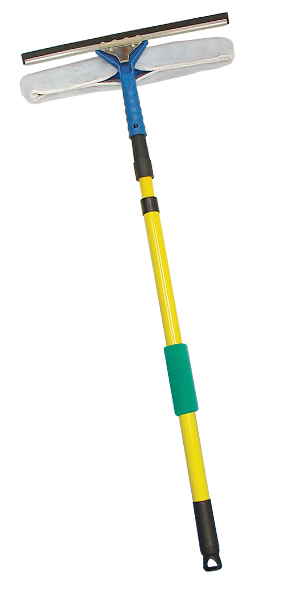
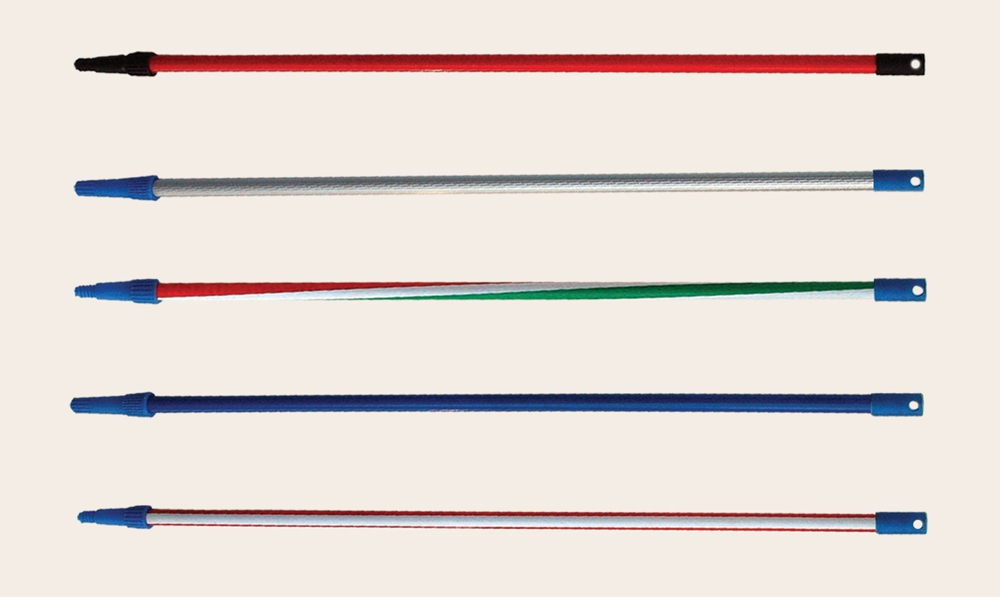
Telescopic Cleaning Tools
Source high-quality telescopic cleaning tools from vetted manufacturers and suppliers in China and across Asia. Designed for importers, distributors, and brands seeking reliable OEM or private-label production, our bulk wholesale catalog offers scalable sourcing solutions to meet your exact specifications.
Sourcing telescopic cleaning tools at scale is an exercise in balancing opposing forces: maximum extension length against minimal deflection, and lightweight handling against heavy-duty durability. Whether you are procuring standard two-section aluminum poles for residential mops or heavy-duty fiberglass water-fed poles for commercial window cleaning, success depends on specifying the right materials, locking mechanisms, and tolerances at the factory level.
Core Specifications: Materials and Wall Thickness
The foundation of any telescopic pole is the tubing material and its wall thickness. These two factors dictate the pole's rigidity, weight, and unit cost.
For standard household and light commercial applications, Aluminum 6063-T5 is the industry standard due to its excellent extrusion properties and corrosion resistance. However, a common factory shortcut is reducing the wall thickness to save on raw material costs. A standard wall thickness of 0.8mm is acceptable for short, light-duty dusters, but professional-grade tools extending beyond 3 meters require 1.0mm to 1.2mm walls to prevent bowing and permanent deformation under load.
| Material | Typical Application | Deflection Resistance | Relative Cost |
|---|---|---|---|
| Aluminum 6063 | Household mops, standard brooms | Moderate | Low |
| Fluted Aluminum | Commercial window squeegees | High | Medium |
| Fiberglass | Electrical safety, heavy-duty | Very High | High |
| Carbon Fiber | Water-fed poles (high reach) | Maximum | Premium |
Specifying the correct alloy and wall thickness requires direct factory negotiation. Let us manage the technical details and secure the right manufacturer for your needs.
Talk to our teamEngineering the Locking Mechanism
The locking mechanism is the most frequent point of failure in telescopic cleaning tools. If the lock slips under pressure, the tool is useless. Manufacturers typically offer two primary systems, each requiring specific material choices for the plastic components.
Twist-Lock (Internal Cam) vs. Flip-Lock (External Lever)
Advantages
- Twist-Lock: Sleek profile, fits into standard tool holders, generally cheaper to manufacture.
- Flip-Lock: Easier to operate with wet or gloved hands, visual confirmation that the pole is locked, less prone to internal jamming.
Disadvantages
- Twist-Lock: Internal cams made of cheap plastics (like recycled PP) will wear out quickly, causing slippage.
- Flip-Lock: Bulky profile, higher component cost, requires precise tension calibration at the factory.
When customizing your product through OEM/ODM Services, insist that all internal cams and external levers be injection-molded from virgin Nylon (PA6) or POM (Polyoxymethylene) rather than brittle ABS.
Quality Control on the Factory Floor
Catching defects before shipping is critical. Telescopic poles involve multiple extruded sections that must slide smoothly; poor tolerances during extrusion or anodizing will result in jamming or excessive play.
Critical Pre-Shipment Inspection Points
- Deflection Test: Measure the bend angle at maximum extension under a standardized weight load.
- Lock Retention: Apply vertical force to a locked pole to ensure the mechanism does not slip or collapse.
- Thread Compatibility: Verify the tip thread (e.g., standard ACME 3/4-inch thread) fits standard attachments seamlessly.
- Anodizing Finish: Check for uniform coating thickness to prevent premature oxidation.
- Grip Adhesion: Ensure EVA or TPR handle grips are securely glued and do not rotate during use.
Implementing rigorous Quality Control & Inspection protocols ensures these mechanical tolerances are verified before the container is loaded.
Buying Mechanics: MOQ, Pricing, and Lead Times
Pricing for telescopic poles is highly sensitive to global aluminum spot prices and the number of sections (a three-section pole requires more complex assembly and more locking components than a two-section pole of the same total length).
Factories in Zhejiang and Jiangsu provinces are the primary hubs for these products, offering strong supply chains for aluminum extrusion and plastic injection. However, vetting these suppliers to ensure they actually extrude their own aluminum rather than just assembling purchased parts is crucial for long-term price stability. Conducting thorough Factory Audits separates the true manufacturers from the trading companies.
Need reliable pricing, capacity verification, and production schedules for your next bulk order? We vet the factories before you commit.
Get a free consultationFrequently Asked Questions
Securing reliable telescopic cleaning tools means looking past the surface finish and focusing on wall thickness, plastic resin quality, and extrusion tolerances. By strictly defining these parameters upfront, you protect your brand from costly product failures in the field. If you need an experienced partner to manage these factory-level details, our team is ready to assist.
Get Sourcing Help for Telescopic Cleaning Tools
Tell us your requirements and our experts will connect you with verified manufacturers.