Studs
Source high-quality studs from vetted manufacturers and wholesale suppliers across Asia. Designed for hardware distributors, industrial importers, and brands requiring reliable bulk production or OEM manufacturing. Secure competitive pricing, strict quality control, and dependable lead times for your fastener supply chain.
Sourcing industrial studs in bulk requires strict attention to material grades, thread tolerances, and heat treatment consistency. While the unit cost of a single fastener is low, the cost of a structural failure in the field is catastrophic. Securing reliable production means looking past the lowest quote to evaluate a factory's threading equipment, raw material sourcing, and quality management systems.
Specifying Studs for Bulk Production
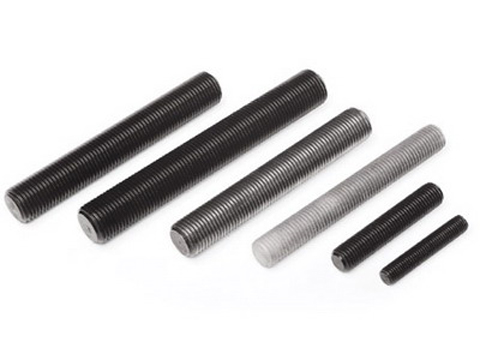
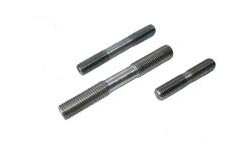
When purchasing studs—whether fully threaded, double-end, or tap-end—imprecise specifications lead to unusable inventory. Relying solely on a DIN, ISO, or ASME standard number is rarely enough for a watertight purchase order. You must explicitly define the critical parameters.
- Material and Property Classes: Specify the exact steel grade and required property class. For metric studs, this means defining Class 4.8, 8.8, 10.9, or 12.9. For imperial, specify Grade 2, 5, or 8. Stainless steel should be designated by its exact alloy (e.g., 304, 316, B8, B8M).
- Thread Fit and Tolerance: Clearly state the thread class. For unified threads, specify 2A (standard fit) or 3A (tight fit). For metric, specify the tolerance class (e.g., 6g).
- Surface Treatment: The coating impacts both corrosion resistance and thread dimensions. Common finishes include plain (light oil), zinc electroplating, hot-dip galvanizing (HDG), and PTFE coatings.
Struggling with inconsistent thread tolerances or material grades? Let us connect you with vetted fastener manufacturers capable of meeting strict industrial standards.
Talk to our teamManufacturing Processes and Quality Control
The durability of a stud is dictated by how it is manufactured. High-quality production facilities utilize thread rolling rather than thread cutting. Rolling cold-forms the steel, maintaining the material's grain flow and resulting in superior fatigue resistance and shear strength.
Heat treatment is another critical phase. High-tensile studs (Class 10.9 and above) require precise quenching and tempering. If these high-strength fasteners are subsequently electroplated, they are highly susceptible to hydrogen embrittlement—a microscopic structural weakness that causes delayed, catastrophic failure under load. Factories must bake electroplated high-tensile studs immediately after plating to outgas the hydrogen. Verifying a supplier's heat treatment and baking capabilities is a primary focus during professional factory audits.
Pre-Shipment QC Checklist for Studs
- Verify thread tolerances using calibrated Go/No-Go ring gauges.
- Conduct tensile strength and yield strength testing on a sample batch.
- Measure plating thickness using X-ray fluorescence (XRF) or magnetic induction.
- Perform salt spray testing to validate corrosion resistance claims.
- Check for straightness, especially on long, fully threaded rods.
Implementing independent quality control prior to container loading ensures that dimensional defects or incorrect material grades are caught before the product leaves the factory.
MOQs, Lead Times, and Pricing Drivers
Fastener economics are heavily driven by global steel commodity indices and production volume. Because studs are manufactured on high-speed, automated equipment, machine setup time is a significant cost factor.
Pricing fluctuates based on the raw material market. When establishing long-term supply agreements, experienced buyers index their pricing to current steel rates. Furthermore, secondary operations like chamfering, specialized heat treatments, or proprietary coatings will add to both the unit cost and the lead time. Engaging in structured product sourcing helps you negotiate these variables transparently with the manufacturer.
Need to lock in competitive pricing for high-volume fastener orders? Our sourcing experts can negotiate factory-direct terms on your behalf.
Get a free consultationFrequently Asked Questions
Successfully importing industrial studs requires balancing unit costs with uncompromising quality requirements. By partnering with vetted manufacturers and enforcing rigorous pre-shipment inspections, you can build a resilient, cost-effective fastener supply chain that protects your brand's reputation.
Get Sourcing Help for Studs
Tell us your requirements and our experts will connect you with verified manufacturers.