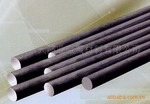
Stainless Steel Bars
Source premium stainless steel bars from vetted manufacturers and wholesale suppliers across Asia. Built for industrial importers, metal distributors, and procurement managers, our network provides direct access to bulk production. Secure competitive pricing, reliable lead times, and strict quality compliance for your next high-volume order.
Sourcing stainless steel bars in bulk requires navigating fluctuating raw material costs, strict dimensional tolerances, and verifying actual material grades. Whether you need cold-drawn hex bars for precision machining, peeled round bars for shafts, or hot-rolled structural bars, securing a reliable mill is critical. A minor deviation in straightness or a mislabeled alloy grade can disrupt your downstream manufacturing or trigger massive rejections from your own buyers.
Manufacturing Processes and Specifications
The manufacturing method dictates the bar's mechanical properties, surface finish, and dimensional accuracy. Buyers must specify not just the alloy grade (such as 304, 316L, 410, or 420), but the exact finishing process required for the end application.
| Characteristic | Hot Rolled (HR) | Cold Drawn (CD) |
|---|---|---|
| Process | Rolled at high temperatures (above recrystallization) | Drawn through dies at room temperature |
| Dimensional Tolerance | Wider tolerances, suitable for further processing | Tight tolerances (often h9 to h11) |
| Surface Finish | Rough, scaled surface (unless peeled/turned) | Smooth, bright, and polished |
| Mechanical Properties | Lower yield strength, highly ductile | Higher yield and tensile strength due to work hardening |
| Primary Use Cases | Forging blanks, structural supports, general fabrication | CNC machining, precision shafts, fasteners |
When specifying cold-drawn bars, you must also define the required straightness (e.g., maximum 1mm per meter) and whether the bars require centerless grinding for ultra-precise roundness.
Need to secure consistent dimensional tolerances across bulk mill runs? Let our experts match you with capable manufacturers.
Talk to our teamCritical Quality Control Checkpoints
The biggest risk when importing stainless steel is receiving "off-spec" material. Unreliable suppliers may blend scrap poorly or substitute grades (e.g., supplying 201 or 304 instead of 316L) to increase their margins.
To prevent this, rigorous Quality Control & Inspection protocols must be established before the goods leave the factory.
Pre-Shipment Inspection Requirements for Stainless Bars
- Positive Material Identification (PMI): Mandatory XRF spectrometer testing to verify exact chemical composition (Nickel, Chromium, Molybdenum content).
- Dimensional Verification: Micrometer checks for diameter, across-flats (for hex/square), and length tolerances.
- Straightness Testing: Dial indicator checks on a flat table to ensure bars meet the specified straightness deviation limits.
- Surface Inspection: Visual and dye-penetrant checks for micro-cracks, seams, pitting, or drawing marks.
- Mechanical Testing Review: Verification of the Mill Test Certificate (MTC) for tensile strength, yield strength, and elongation.
If your market requires strict adherence to ASTM, EN, or JIS standards, integrating third-party Compliance & Testing is highly recommended to validate the factory's internal MTCs.
Buying Mechanics: Pricing, MOQs, and Logistics
Stainless steel pricing is notoriously volatile. Factory quotes are typically structured as a base fabrication cost plus an "alloy surcharge" tied directly to the London Metal Exchange (LME) prices for nickel and chromium. Quotes are usually valid for just a few days.
Because metals are exceptionally heavy, logistics planning is as important as the purchase price. A standard 20-foot container will max out its weight limit (typically around 24 to 28 metric tons) long before it runs out of volume. Proper dunnage, strapping, and moisture-absorbing desiccants are required to prevent transit damage and corrosion. Partnering with experts in heavy Shipping & Freight ensures your cargo complies with weight limits and arrives safely.
Furthermore, always conduct thorough Factory Audits to ensure you are dealing directly with a capable rolling mill or a top-tier authorized stockist, rather than a multi-layered trading company that adds unnecessary markup.
Struggling with volatile alloy prices and heavy freight logistics? We streamline the entire procurement cycle.
Get a free consultationFrequently Asked Questions
Successful procurement of stainless steel bars comes down to removing the guesswork. By demanding independent PMI testing, purchasing on actual weight, and auditing mill capabilities firsthand, importers can secure high-quality metal that protects their bottom line and their reputation.
Get Sourcing Help for Stainless Steel Bars
Tell us your requirements and our experts will connect you with verified manufacturers.