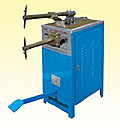
Spot Welders
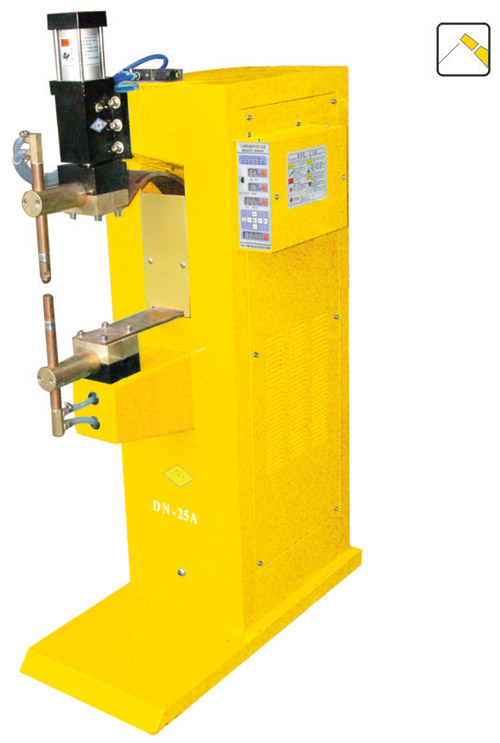
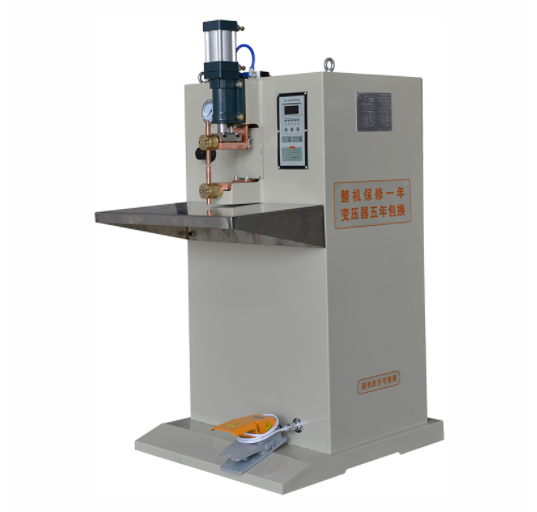
Source high-performance spot welders from vetted suppliers and manufacturers. Designed for industrial distributors, wholesalers, and brands seeking reliable OEM production, our network delivers equipment built for precision and durability. Ensure compliance and scale your inventory with factory-direct pricing.
Sourcing commercial spot welders requires navigating a complex landscape of transformer capabilities, duty cycles, and control board reliability. For importers and industrial distributors, the difference between a machine that performs reliably on a production line and one that suffers premature thermal failure comes down to precise component specification and rigorous factory-level validation.
Core Specifications and Transformer Quality
The heart of any spot welder is its transformer. When negotiating with manufacturers, the stated KVA (Kilovolt-Amperes) rating is only part of the equation. You must define the underlying materials and duty cycle expectations to ensure the machines meet your market's demands.
Many lower-tier factories will substitute copper windings with copper-clad aluminum (CCA) to cut costs. While CCA can function in light-duty applications, it significantly reduces the machine's thermal capacity and overall lifespan in industrial settings. Always specify 100 percent pure copper windings for professional-grade units.
Critical Manufacturing Specifications to Define
- Transformer Winding Material: Demand pure copper for any unit rated for industrial duty cycles.
- Duty Cycle Validation: Ensure the rated duty cycle (e.g., 50 percent at maximum output) is tested at standard ambient operating temperatures, not artificially cooled environments.
- Electrode Material: Specify Chromium Zirconium Copper (CuCrZr) or Alumina Copper for optimal conductivity and wear resistance.
- Control Systems: Determine if the market requires basic thyristor-controlled AC boards or advanced microprocessor-controlled inverters.
Need help verifying factory transformer capabilities? Our engineers can audit technical specifications before you commit to production.
Talk to our teamAC vs. Medium Frequency Inverter (MFDC) Welders
Understanding the technological divide in spot welding equipment is crucial when building your catalog or specifying machines for a production facility.
| Technology Type | Power Efficiency | Current Output | Target Market |
|---|---|---|---|
| AC Spot Welders | Standard | Alternating, zero-crossing | General sheet metal, HVAC, entry-level auto repair |
| MFDC Inverter Welders | High (lower power draw) | Continuous DC | Precision manufacturing, aerospace, advanced automotive |
If you are developing a proprietary line of equipment, leveraging OEM/ODM Services allows you to customize the control interfaces and enclosure designs of these systems to match your brand's existing industrial portfolio.
Quality Control and Compliance
Spot welders deal with massive sudden current draws and extreme localized heat. Substandard assembly can lead to catastrophic failure or severe safety hazards. Verifying the factory's internal testing protocols is non-negotiable.
Before shipment, machines must undergo rigorous load testing. This includes continuous weld cycles to test the thermal overload protection and the efficacy of the water or air-cooling systems. Implementing third-party Quality Control & Inspection ensures that the units off the line actually match the golden sample.
Furthermore, electrical safety compliance is a major hurdle. Units bound for the European market require strict CE and RoHS adherence, while North American buyers must look for UL or ETL marks. Navigating these regulatory requirements often necessitates dedicated Compliance & Testing to avoid customs seizures or liability issues.
Typical MOQs, Pricing, and Lead Times
Pricing for spot welders is heavily dependent on the KVA rating, cooling method (air vs. water), and control technology. Because these are heavy, capital-intensive machines, minimum order quantities (MOQs) are generally lower than consumer electronics, but lead times must account for raw material procurement and heavy assembly.
Logistics Consideration
Spot welders, particularly pedestal and water-cooled industrial models, have a high weight-to-volume ratio. Factor in container weight limits and specialized freight handling when calculating your landed costs.
Optimize your welding equipment supply chain. We handle the negotiations, quality checks, and heavy freight logistics.
Get a free consultationFrequently Asked Questions
Sourcing commercial spot welders at scale requires looking past the spec sheet and verifying the raw materials and engineering tolerances on the factory floor. By strictly controlling the transformer specifications and mandating rigorous load testing, buyers can secure reliable, high-margin equipment for their distribution networks.
Get Sourcing Help for Spot Welders
Tell us your requirements and our experts will connect you with verified manufacturers.