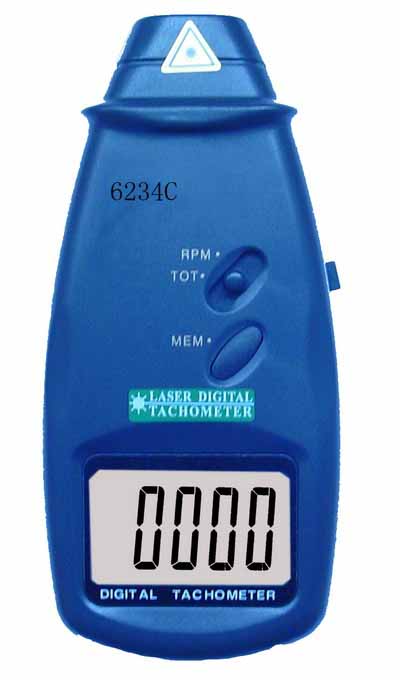
Speed Measuring Instruments
Source high-accuracy Speed Measuring Instruments from vetted manufacturers and wholesale suppliers. Designed for importers, industrial distributors, and brands seeking reliable OEM or private-label production, our network delivers precision tachometers, anemometers, and radar units built for rigorous commercial and industrial applications.
Sourcing physical speed measuring instruments—whether contact tachometers, laser stroboscopes, or ultrasonic anemometers—requires strict attention to sensor precision and calibration stability. While the exterior casing might look identical across different factory catalogs, the internal components and assembly environment dictate whether the instrument maintains its accuracy over time or drifts after just a few months of industrial use.
For high-volume buyers, the core challenge is ensuring that the manufacturer has the necessary metrology infrastructure to calibrate each unit properly, rather than simply assembling off-the-shelf components.
Critical Specifications to Define
When negotiating with suppliers, vague specifications lead to component substitution. You must define the internal architecture clearly, particularly the sensor type, the microcontroller unit (MCU), and the expected tolerance.
| Specification | Standard Commercial | Industrial/Precision Grade |
|---|---|---|
| Accuracy Tolerance | ±1.0% to ±0.5% | ±0.05% or better |
| Sensor Technology | Basic photoelectric / mechanical | Laser optical / Doppler radar / Hall effect |
| Data Processing | Basic MCU, direct display | High-speed MCU with data logging & PC interface |
| Housing & Ingress | Standard ABS plastic (IP40) | Over-molded TPR or Aluminum (IP65+) |
The optical lens quality in non-contact tachometers and stroboscopes is a frequent point of failure. Low-cost manufacturers often use unpolished plastic lenses that degrade under UV exposure or industrial solvents, severely reducing the effective measurement distance.
Struggling to verify the sensor quality in your supplier's BOM? We can help validate component origins.
Talk to our teamManufacturing Risks and Quality Control
The production of speed measuring instruments is highly sensitive to the assembly environment. Dust or particulate matter on optical sensors during PCB assembly will permanently impair the unit's functionality.
Before committing to a high-volume order, it is crucial to verify the supplier's production capabilities. Reliable manufacturers will have dedicated clean-room assembly lines for optical components and automated calibration rigs. Conducting thorough Factory Audits ensures the facility actually possesses the metrology equipment claimed on their Alibaba or Global Sources profile.
Factory-Level Quality Checks
A robust Quality Control & Inspection protocol should catch defects before the units leave the factory floor. Your pre-shipment inspection checklist should include:
- Multi-point calibration verification using master reference tachometers or wind tunnels.
- Measurement distance validation for non-contact optical instruments (verifying the maximum effective range).
- Burn-in testing for the MCU and display under elevated temperatures.
- Ingress protection (IP) verification for units destined for outdoor or heavy industrial use.
- Data interface testing (RS232, USB, Bluetooth) to ensure stable packet transmission.
Sourcing Mechanics: Pricing, MOQs, and Lead Times
Pricing for speed measuring instruments is highly volatile and scales directly with the quality of the primary sensor, the complexity of the MCU, and the level of custom firmware required.
If you are developing a proprietary instrument for a specific industrial application, engaging OEM/ODM Services allows you to dictate the exact PCB layout, sensor integration, and data output protocols. Keep in mind that custom firmware development will extend the initial lead time by several weeks for prototyping and debugging.
Ready to negotiate bulk pricing and customize your product line?
Get a free consultationFrequently Asked Questions
Securing reliable speed measuring instruments requires moving past surface-level specifications and drilling down into the manufacturer's component supply chain and calibration infrastructure. By demanding transparency on sensor origins and enforcing strict pre-shipment metrology checks, you can eliminate the risk of importing inaccurate or unstable equipment.
Get Sourcing Help for Speed Measuring Instruments
Tell us your requirements and our experts will connect you with verified manufacturers.