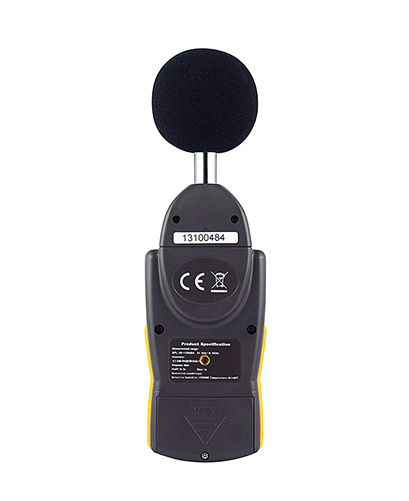
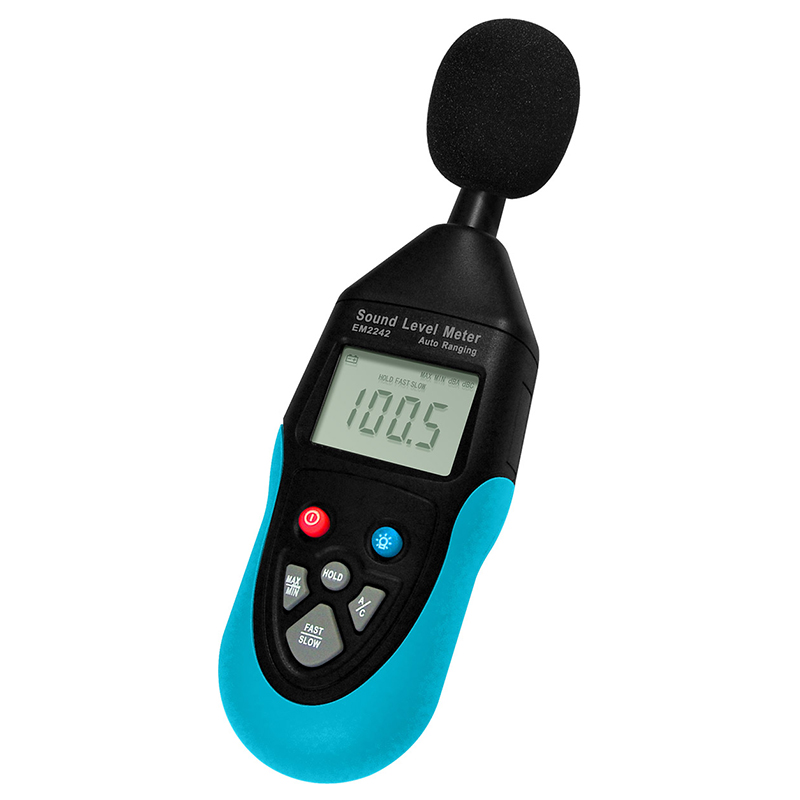
Sound Level Meters
Source wholesale Sound Level Meters from vetted manufacturers and suppliers. Designed for importers, distributors, and brands seeking OEM or private-label production, our network delivers reliable environmental testing instruments built to precise international acoustic standards.
Sourcing sound level meters (SLMs) at scale requires navigating strict acoustic compliance standards, component tolerances, and rigorous factory-level calibration. The difference between a professional-grade instrument and a consumer-grade gadget lies heavily in the microphone capsule quality, the stability of the analog-to-digital conversion, and strict adherence to IEC standards. For volume buyers, securing a reliable supply chain means vetting factories not just for assembly capacity, but for their acoustic engineering and testing infrastructure.
Understanding Class 1 vs. Class 2 Specifications
When ordering sound level meters, the primary cost and performance driver is the instrument's accuracy class, defined by IEC 61672-1. Buyers must specify the exact class required for their target market, as this dictates the microphone type and internal circuitry.
| Specification | Class 1 (Precision) | Class 2 (General Purpose) |
|---|---|---|
| Tolerance | ±0.7 dB | ±1.5 dB |
| Microphone Type | 1/2-inch prepolarized condenser | Electret condenser or MEMS |
| Frequency Range | 10 Hz to 20 kHz | 20 Hz to 8 kHz |
| Primary Application | Legal compliance, lab acoustics | Occupational safety, basic noise monitoring |
Class 1 meters require highly stable prepolarized condenser microphones that resist temperature and humidity fluctuations. Class 2 meters often utilize lower-cost electret or MEMS microphones, making them suitable for broader commercial applications but inappropriate for legally binding noise assessments.
Need help verifying a manufacturer's acoustic testing capabilities? Get expert support in vetting suppliers and securing production-ready factories.
Talk to our teamManufacturing and Quality Control Challenges
Assembling a sound level meter is straightforward; calibrating it to remain stable across a wide temperature range (typically -10°C to 50°C) is not. Many entry-level suppliers purchase off-the-shelf PCBA boards and generic microphone capsules, lacking the facility to perform true acoustic verification.
When conducting Factory Audits, it is critical to verify the supplier's testing environment.
Critical Factory Verification Points
- Anechoic Chamber: Does the factory possess a qualified anechoic chamber for free-field testing?
- Reference Calibrators: Are they using traceable B&K (Brüel & Kjær) or equivalent reference calibrators on the assembly line?
- Temperature & Humidity Chambers: Are sample units tested for drift under environmental stress?
- Microphone Aging: Do they perform artificial aging on condenser microphones to ensure long-term stability?
Without these controls, batch consistency will fail. Implementing rigorous Quality Control & Inspection protocols before shipment is mandatory to ensure every unit meets the declared accuracy class.
Customization and OEM/ODM Production
For brands looking to develop proprietary environmental testing equipment, partnering with a capable manufacturer for OEM/ODM Services allows for significant customization.
Key customization vectors include:
- Data Logging & Connectivity: Integrating SD card storage, USB output for PC analysis software, or Bluetooth/Wi-Fi for real-time remote monitoring.
- Weighting Filters: Ensuring the firmware accurately processes A, C, and Z frequency weightings, alongside Fast, Slow, and Impulse time weightings.
- Display & Enclosure: Upgrading to high-contrast TFT LCDs and ruggedized, IP-rated enclosures for industrial environments.
Compliance Notice
Any structural change to the enclosure or microphone housing in an OEM project can alter the acoustic diffraction of the device, potentially pushing it out of IEC 61672-1 compliance. Always require re-testing after enclosure modifications.
Typical Pricing and MOQ Realities
Pricing for sound level meters varies drastically based on the sensor quality and data-logging capabilities. The figures below represent typical factory-direct wholesale parameters.
Note: Integrating advanced features like octave band analysis or integrating sound level (Leq) calculation will push unit costs toward the higher end of these spectrums.
Managing a complex testing instrument project? Let our engineering and sourcing team handle the technical negotiations and quality control.
Get a free consultationFrequently Asked Questions
Successfully sourcing sound level meters requires looking past the spec sheet and evaluating the manufacturer's acoustic engineering pedigree. By ensuring your supplier utilizes proper reference equipment and maintains strict environmental testing protocols, you can secure a stable supply of reliable, compliant instruments.
Get Sourcing Help for Sound Level Meters
Tell us your requirements and our experts will connect you with verified manufacturers.