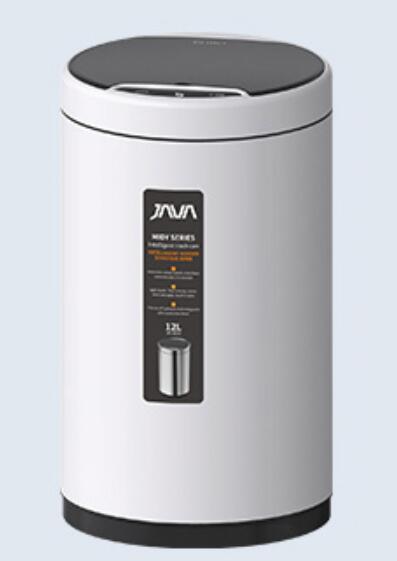
Smart Waste Bins
Source high-quality Smart Waste Bins from vetted suppliers and manufacturers in Asia. Designed for importers, wholesalers, and brands seeking reliable OEM/ODM production, our network delivers bulk manufacturing with strict quality control. Ensure your smart home product line meets global market standards with confidence.
Smart waste bins combine mechanical actuation, infrared sensors, and power management into a high-use household appliance. For volume buyers, the sourcing challenge is balancing aesthetic finishes with electronic reliability. A bin that looks premium but suffers from parasitic battery drain, noisy gearboxes, or erratic sensor behavior will quickly generate returns. Successful procurement requires deep visibility into the factory's component selection and assembly standards.
Core Specifications and Component Selection
When negotiating with a smart waste bin manufacturer, the external housing is only half the equation. The longevity of the product relies entirely on the printed circuit board (PCB) design, sensor quality, and the motor assembly housed within the lid.
- Sensors & PCB Logic: Standard models use a single infrared (IR) sensor with a typical range of 15 to 25 centimeters. Premium models often incorporate dual-sensor setups (IR plus vibration/kick sensors) and advanced PCB logic to prevent "phantom openings" caused by passing shadows or direct sunlight.
- Actuation & Gearboxes: The motor and gearbox dictate the opening speed and noise level. Planetary gear designs generally offer smoother, quieter operation than standard spur gears. A high-quality assembly should operate at under 60 decibels.
- Materials & Finishes: The bin body is typically rolled stainless steel. Grade 430 is standard for cost-efficiency, but Grade 304 is highly recommended for rust resistance in high-humidity environments like bathrooms. A baked-on, anti-fingerprint clear coat is mandatory for consumer acceptance.
| Specification | Standard Market Spec | Premium / Brand Spec |
|---|---|---|
| Sensor Type | Single IR (Top-facing) | Dual (IR + Kick/Vibration) |
| Lid Motor | Standard DC (Over 65dB) | Brushless DC (Under 55dB) |
| Power Source | 4x AA Batteries | Rechargeable Li-ion (USB-C) |
| Body Material | 430 Stainless (0.3mm) | 304 Stainless (0.4mm+) |
Need help standardizing specifications across multiple smart home suppliers? Let's discuss your product roadmap and component requirements.
Talk to our teamManufacturing Controls & Quality Assurance
The primary failure points in smart housewares occur where electronics meet mechanical stress and moisture. In the factory, standard visual inspections are insufficient. You must implement functional and lifecycle testing during production.
Moisture protection is critical. Because wet waste generates humidity, the PCB inside the lid assembly must feature conformal coating to prevent short circuits. Furthermore, the motor's parasitic current draw—the amount of battery power consumed while the bin is in standby mode—must be strictly limited to ensure acceptable battery life.
Implementing robust Quality Control & Inspection protocols is essential. Ensure your inspection plan includes:
Critical Factory Floor Checks
- Lid hinge fatigue testing (minimum 50,000 open/close cycles)
- Parasitic current draw measurement on standby mode
- Salt spray testing for stainless steel clear coat adherence
- Drop testing for ABS plastic lid assemblies
- Sensor calibration checks under varying ambient light conditions
Customization and Regulatory Compliance
For brands looking to differentiate, modifying off-the-shelf models through OEM/ODM Services is the most efficient path. Customizations often include adjusting the PCB logic for "stay-open" modes, integrating ozone odor-control modules, or upgrading the power supply from standard AA batteries to rechargeable lithium-ion packs.
Keep in mind that integrating electronic components requires strict Compliance & Testing. Units destined for the US market require FCC certification for the electronic emissions, while European imports require CE and RoHS. If you opt for integrated lithium-ion batteries, UN38.3 certification is mandatory for international freight.
Pricing, MOQs, and Lead Times
Sourcing smart waste bins in bulk requires aligning your budget with realistic factory minimums and production schedules. Tooling costs for custom plastic lids or modified stainless steel stamping can be significant, so leveraging existing factory molds with customized electronics is often the most cost-effective strategy.
Evaluating factory pricing for your next bulk order? We can benchmark your quotes against verified manufacturer data.
Get a free consultationFrequently Asked Questions
Sourcing smart housewares requires bridging the gap between hardware manufacturing and electronics assembly. By defining strict component standards and implementing rigorous lifecycle testing at the factory level, you protect your brand from costly post-sale failures. If you are scaling your smart home catalog, having an experienced team on the ground ensures your production runs smoothly from the first sample to the final shipment.
Get Sourcing Help for Smart Waste Bins
Tell us your requirements and our experts will connect you with verified manufacturers.