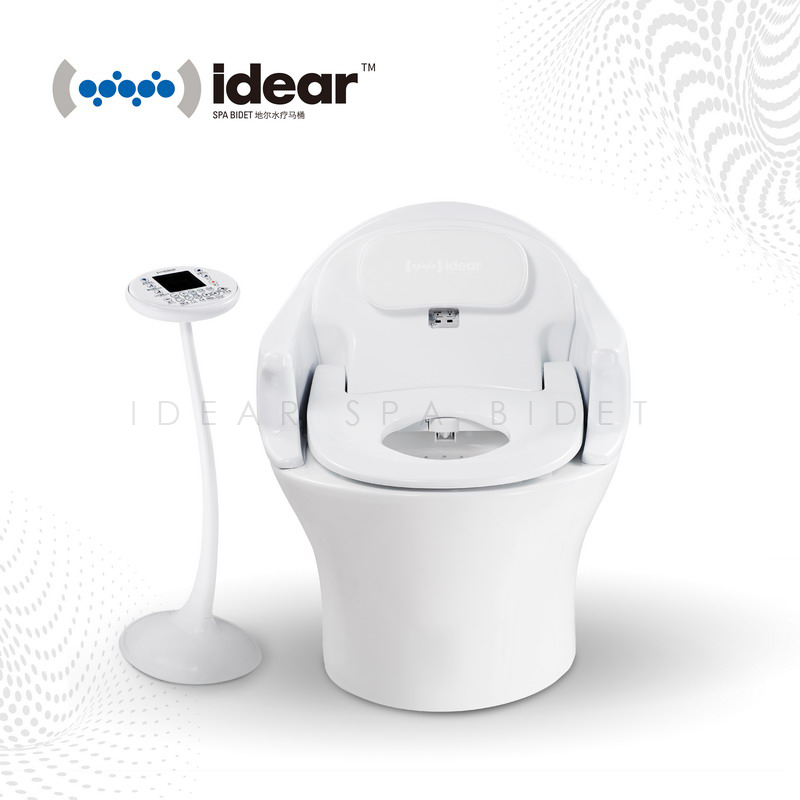
Smart Toilets
Source premium Smart Toilets from vetted suppliers and manufacturers across Asia's top sanitaryware hubs. Designed for importers, wholesalers, and brands seeking reliable OEM and private-label production, this category covers advanced integrated bidet toilets built to rigorous international compliance standards.
Sourcing smart toilets requires bridging two entirely different manufacturing disciplines: heavy sanitaryware ceramics and precision consumer electronics. A failure in either domain—whether a micro-crack in the porcelain or a moisture-compromised motherboard—results in a high-cost return and reputational damage. For volume buyers, success depends on identifying manufacturers who control both the kiln and the cleanroom, or who have bulletproof supply chain integrations between the two.
Core Technical Specifications to Define
When negotiating with a smart toilet manufacturer, generic feature lists are insufficient. You must specify the underlying technology driving the unit's performance, longevity, and market compliance.
Heating Systems: Instantaneous vs. Storage
The water heating mechanism is the primary driver of both user experience and unit cost.
| System Type | Mechanism | Pros | Cons | Cost Impact |
|---|---|---|---|---|
| Instantaneous (Ceramic Heater) | Heats water on demand as it flows | Endless warm water, energy efficient, compact design | Requires higher wattage, sensitive to hard water scaling | Premium ($$) |
| Storage Tank | Keeps a small reservoir of heated water | Lower peak power draw, simpler circuitry | Limited warm water duration, bulkier profile, standby energy loss | Standard ($) |
Flushing Mechanisms and Water Pressure
Tankless smart toilets often rely on the building's dynamic water pressure. If a unit requires a dynamic pressure of 0.15 MPa to operate the siphon jet, it will fail in older residential buildings with low pressure.
Specify Pump-Assisted Models for Low-Pressure Markets
If you are distributing to regions with inconsistent municipal water pressure, specify units with built-in booster pumps or hidden cisterns. Standard tankless models will suffer from incomplete flushes if the dynamic pressure drops below 0.15 MPa.
Glazing and Ceramic Quality
The ceramic base must be fired at temperatures exceeding 1200 degrees Celsius to achieve a water absorption rate of under 0.5 percent (vitreous china). Premium OEM models utilize a "nano-glaze" or micro-crystalline glaze, which creates an ultra-smooth surface that prevents waste adhesion and bacterial growth.
Need to verify a factory's ceramic firing and electronic assembly standards? We can conduct comprehensive audits on your behalf.
Talk to our teamManufacturing Tolerances and Quality Control
The primary point of failure in integrated smart toilets is moisture ingress into the electronic components. The mainboard, sensors, and motorized valves must be housed in IPX4-rated enclosures. Relying on a supplier's word is risky; rigorous Quality Control & Inspection is mandatory.
Critical In-Line & Pre-Shipment Inspections
- Hi-Pot (High Potential) Testing: Verifying electrical insulation to prevent shock hazards.
- Water Seal & Leakage Tests: Pressurizing internal waterways to check for valve or joint leaks.
- Dynamic Flush Testing: Measuring flush volume and clearing capability using standard test media.
- Thermal Cycling: Testing the instant heater's response time and temperature stability.
- Ceramic Acoustic/Dye Testing: Checking for internal micro-cracks in the porcelain body.
Compliance and Certifications
Smart toilets are highly regulated because they connect directly to both the potable water supply and the electrical grid.
- North America: Requires cUPC (plumbing) and UL or ETL (electrical) certifications. Some states also mandate WaterSense certification for flush efficiency (typically 1.28 Gallons Per Flush or lower).
- Europe: CE marking (LVD and EMC directives) for electronics, and EN 997 compliance for the ceramic toilet bowl.
- Australia: WaterMark certification and WELS rating (water efficiency), plus SAA approvals for electronics.
Navigating these requirements during OEM/ODM Services requires a factory that already holds base certifications for their internal components (like the bidet seat or heating module), allowing you to streamline final product certification.
Pricing, MOQs, and Lead Times
The smart toilet supply chain in China is highly localized. Taizhou is the undisputed hub for integrated smart toilets, while Chaozhou dominates traditional ceramics, and Xiamen leads in valves and electronic bidet seats. Understanding these hubs helps explain pricing variations.
Tooling costs for a completely custom ceramic mold and proprietary electronic housing can run into the tens of thousands of dollars. Most private-label buyers opt to customize the electronic features, remote control, and packaging while utilizing the factory's existing ceramic molds.
Looking to consolidate shipments from multiple sanitaryware suppliers or negotiate better OEM terms? Let our sourcing experts manage the process.
Get a free consultationFrequently Asked Questions
Sourcing smart toilets at scale is an exercise in risk management. The intersection of water and electricity demands stringent vetting of a factory's component supply chain, testing protocols, and certification history. Focusing purely on FOB price without verifying IPX4 enclosures and dynamic pressure tolerances will inevitably lead to costly post-installation failures.
Get Sourcing Help for Smart Toilets
Tell us your requirements and our experts will connect you with verified manufacturers.