Seals
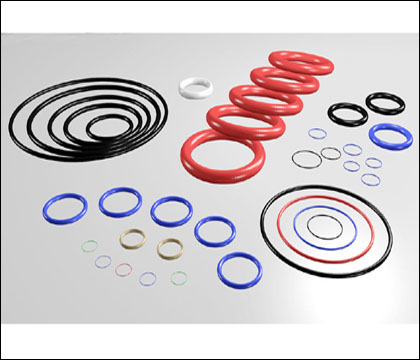
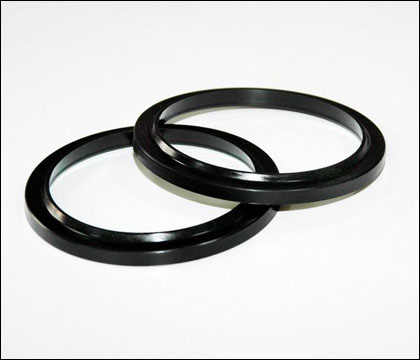
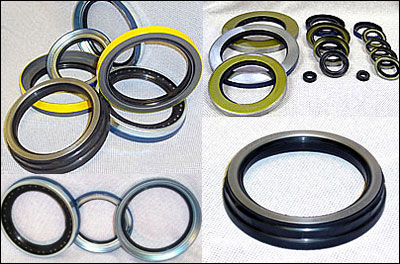
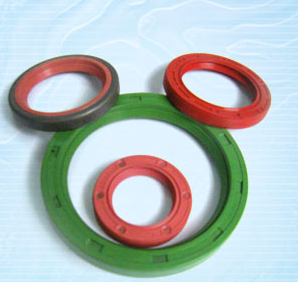
Source high-quality seals from vetted suppliers and manufacturers across Asia. Designed for importers, wholesalers, distributors, and brands seeking reliable OEM production, our network delivers precision hardware components in bulk. Secure competitive pricing and scalable manufacturing for your supply chain.
Sourcing industrial and mechanical seals requires strict adherence to material science and dimensional tolerances. A seal that fails under pressure, extreme temperatures, or chemical exposure compromises the entire hardware assembly. For volume buyers, the challenge lies in finding a manufacturing partner capable of consistent compounding, precise tooling, and rigorous quality control across high-volume production runs.
Critical Specifications and Material Selection
The performance of any seal dictates the lifespan of the equipment it protects. Specifying the correct elastomer or polymer is the first step in successful procurement. Buyers must clearly define the operating environment, including temperature extremes, operating pressures, and chemical exposure, before engaging a factory.
| Material | Typical Temp Range | Primary Strengths | Common Limitations |
|---|---|---|---|
| NBR (Nitrile) | -40°C to 120°C | Excellent oil and fuel resistance | Poor ozone and UV resistance |
| FKM (Fluorocarbon/Viton) | -20°C to 200°C | High heat and chemical resistance | Higher cost, poor low-temp flexibility |
| EPDM | -50°C to 150°C | Outstanding weather, ozone, and steam resistance | Incompatible with petroleum oils |
| Silicone | -60°C to 230°C | Extreme temperature range, food grade | Low tear strength, poor abrasion resistance |
| PTFE | -200°C to 260°C | Near-universal chemical inertness, low friction | Lacks elasticity, requires special hardware design |
Beyond the base material, you must specify the durometer (usually measured in Shore A). Standard seals typically range from 70 to 90 Shore A, but custom compounding can adjust hardness to accommodate specific extrusion gaps or mating surface finishes.
Need help matching elastomer specifications to your application's operating environment and budget?
Talk to our teamManufacturing Processes and Factory Capabilities
Seal manufacturing primarily relies on compression molding, transfer molding, or injection molding. The method a factory uses impacts unit cost, tooling investment, and part consistency.
- Compression Molding: Ideal for large, bulky seals or lower-volume runs. Tooling is relatively inexpensive, but cycle times are longer, and flash (excess material) can be heavier.
- Injection Molding: Best for high-volume, tight-tolerance production. The tooling is more expensive, but the automated process ensures high repeatability and minimal material waste.
A critical area to evaluate when assessing a supplier is their deflashing process. High-quality manufacturers utilize cryogenic deflashing for precise flash removal without damaging the seal's critical sealing lip or cross-section. Relying on manual trimming often leads to inconsistent dimensions and potential leak paths. Conducting comprehensive factory audits is essential to verify a supplier's compounding equipment, mold maintenance protocols, and deflashing capabilities before committing to tooling.
Quality Control and Defect Prevention
In seal production, a dimensional variance of a fraction of a millimeter can result in catastrophic failure. Quality control must be integrated at every step, from raw material batch testing to final visual inspection.
Critical QC Checks for Seal Production
- Dimensional verification using optical comparators (O.D., I.D., and cross-section)
- Parting line flash measurement (typically must be kept under 0.05mm)
- Durometer hardness verification (standard tolerance is usually +/- 5 Shore A)
- Tensile strength and elongation testing on material batches
- Visual inspection for flow marks, non-fills, knit lines, or foreign inclusions
Implementing independent quality control and inspection prior to shipment ensures that the factory's output matches the approved first article. This is particularly crucial for custom OEM profiles where standard off-the-shelf testing jigs may not apply.
Pricing, MOQs, and Lead Times
Seal pricing is highly sensitive to material choice and production volume. Tooling costs (NRE) are usually the first hurdle. A simple single-cavity compression mold for a standard profile might cost a few hundred dollars, while a multi-cavity injection mold for a complex, tight-tolerance part can run into the thousands.
When negotiating piece prices, volume is the strongest lever. Because setup times and material compounding are fixed costs for a batch, factories require higher MOQs for specialized materials like FKM or custom-colored silicones. Managing these negotiations and finding a factory scaled to your specific volume is a core component of effective product sourcing.
Looking to optimize your tooling investments and secure better piece pricing for high-volume seal orders?
Get a free consultationFrequently Asked Questions
Sourcing industrial seals is an exercise in risk management. The upfront cost of a seal is negligible compared to the cost of replacing a failed component in the field. Success requires partnering with manufacturers who prioritize consistent material compounding and strict dimensional controls over absolute lowest-cost production.
Get Sourcing Help for Seals
Tell us your requirements and our experts will connect you with verified manufacturers.