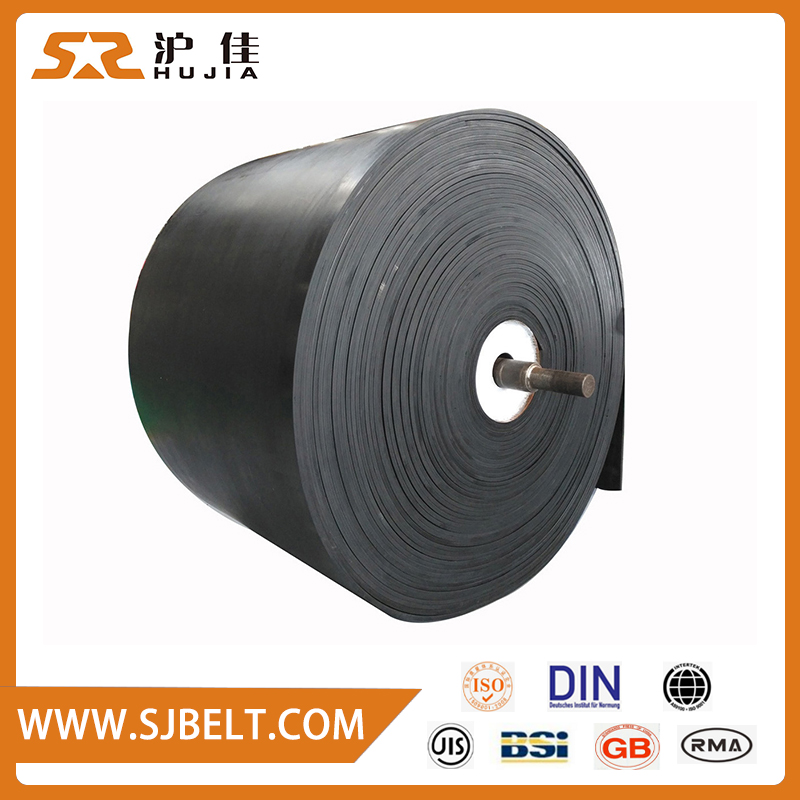
Rubber Belts
Source high-quality Rubber Belts from vetted suppliers and manufacturers across Asia. Designed for industrial importers, wholesale distributors, and brands seeking OEM production, our bulk sourcing solutions ensure consistent performance. Secure competitive wholesale pricing and reliable supply for your power transmission and conveying needs.
Sourcing industrial rubber belts in volume requires precise alignment between compound chemistry, reinforcement materials, and the end-use application. Whether you are procuring standard power transmission belts for wholesale distribution or engineering custom profiles for heavy machinery, selecting the right manufacturing partner is critical. A minor variation in vulcanization or cord tension during production can lead to premature failure, elongation, and costly equipment downtime.
Core Specifications and Material Selection
The performance of a rubber belt is dictated by its base elastomer and the internal tensile cord. Buyers must specify both elements clearly on their purchase orders to ensure the factory does not substitute inferior materials to cut costs.
Elastomer Compounds
The outer rubber provides grip, protects the load-carrying cords, and resists environmental degradation.
| Compound | Primary Characteristics | Typical Applications |
|---|---|---|
| Neoprene (CR) | Excellent balance of oil, heat, and weathering resistance. | General-purpose industrial drives, automotive. |
| EPDM | Superior resistance to ozone, UV, and extreme temperatures. | Outdoor equipment, high-heat environments. |
| Nitrile (NBR) | Maximum resistance to oils, greases, and solvents. | Petrochemical processing, machine tools. |
| Polyurethane (PU) | High abrasion resistance, non-marking, highly flexible. | Food processing, precision timing applications. |
Tensile Reinforcement Cords
The internal cords handle the actual load and prevent the belt from stretching under tension. Standard belts typically utilize polyester cords, which offer a good balance of strength and cost. For high-torque applications, buyers should specify aramid (Kevlar) or fiberglass cords, which provide superior tensile strength and near-zero elongation.
Struggling to find a supplier capable of meeting strict tensile strength and dimensional tolerance requirements?
Talk to our teamManufacturing Process & Quality Control
Rubber belt manufacturing is a multi-step process involving mixing, calendering, building, and vulcanization. The critical phase is vulcanization, where the rubber is cured under heat and pressure. If the factory's curing presses are poorly calibrated, the belt may suffer from uneven hardness or delamination.
To ensure consistent quality across bulk orders, rigorous Quality Control & Inspection is non-negotiable.
Critical In-Line Inspection Points
- Cord Alignment: Ensure tensile cords are perfectly centered; off-center cords cause uneven wear and tracking issues.
- Vulcanization Temperature: Monitor curing times and temperatures to prevent under-cured (soft) or over-cured (brittle) belts.
- Dimensional Tolerance: Verify pitch, top width, and thickness against RMA, DIN, or ISO standards.
- Surface Finish: Check for blisters, porosity, or mold release residue that could affect pulley grip.
Supplier Sourcing and Regional Hubs
In China, the production of industrial rubber belts is heavily concentrated in specific regional hubs. Zhejiang province (particularly Taizhou and Ningbo) is renowned for power transmission and timing belts, offering a dense network of raw material suppliers and specialized tooling workshops. Shandong province is another major hub, often focusing on larger, heavy-duty conveyor belting.
When evaluating potential partners, conducting thorough Factory Audits is essential. You must verify that the supplier has in-house mixing and testing capabilities (such as rheometers and tensile testers) rather than outsourcing the critical compound formulation. If you are developing proprietary belt profiles, ensure the factory has a dedicated engineering team experienced in OEM/ODM Services to handle custom mold creation and prototyping.
MOQs, Lead Times, and Pricing Drivers
Pricing for rubber belts is highly dependent on the raw material index (particularly crude oil prices for synthetic rubbers), the complexity of the mold, and the volume of the run.
Factories will often lower MOQs for standard sizes they run frequently, but custom lengths or specialized compounds (like anti-static or flame-retardant EPDM) will require larger minimum runs to justify the machine setup and purging time.
Need accurate pricing and lead times for a custom belt profile or a large-volume standard order?
Get a free consultationFrequently Asked Questions
Successfully sourcing rubber belts in bulk means looking past the unit price and scrutinizing the factory's compounding expertise and quality management systems. Partnering with a supplier who understands the chemical and mechanical demands of your specific application is the most reliable way to secure long-term product performance.
Get Sourcing Help for Rubber Belts
Tell us your requirements and our experts will connect you with verified manufacturers.