Routers
Source commercial and enterprise-grade routers from vetted suppliers and manufacturers in Asia. Designed for importers, networking equipment distributors, and brands seeking OEM/private-label production in bulk. Secure competitive pricing, reliable hardware, and full regulatory compliance for your target markets.
Sourcing routers in bulk requires navigating a complex supply chain of chipset vendors, PCB assemblers, and firmware developers. Whether you are importing standard consumer Wi-Fi routers or developing a custom enterprise gateway, success hinges on strict component control, thermal management, and rigorous compliance testing. A slight deviation in antenna calibration or a substitute memory chip can severely impact throughput, range, and network stability.
Core Hardware Specifications to Define
When negotiating with router manufacturers, vague specifications lead to component substitution. Factories often quote based on the lowest-tier components unless you specify exact requirements for the PCBA (Printed Circuit Board Assembly).
| Specification | Standard Consumer | Commercial / Enterprise |
|---|---|---|
| Chipset Architecture | MediaTek, Realtek (Cost-effective) | Broadcom, Qualcomm (High throughput, stable) |
| Memory (RAM/Flash) | 128MB RAM / 16MB Flash | 512MB+ RAM / 128MB+ Flash (OpenWRT ready) |
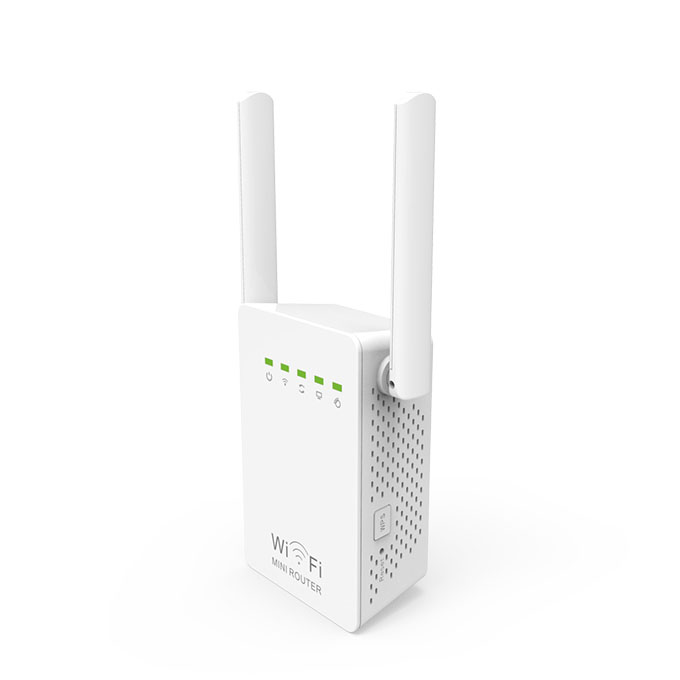
| Antenna Configuration | 2x2 MIMO (Internal or 5dBi external) | 4x4 or 8x8 MU-MIMO (High-gain, beamforming) |
| Port Configuration | 10/100/1000 Gigabit Ethernet | Multi-Gig (2.5G/10G), SFP+, Dual WAN |
Firmware and OS Compatibility
Hardware is only half the equation. If you are ordering OEM/ODM routers, you must define the software layer early. Many Chinese manufacturers use proprietary, closed-source firmware based on older Linux kernels. If your brand requires custom UI/UX, remote management (TR-069), or mesh networking protocols, you must verify if the factory's SDK supports it, or if the hardware is fully compatible with open-source platforms like OpenWRT, DD-WRT, or pfSense.
Navigating chipset allocation and firmware customization is complex. Let our sourcing experts match you with a factory capable of meeting your exact technical requirements.
Talk to our teamManufacturing Processes and Quality Control
Router assembly is heavily reliant on automated SMT (Surface Mount Technology) for the motherboard, followed by manual assembly for the casing, antennas, and heat sinks. Quality is often won or lost in thermal management and RF (Radio Frequency) calibration.
Critical Quality Checkpoints
If you are conducting Factory Audits prior to production, or arranging Quality Control & Inspection before shipment, ensure the following are strictly monitored:
Factory Evaluation & QC Checklist
- SMT Precision: Check for automated optical inspection (AOI) to detect soldering defects on the PCBA.
- Thermal Management: Verify the correct application of thermal paste and precise seating of heatsinks on the SoC and Wi-Fi chips.
- RF Shielding: Ensure RF shielding cans are properly soldered to prevent EMI (Electromagnetic Interference) between 2.4GHz and 5GHz bands.
- Calibration & Testing: Confirm the use of specialized testing equipment (like LitePoint) to calibrate Wi-Fi transmission power and receive sensitivity.
- Aging Tests: Routers should undergo 100 percent burn-in testing in high-temperature chambers (usually 40 to 50 degrees Celsius for 8 to 24 hours) to catch early component failure.
OEM/ODM Customization and Compliance
For brands looking to establish their own product lines, OEM/ODM Services offer varying levels of customization.
- White-Label (OEM): Using an existing factory mold and PCBA. Customization is limited to the outer logo, packaging, and a branded firmware GUI. This requires lower MOQs and faster time-to-market.
- Custom Design (ODM): Developing a custom casing (tooling) and modifying the PCBA layout. This requires significant NRE (Non-Recurring Engineering) costs and longer lead times but results in a proprietary product.
Regulatory Compliance
Routers are intentional radiators of radio frequencies, making strict regulatory compliance non-negotiable. Importing non-compliant devices can result in customs seizures. You must ensure the factory provides valid, verifiable test reports for your target market. Partnering with experts for Compliance & Testing ensures your products meet FCC (USA), CE RED (Europe), RoHS, and local telecommunications standards.
Pricing, MOQs, and Lead Times
Router pricing is highly volatile, driven primarily by global semiconductor supply and the specific chipset chosen.
Chipset Lead Times
While standard MediaTek or Realtek chips may be readily available, specialized Broadcom or Qualcomm enterprise SoCs can occasionally face extended lead times. Always forecast your inventory needs well in advance.
Need accurate pricing and lead times for your next router order? Connect with us to get real-time data from vetted manufacturers.
Get a free consultationFrequently Asked Questions
Successfully importing routers requires technical vigilance from the initial BOM negotiation through to final pre-shipment inspection. By prioritizing component transparency and rigorous RF testing, you can build a reliable supply chain that scales with your network demands.
Get Sourcing Help for Routers
Tell us your requirements and our experts will connect you with verified manufacturers.