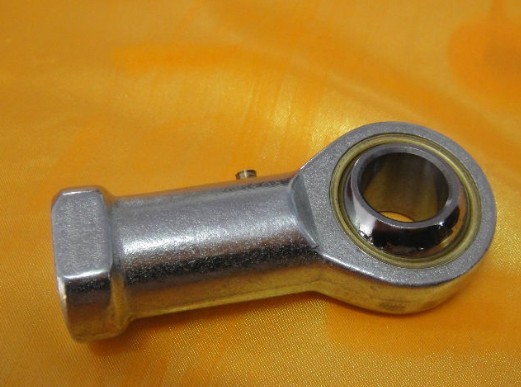
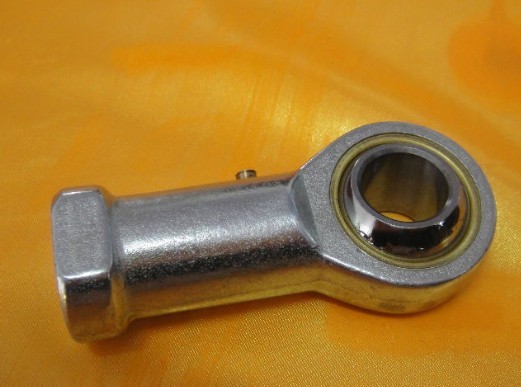
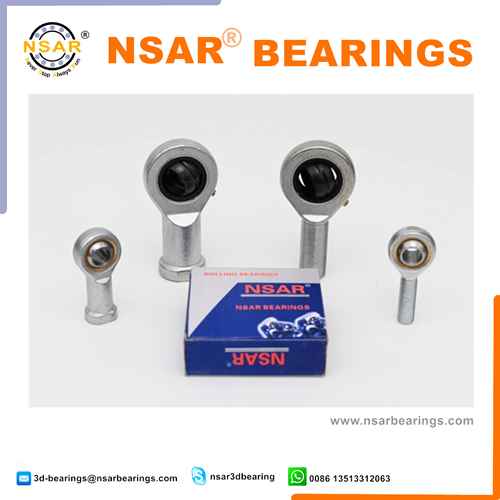
Rod End Bearings
Source premium Rod End Bearings from vetted suppliers and manufacturers across Asia. Designed for importers, industrial wholesalers, and OEM brands buying in volume, our network delivers precision-engineered linkages built to exact load and tolerance specifications.
Sourcing industrial-grade rod end bearings (often referred to as heim joints) requires strict attention to load ratings, thread precision, and race materials. When buying in bulk, the primary challenge is ensuring consistency across production runs. A slight deviation in radial clearance, a poorly swaged race, or an out-of-spec thread pitch can lead to catastrophic linkage failure in the field.
Critical Specifications for Bulk Procurement
Material selection dictates both performance and unit cost. Buyers must clearly specify the housing material (typically low carbon steel, alloy steel, or stainless steel), the ball material (usually 52100 bearing steel, hard chrome plated), and the race construction.
| Race Material | Best Application | Maintenance | Cost Profile |
|---|---|---|---|
| Metal-to-Metal (Steel/Bronze) | High shock loads, heavy industrial equipment | Requires regular lubrication via zerk fitting | Low to Medium |
| PTFE-Lined (Teflon fabric) | High frequency movement, moderate loads | Self-lubricating (Maintenance-free) | High |
| Nylon/Polymer Injection | Light duty, vibration dampening, automotive aftermarket | Self-lubricating | Low |
Beyond materials, thread precision is critical. Ensure your technical packages specify the required thread class—typically 6g/6H for metric sizes or 2A/2B for imperial. Failure to define this upfront often results in loose linkages during final assembly.
Manufacturing Discrepancies and Quality Control
Quality is won or lost on the factory floor during the forging, machining, and swaging processes. Subpar manufacturers frequently cut corners on heat treatment, resulting in housings that fail under stated static load capacities. Another common failure point is the swaging process, where the housing is deformed around the spherical ball; inconsistent pressure here leads to either binding (too tight) or excessive play (too loose).
Pre-Shipment Inspection Focus Areas
- Thread Pitch & Runout: Verify against specified metric or imperial standards using go/no-go gauges.
- Radial and Axial Clearance: Ensure play is within specified micrometers.
- Swaging Integrity: Check the conformity of the housing around the spherical ball.
- Surface Treatment: Verify zinc plating thickness or black oxide coating to prevent premature corrosion.
- Breakaway Torque: Test the rotational resistance of the ball to ensure it meets application requirements.
If you are coordinating multiple suppliers or running large volumes, implementing rigorous quality control before the container is sealed is non-negotiable. Catching a batch of poorly threaded shanks at the factory saves immense rework costs downstream.
Struggling with inconsistent bearing tolerances? Let us handle supplier vetting and on-site quality assurance.
Talk to our teamMOQs, Lead Times, and Pricing Drivers
Standard catalog sizes (e.g., M6 to M20 or 1/4-inch to 1-inch) are heavily commoditized. Pricing for these standard units is largely driven by raw material indices and the chosen surface treatment.
Custom applications requiring non-standard shank lengths, specialized thread pitches, or proprietary coatings will push MOQs higher, often requiring tooling fees for custom forgings. If your brand requires specialized geometry or private labeling, utilizing OEM/ODM services requires clear technical drawings and strict initial sample validation.
Before placing high-volume orders, comprehensive factory audits are highly recommended. You must verify the manufacturer's in-house CNC machining capabilities, heat treatment facilities (or their sub-tier suppliers), and their internal testing equipment for load capacity and fatigue.
Need to negotiate better terms or develop a custom rod end bearing? We manage the entire sourcing process.
Get a free consultationFrequently Asked Questions
Securing Your Supply Chain
Procuring rod end bearings at scale is an exercise in risk management. Success depends on aligning your technical requirements with a factory's specific machining capabilities and ensuring those standards remain strict after the first order. If you need a partner to manage supplier qualification, production oversight, and final delivery, our team provides the technical oversight required for reliable procurement.
Get Sourcing Help for Rod End Bearings
Tell us your requirements and our experts will connect you with verified manufacturers.