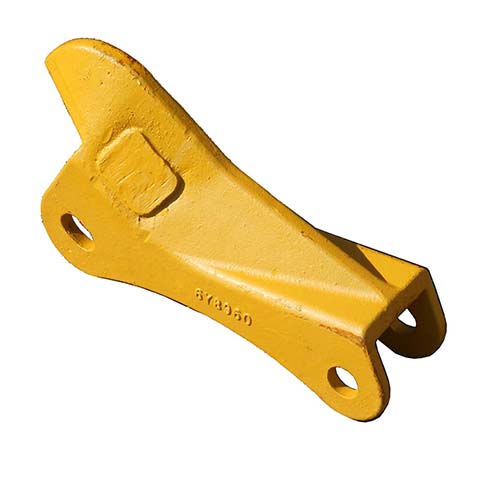
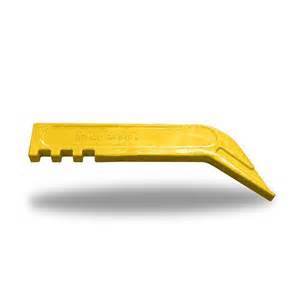
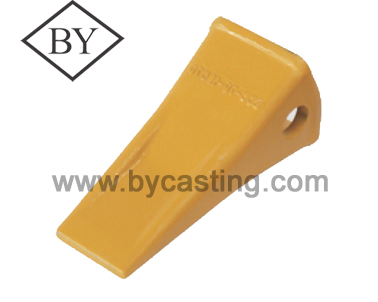
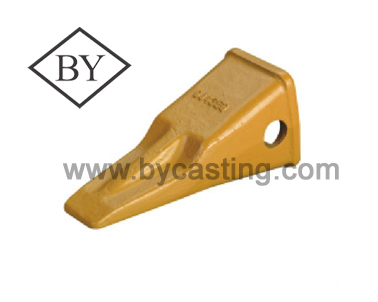
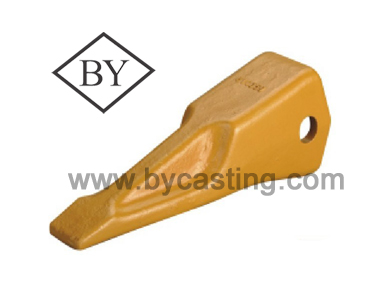
Rippers
Source heavy-duty rippers from vetted suppliers and manufacturers across Asia. Designed for equipment importers, construction machinery distributors, and brands seeking OEM production, our bulk wholesale catalog offers reliable attachments built for extreme excavation environments.
Heavy machinery rippers endure immense torsional and sheer stresses when breaking up frost, rock, and compacted pavement. For importers and procurement teams sourcing excavator and bulldozer attachments in volume, the primary challenge is ensuring structural integrity. A visually flawless ripper is useless if the manufacturer substituted standard carbon steel for high-yield wear-resistant plate, or if poor weld penetration leads to shank failure under load.
Successfully sourcing these attachments requires strict oversight of material selection, machining tolerances, and heavy welding processes at the factory level.
Critical Specifications and Material Selection
The lifespan of a single-shank or multi-shank ripper is dictated entirely by its steel composition and thickness. Manufacturers typically segment their production into standard duty and heavy duty, which fundamentally changes the bill of materials.
| Component | Standard Duty (Soft Soil/Shale) | Heavy Duty (Rock/Frost) |
|---|---|---|
| Main Shank Material | Q345B / Q460 High-strength steel | NM400, NM500, or Hardox 400/500 |
| Tooth & Adapter | Standard cast alloy | Forged high-impact alloy |
| Wear Protection | Minimal (paint only) | Hard-facing, wear shrouds, side protectors |
| Gusseting | Single reinforcing plate | Double gussets with full-penetration welds |
When defining specifications for your supplier, explicitly state the required steel grade for the shank and the mounting bracket (ears). Many lower-tier factories will quote based on Q345B for the entire assembly to win on price. If your clients operate in abrasive rock environments, you must insist on NM400 or equivalent wear-resistant steel for the shank.
Manufacturing Standards and Defect Prevention
Ripper manufacturing involves heavy plate cutting (plasma or laser), beveling, welding, and line-boring. Quality is won or lost in the welding and machining phases.
Because rippers take the full breakout force of the machine, weld failures at the mounting bracket or shank root are catastrophic. Verifying the factory's welding procedures—often through targeted factory audits—is non-negotiable before placing volume orders.
Key QC Checks for Ripper Attachments
- Ultrasonic Testing (UT): Ensure full-penetration welds on the main shank-to-bracket joints are ultrasonically tested for internal voids.
- Bore Hole Tolerances: Pin holes must be line-bored after welding to prevent misalignment caused by heat distortion.
- Material Verification: Request spectrometer reports to verify the chemical composition of the steel plate matches the specified grade.
- Pre-heating: Thick steel plates (over 40mm) must be pre-heated before welding to prevent hydrogen-induced cracking.
Implementing strict quality control protocols during production, rather than just at pre-shipment, allows you to catch dimensional deviations in the mounting ears before the attachment is painted and palletized.
Need boots on the ground to verify steel grades and weld quality at your chosen factory? Let our engineers handle your technical sourcing.
Talk to our teamOEM Customization and Machine Compatibility
If you are a brand or distributor looking for OEM/ODM services, you will need to provide precise dimensional data for the target machinery. Excavator mountings are not universally standardized.
To ensure a perfect fit, your technical drawings must specify:
- Pin Diameter: The exact diameter of the mounting pins (e.g., 80mm, 90mm).
- Ear Spacing (Inside Width): The distance between the mounting brackets, which must accommodate the machine's stick with minimal play.
- Pin Center-to-Center Distance: The distance between the two mounting pins, critical for the bucket cylinder's geometry and breakout force.
Quick Coupler Compatibility
If your customers use quick couplers (hitches), the ripper's pin spacing and ear profile must be specifically designed to clear the coupler's locking mechanism. Always provide the supplier with the specific quick hitch dimensions during the prototyping phase.
Pricing Drivers, MOQs, and Logistics
Ripper pricing is heavily correlated with the global cost of steel and the total weight of the attachment. A ripper for a 20-ton excavator will naturally cost significantly less than a massive shank designed for a 50-ton machine.
Because attachments are dense and heavy, shipping logistics require careful planning. A standard 20-foot container will hit its maximum payload capacity long before it runs out of physical space. Efficient shipping and freight consolidation, combined with custom steel pallets or wooden blocking, is necessary to prevent these heavy items from shifting and damaging the container during transit.
Struggling with high freight costs and inefficient container loading for heavy attachments? We can optimize your supply chain.
Get a free consultationFrequently Asked Questions
Sourcing heavy machinery rippers is ultimately an exercise in risk management. By focusing on material verification, weld integrity, and precise machining tolerances, you can build a reliable supply chain that delivers attachments capable of surviving the harshest job sites.
Get Sourcing Help for Rippers
Tell us your requirements and our experts will connect you with verified manufacturers.