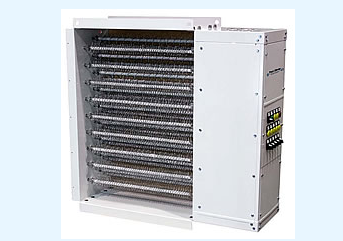
Resistance Boxes
Source precision resistance boxes from vetted manufacturers and wholesale suppliers. Designed for importers, educational distributors, and testing equipment brands seeking reliable OEM and private-label production. Secure competitive bulk pricing on high-accuracy decade boxes built to international calibration standards.
Sourcing decade resistance boxes at scale requires balancing unit cost with long-term calibration stability. For educational distributors, industrial suppliers, and testing equipment brands, the core challenge isn't merely finding a factory—it's verifying that their assembly and testing systems can consistently deliver the specified tolerances across thousands of units without drift.
Defining Critical Specifications for Bulk Orders
When negotiating with manufacturers, vague specifications lead to inconsistent batches. Resistance boxes are fundamentally simple devices, but their reliability depends entirely on the quality of internal components. You must define the exact parameters for the resistor elements and the switching mechanisms.
| Application Grade | Typical Tolerance | Power Rating per Step | Switch Contact Material |
|---|---|---|---|
| Educational / Standard | ±1.0% to ±5.0% | 0.5W to 1W | Standard Brass or Copper |
| Industrial / Lab Precision | ±0.1% or better | 1W to 5W | Silver-Plated or Gold-Flashed |
The temperature coefficient of resistance (TCR) is another vital metric. For precision models, specify a TCR of under 20 ppm/°C. Factories achieve this by using specialized alloys like Manganin or Evanohm for the wire-wound resistors, whereas cheaper standard models may use basic metal film resistors that drift significantly under load.
Manufacturing Variances and Quality Control
The most common failure point in any decade resistance box is the rotary switch mechanism. Over time, poor-quality switch contacts oxidize or wear down, introducing variable contact resistance that ruins the accuracy of the entire unit.
When evaluating a factory's production line, pay close attention to how they handle the switching assembly. High-end manufacturers will use self-cleaning, multi-leaf switch contacts to ensure the zero-resistance state remains negligible (typically under 0.005 ohms).
Critical Factory Verification Points
- Verify the use of low-thermal EMF binding posts to prevent parasitic voltages.
- Check that internal wiring uses heavy-gauge copper to minimize base resistance.
- Review their in-house calibration equipment (e.g., high-precision LCR meters) and its calibration schedule.
- Confirm their burn-in testing procedures for high-power models.
Relying on a factory's self-reported quality is risky. Implementing strict Quality Control & Inspection protocols, particularly pre-shipment inspections that test a randomized sample across all decade dials, is essential to catch switch alignment issues before they leave the facility.
Need reliable boots on the ground to audit factory testing capabilities and verify production quality?
Talk to our teamProduction Lead Times, MOQs, and Pricing Drivers
Pricing for resistance boxes scales directly with the required tolerance, the number of decades (dials), and the power rating.
For standard educational models, factories typically require Minimum Order Quantities (MOQs) between 500 and 1,000 units. Because these use standard components, lead times are relatively short. Precision laboratory models, which require specialized wire-wound resistors and individual manual calibration, often have lower MOQs (100 to 300 units) but significantly longer lead times.
If you are developing a proprietary testing unit, many factories offer OEM/ODM Services to customize the housing (e.g., ruggedized metal casings instead of standard bakelite) and modify the resistance ranges to suit specific industrial applications. Keep in mind that custom tooling for new enclosures will add 20 to 30 days to your initial production schedule.
Planning a custom production run? Let us help you negotiate MOQs and manage the tooling process.
Get a free consultationFrequently Asked Questions
Successfully importing electrical instruments requires looking past the outer casing and rigorously verifying the internal components and factory testing standards. Partnering with experienced professionals for your Product Sourcing ensures you engage with manufacturers who actually understand precision tolerances, protecting your brand's reputation in the market.
Get Sourcing Help for Resistance Boxes
Tell us your requirements and our experts will connect you with verified manufacturers.