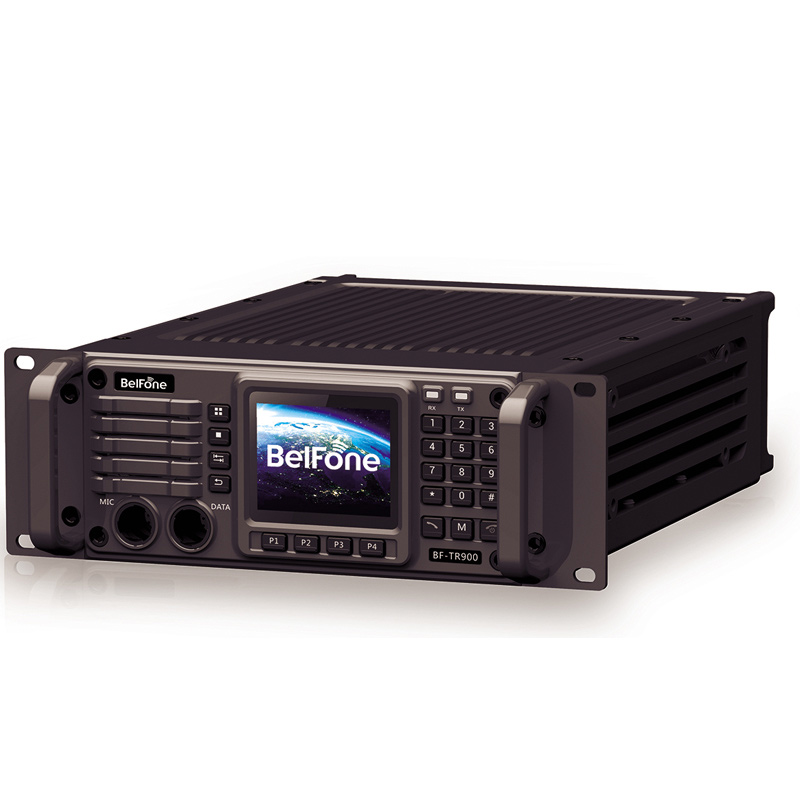
Repeaters
Source high-performance telecommunications repeaters from vetted suppliers and manufacturers. Designed for importers, distributors, and brands seeking reliable OEM/ODM production, our network provides bulk access to cellular, optical, and radio signal boosters built to rigorous international compliance standards.
Sourcing telecommunications repeaters requires navigating strict RF engineering tolerances and rigid global regulatory frameworks. Whether you are scaling distribution for commercial cellular boosters, optical repeaters, or developing custom two-way radio relays, securing a manufacturer with genuine RF expertise is the difference between a high-performing product and costly network interference issues.
Defining Core Repeater Specifications
When communicating with manufacturers, precision in your RF specifications prevents fundamental design flaws. Consumer-grade and industrial-grade repeaters utilize entirely different component architectures, particularly concerning heat dissipation and signal isolation.
| Specification | Consumer/SOHO Grade | Commercial/Industrial Grade |
|---|---|---|
| Typical System Gain | 60dB to 70dB | 75dB to 85dB+ |
| Max Output Power | 10dBm to 15dBm | 20dBm to 37dBm+ |
| Noise Figure | Under 6dB | Under 4dB |
| Enclosure / Rating | Plastic / IP40 | Die-cast Aluminum / IP65+ |
Critical Metrics to Define
- Frequency Bands: Specify the exact uplink and downlink frequencies (e.g., Band 1, Band 3, Band 20). Multi-band repeaters require complex filtering to prevent intermodulation distortion.
- Automatic Gain Control (AGC) & Auto Level Control (ALC): These are non-negotiable for modern cellular repeaters. They protect carrier base stations by automatically reducing gain when the input signal is too strong.
- Voltage Standing Wave Ratio (VSWR): Ensure the factory guarantees a VSWR of under 2.0 across all operating bands to minimize signal reflection and power loss.
Manufacturing Capabilities and RF Testing
The physical assembly of a repeater is straightforward surface-mount technology (SMT) work; the true manufacturing challenge lies in RF tuning, isolation, and testing. Poor internal shielding leads to self-oscillation (feedback loops), which effectively turns the repeater into a jammer.
Evaluating a factory's testing infrastructure is critical. If a supplier lacks high-end spectrum analyzers and vector network analyzers (VNAs) on the production floor, they cannot guarantee consistent RF performance.
Factory Evaluation Checklist for RF Devices
- Verify the presence of Agilent, Rohde & Schwarz, or equivalent VNAs and spectrum analyzers.
- Check for dedicated RF shielding rooms (Faraday cages) used during final QA.
- Assess internal PCB shielding—look for CNC-milled aluminum housings isolating the RF chains.
- Review thermal management designs for units exceeding 20dBm output power.
- Confirm the factory's process for calibrating ALC/AGC thresholds per unit.
Struggling to verify the technical capabilities of potential RF manufacturers? We conduct thorough on-site evaluations to ensure your suppliers have the engineering depth required for reliable production.
Talk to our teamTo mitigate risks before shipment, implementing rigorous Quality Control & Inspection protocols is essential. Testing should include sweep tests across the entire frequency band to verify gain flatness and output power consistency.
Regulatory Compliance and Certification
Telecommunications equipment is heavily regulated. Repeaters actively transmit RF signals, making them subject to stringent compliance frameworks. Importing non-compliant repeaters can result in customs seizures, heavy fines, and carrier network blacklisting.
- FCC (United States): Cellular repeaters must comply with FCC Part 20 (Network Protection Standards). Industrial repeaters may fall under Part 90.
- CE RED (Europe): The Radio Equipment Directive mandates compliance for health, safety, electromagnetic compatibility (EMC), and efficient use of the radio spectrum.
- ISED (Canada): Requires IC certification, often closely mirroring FCC standards but with distinct administrative requirements.
Do not rely on a supplier's generic "CE/FCC" badges. You must verify the test reports match the specific model and components you are purchasing. Utilizing professional Compliance & Testing services ensures your products meet the exact legal requirements of your target market. Furthermore, comprehensive Factory Audits can verify that the supplier maintains the quality management systems necessary to produce compliant devices consistently.
Production Economics: MOQs, Pricing, and Lead Times
Pricing for repeaters scales dramatically with the number of supported frequency bands, output power, and the quality of the RF filters used.
When planning your procurement, factor in the lead times for specialized RF components like duplexers and SAW filters, which can occasionally experience supply chain bottlenecks. If you are developing a proprietary solution, leveraging OEM/ODM Services allows you to customize the firmware, housing, and specific band configurations to match regional carrier requirements perfectly.
Ready to scale your repeater product line? Our team negotiates pricing, manages production schedules, and ensures strict quality adherence directly with top-tier Asian manufacturers.
Get a free consultationFrequently Asked Questions
Successfully sourcing repeaters requires moving beyond basic specifications to scrutinize a manufacturer's internal testing infrastructure and compliance rigor. Partnering with a sourcing team that understands RF manufacturing ensures your products perform reliably in the field and clear customs without delay.
Get Sourcing Help for Repeaters
Tell us your requirements and our experts will connect you with verified manufacturers.