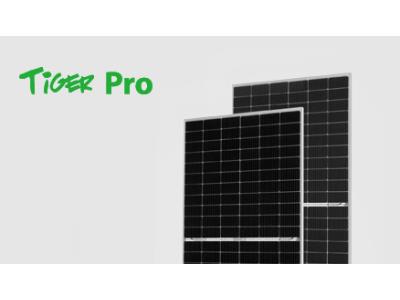
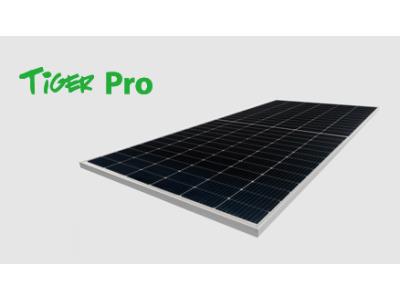
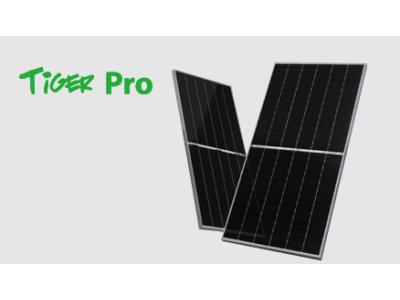
Renewable Energy Power Generation
Source reliable Renewable Energy Power Generation equipment from vetted suppliers and manufacturers across Asia. Designed for importers, wholesale distributors, and brands requiring high-volume OEM production, our network delivers scalable power systems built to strict international compliance standards.
Sourcing renewable energy power generation equipment at scale requires strict control over the Bill of Materials (BOM) and rigorous performance validation. Whether you are procuring utility-scale solar arrays, commercial wind turbines, or integrated hybrid power systems, the gap between a supplier's datasheet and actual field performance can be significant. Success in this category depends on locking down component origins, verifying true conversion efficiencies, and ensuring long-term environmental durability.
Critical Specifications for Power Generation Equipment
When negotiating with manufacturers, vague specifications lead to component substitution. Professional buyers must define exact electrical and mechanical parameters to ensure compatibility and yield.
- Rated Power & Conversion Efficiency: Specify the exact testing conditions (e.g., Standard Test Conditions for solar: 1000W/m², 25°C). Ensure the manufacturer guarantees a maximum degradation rate (e.g., under 0.55% annually after the first year).
- Operating Voltage & Current: Define the maximum system voltage (typically 1000V or 1500V DC) and short-circuit current to ensure compatibility with downstream inverters and balance-of-system (BOS) components.
- Environmental Protection: For outdoor generation equipment, specify IP65, IP67, or IP68 ratings for junction boxes and connectors. Mechanical load capacities (e.g., 5400 Pa for snow, 2400 Pa for wind) must be certified, not just claimed.
| Component Tier | Typical Application | BOM Characteristics | Expected Lifecycle |
|---|---|---|---|
| Tier 1 / Premium | Utility & Commercial | Traceable cells, premium encapsulate (POE), brand-name IGBTs | 25 to 30 years |
| Tier 2 / Standard | Residential & Light Commercial | Standard EVA encapsulate, mixed-origin silicon/magnets | 15 to 20 years |
| Off-Brand / Budget | Temporary or Low-Yield | Grade B/C components, minimal weather sealing | Under 10 years |
Manufacturing Quality and BOM Control
The reliability of renewable energy equipment is won or lost on the factory floor. In solar and wind manufacturing, visual defects are often secondary to hidden micro-cracks, poor soldering, or substandard encapsulation that leads to Potential Induced Degradation (PID).
If you are developing proprietary systems, utilizing professional OEM/ODM Services ensures your specific engineering requirements are integrated directly into the factory's SOPs.
Struggling with inconsistent component quality across batches? Let us audit your supply chain and lock down your BOM.
Talk to our teamEssential Factory Verifications
Before committing to high-volume production, verify the supplier's manufacturing environment:
- Automated Assembly: High-quality generation equipment requires automated stringing, soldering, and winding to prevent human error and contamination.
- In-Line Testing: Ensure the factory uses Electroluminescence (EL) imaging to detect micro-cracks before and after lamination.
- Flash Testing Calibration: Verify that the factory's sun simulators or load banks are calibrated by certified third parties to prevent inflated power ratings.
Implementing robust Quality Control & Inspection protocols, including pre-shipment EL testing and random flash testing, is non-negotiable for preserving your investment.
Compliance and Certification Requirements
Renewable energy equipment is heavily regulated. Importing non-compliant hardware can result in customs seizures or grid-connection rejections.
Core Compliance Standards to Verify
- IEC 61215 / IEC 61730: Core design and safety qualifications for photovoltaic modules.
- UL 1741 / IEEE 1547: Safety and grid-tie standards for inverters and converters.
- CE / RoHS: Mandatory for the European market, covering electromagnetic compatibility and hazardous substances.
- ISO 9001 / ISO 14001: Ensures the manufacturer has standardized quality and environmental management systems.
Certifications must be verified directly with the issuing body, as forged documents are common. If you are targeting new markets, engaging Compliance & Testing services ensures your products meet local regulatory and safety standards before shipment.
MOQs, Pricing, and Lead Times
Pricing in the renewable energy sector is highly volatile, driven by raw material costs (polysilicon, copper, rare earth metals) and global shipping capacities. Factories typically quote based on total wattage (price per watt) rather than per unit.
Volume buyers must also factor in the financial stability of the manufacturer. A 25-year warranty is useless if the factory closes in three years. Conducting comprehensive Factory Audits helps assess the financial health and true production capacity of your manufacturing partners.
Need to scale your renewable energy procurement? We manage factory negotiations, QC, and logistics for high-volume buyers.
Get a free consultationSecuring reliable renewable energy equipment requires moving beyond datasheet comparisons and actively managing the manufacturing process. By enforcing strict BOM controls, demanding rigorous testing protocols, and verifying factory capabilities, you can build a resilient supply chain that delivers consistent, high-yield power generation products.
Get Sourcing Help for Renewable Energy Power Generation
Tell us your requirements and our experts will connect you with verified manufacturers.