Reflow Ovens
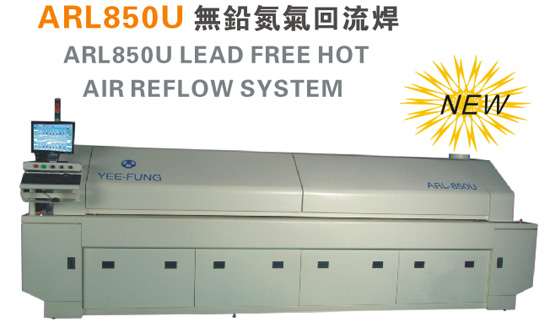
Source industrial-grade reflow ovens directly from vetted manufacturers and suppliers. Designed for electronics manufacturing service (EMS) providers, equipment distributors, and OEM brands, our wholesale sourcing connects you with reliable factories for high-volume SMT assembly.
Surface-mount technology (SMT) assembly relies on precise, repeatable thermal profiling. When sourcing reflow ovens for high-volume PCB production lines, the primary challenge is identifying equipment that delivers a tight delta-T across complex, high-mass boards without excessive nitrogen consumption or power draw. Sourcing industrial machinery overseas requires rigorous technical vetting to ensure the equipment meets strict thermal and mechanical tolerances.
Defining Reflow Oven Specifications
Selecting the right oven architecture depends entirely on the buyer's throughput requirements and board complexity. Specifying the wrong zone count or conveyor type leads to bottlenecked production lines or thermal damage to sensitive components.
| Specification | Mid-Volume Production | High-Volume / Complex SMT |
|---|---|---|
| Heating Zones | 6 to 8 zones | 10 to 14+ zones |
| Cooling Zones | 1 to 2 zones | 3 to 4+ zones (chilled water option) |
| Conveyor System | Mesh belt or single rail | Dual-lane edge hold with center support |
| Atmosphere | Air | Nitrogen (N2) capable (under 500ppm O2) |
Thermal Management and Blower Design
The core of any reflow oven is its forced convection system. High-quality ovens utilize independent variable frequency drive (VFD) blower motors for each top and bottom zone. This allows process engineers to fine-tune gas velocity, transferring heat efficiently to high-mass components like BGAs without blowing smaller passive components off their pads. When evaluating a manufacturer, request detailed schematics of their heater matrix and blower motor sourcing.
Need help verifying the technical capabilities of a prospective equipment manufacturer?
Talk to our teamWhere Quality is Won and Lost on the Factory Floor
Not all sheet metal and insulation are created equal. The difference between a tier-one oven and a budget alternative often lies in unseen construction details that impact total cost of ownership (TCO) and process stability.
- Insulation Integrity: Cheap fiberglass insulation settles over time, leading to thermal leaks, increased power consumption, and warped exterior chassis. Premium manufacturers use multi-layer calcium silicate or high-density ceramic wool.
- Conveyor Stability: At peak reflow temperatures, chain rails can warp if not machined from high-grade, heat-treated alloys. Warped rails cause board drops or vibrations that shift components during the liquidus phase.
- Flux Management Systems: High-volume ovens require robust flux extraction to prevent buildup inside the cooling zones. Poorly designed collection jars or inadequate filtration will force frequent, costly maintenance downtime.
Because these details are difficult to verify from a spec sheet, conducting comprehensive Factory Audits is essential before placing an order. You must confirm the factory has the CNC machining capabilities and quality management systems required to build precision industrial equipment.
Quality Control and Pre-Shipment Verification
Never allow a reflow oven to ship without rigorous factory acceptance testing (FAT). Once a machine weighing several tons arrives at your facility, rectifying manufacturing defects is prohibitively expensive.
Critical Pre-Shipment Inspection Points
- Verify PID controller accuracy using an independent thermal profiler (e.g., KIC or Datapaq).
- Measure delta-T across a heavy copper test board to ensure it stays within specified tolerances.
- Inspect conveyor rail parallelism and center support auto-adjustment mechanisms.
- Test flux management system airflow and filter accessibility.
- Confirm electrical panel wiring meets destination country standards (UL/CE) with proper grounding.
Executing this level of Quality Control & Inspection requires engineers on the ground who understand SMT processes and can interpret thermal profile data correctly.
Sourcing Mechanics: Pricing, MOQs, and Lead Times
Reflow ovens are capital equipment, built to order based on specific line requirements. While distributors may buy standard configurations in small batches, most EMS providers order specific setups tailored to their exact floor space and power availability.
Logistics and Freight Considerations
Shipping industrial ovens requires specialized logistics. Due to their length (often exceeding 4 to 6 meters), larger 10+ zone ovens require dedicated 40ft containers or flat rack shipping. Proper export crating, vacuum-sealed moisture barrier bags, and shock-watch indicators are mandatory. Coordinating Shipping & Freight for heavy machinery involves managing complex customs classifications and ensuring rigging teams are prepared at the destination port.
Planning a new SMT line? We can coordinate the sourcing, inspection, and heavy freight for your equipment.
Get a free consultationFrequently Asked Questions
Sourcing reflow ovens effectively requires looking past the initial purchase price and evaluating the machine's thermal stability, power efficiency, and long-term reliability. A well-vetted manufacturing partner ensures your SMT line operates with maximum uptime and minimal defect rates.
Get Sourcing Help for Reflow Ovens
Tell us your requirements and our experts will connect you with verified manufacturers.