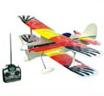
RC Airplanes
Source wholesale RC Airplanes from vetted Chinese manufacturers and suppliers. Designed for importers, distributors, and hobby brands seeking reliable OEM and private-label production, our catalog covers everything from durable EPP trainers to high-performance brushless models. Ensure consistent quality, strict RF compliance, and competitive bulk pricing.
Sourcing RC airplanes at scale requires navigating a fragmented supply chain. Unlike static toys, an RC aircraft relies on the precise integration of lightweight airframes, high-draw electronics, and reliable radio frequency (RF) components. Balancing aerodynamic tolerances with factory-floor assembly efficiency is the core challenge when importing these products in volume.
Whether you are procuring ready-to-fly (RTF) trainers for the beginner market or plug-and-play (PNP) airframes for hobbyists, securing a stable manufacturing partner ensures consistent center-of-gravity (CG) accuracy, reliable electronics, and compliant battery shipments.
Airframe Materials and Manufacturing Tolerances
The foundation of any modern RC airplane is its foam or wood composite structure. Most production today relies on injected foam, but the specific polymer dictates the product's market positioning, durability, and tooling costs.
| Material | Durability | Finish Quality | Typical Application |
|---|---|---|---|
| EPP (Expanded Polypropylene) | Extremely high; memory-retaining | Textured, porous | Trainers, 3D aerobatic models, combat wings |
| EPO (Expanded Polyolefin) | High; resists denting | Smooth, excellent for decals | Scale warbirds, EDF jets, sport flyers |
| EPS (Expanded Polystyrene) | Low; brittle and easily crushed | Very smooth, ultra-light | Micro indoor flyers, low-cost gliders |
| Balsa / Light Plywood | Moderate; shatters on hard impact | Film-covered, premium | Large-scale hobbyist models, gas-powered |
When working with foam molding factories, the density of the bead injection is a critical specification. Too dense, and the aircraft exceeds its target wing loading, resulting in poor flight characteristics. Too light, and the airframe lacks structural rigidity, often requiring excessive carbon fiber sparring which drives up unit costs.
Struggling to find a factory capable of precision EPO molding and reliable electronics integration? Let us identify and vet the right manufacturing partner for your specific project.
Talk to our sourcing teamElectronics Integration and Configuration Standards
The configuration you choose dictates your supply chain complexity. Supplying KITs (airframe only) involves simple foam and hardware packing. However, scaling up to PNP (Plug-N-Play) or RTF (Ready-to-Fly) introduces complex electronics sourcing.
Most airframe factories do not manufacture their own electronics; they assemble components sourced from sub-suppliers. Managing this tier-two supply chain is where many importers face quality fade.
- Motors and ESCs: Hobby-grade models require brushless outrunner motors paired with dedicated Electronic Speed Controllers (ESCs). Ensure your factory specifies the continuous amperage rating of the ESC (e.g., 30A, 40A) and that it includes thermal overload protection.
- Servos: Standardizing on reliable 9g or 17g servos is vital. Stripped plastic gears are a leading cause of returns. For high-performance models, specify metal-gear digital servos.
- Transmitters and Receivers: RTF models include radio gear. Toy-grade models often use integrated receiver/ESC boards with proprietary 2.4GHz protocols. Hobby-grade RTF models should use standard 4-channel or 6-channel PWM/SBUS receivers.
If you are developing custom models or private-labeling existing designs, utilizing professional OEM/ODM services ensures that the integration of these third-party electronics matches your performance specifications without bottlenecking the assembly line.
Quality Control and Compliance Checklists
Defects in RC airplanes are rarely cosmetic; they usually result in catastrophic crashes on the first flight. Pre-shipment inspections must go beyond visual checks to verify functional integrity.
Critical QC Checks for RC Airplanes
- Center of Gravity (CG): Verify the factory-marked CG aligns with the actual balance point when the specified battery is installed.
- Control Surface Hinge Integrity: Check foam hinges for over-compression or tearing, and verify CA (cyanoacrylate) hinges are securely glued.
- Thrust Angle: Ensure the motor mount possesses the correct built-in right and down thrust angles to counteract torque.
- Electronics Bench Test: Power on the ESC and cycle all servos under load to identify jittering or dead bands.
- Decal Adhesion: Verify water-slide decals or stickers are applied without bubbling, particularly on EPP surfaces.
Implementing robust quality control and inspection at the factory level prevents misaligned control surfaces and faulty electronics from reaching your warehouse.
Regulatory Compliance
RC airplanes are heavily regulated due to their RF emissions and high-density power sources.
- RF Transmitters: Must comply with FCC Part 15 (USA) or CE RED (Europe).
- Batteries: Lithium Polymer (LiPo) batteries require UN38.3 certification for air and sea freight.
- General Safety: If marketed to users under 14 years old, the product must pass stringent toy safety standards (ASTM F963 in the US, EN71 in Europe).
Navigating these requirements is non-negotiable. Engaging compliance and testing services early in the sourcing process prevents costly customs seizures and liability issues.
Typical MOQs, Pricing, and Lead Times
Volume buyers must align their procurement schedules with realistic factory capabilities. Tooling new foam molds is expensive, so many buyers start by private-labeling existing factory designs (changing liveries, upgrading electronics) before committing to fully custom airframes.
Pricing is highly volatile based on the electronics package and battery inclusion. A bare EPO airframe might cost a fraction of the final RTF unit. Furthermore, shipping RC airplanes involves moving a lot of "air" due to the large, lightweight boxes. Efficient packaging design (e.g., detachable wings) is critical to maximizing container utilization.
Need to optimize your landed costs? We help buyers negotiate volume pricing, manage sub-supplier electronics sourcing, and streamline container loading for bulky RC products.
Get a free consultationFrequently Asked Questions
Sourcing RC airplanes requires a precise balance of aerodynamic engineering, reliable electronics procurement, and strict quality enforcement. By partnering with experienced sourcing professionals who understand the nuances of foam molding and RF compliance, you can build a resilient supply chain that delivers high-performance models your customers can trust.
Get Sourcing Help for RC Airplanes
Tell us your requirements and our experts will connect you with verified manufacturers.