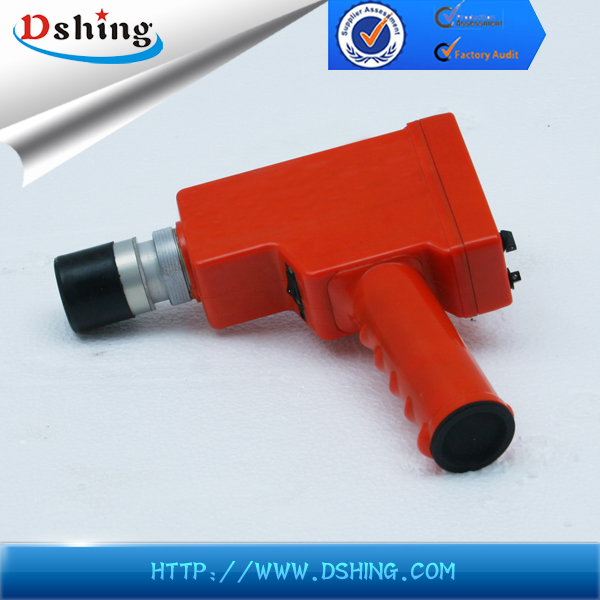
Radiation Detectors
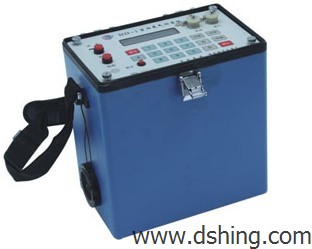
Source professional-grade radiation detectors in bulk directly from vetted manufacturers and suppliers. Designed for importers, distributors, and brands seeking OEM or private-label production, our network delivers reliable environmental testing instruments built to exact compliance standards.
Sourcing radiation detectors requires navigating a complex supply chain where sensor accuracy, calibration reliability, and build quality are non-negotiable. Whether you are procuring handheld dosimeters for industrial safety or environmental monitoring stations, the core challenge remains the same: ensuring the manufacturer actually utilizes high-grade sensor components and maintains strict calibration protocols on the assembly line, rather than just assembling off-the-shelf parts with generic firmware.
Core Specifications and Sensor Technologies
The heart of any radiation detector is its sensor. When specifying requirements to an OEM, you must align the sensor technology with your target market's sensitivity and energy response needs.
| Sensor Type | Primary Application | Sensitivity & Cost |
|---|---|---|
| Geiger-Müller (GM) Tube | General environmental, personal dosimetry | Moderate sensitivity, highly cost-effective |
| Scintillation Detectors | Low-level environmental, scrap metal screening | High sensitivity, higher cost |
| Solid-State (Semiconductor) | Spectroscopy, precise energy measurement | Extreme precision, premium pricing |
Beyond the sensor type, buyers must specify the exact measurement ranges (typically in µSv/h or mSv/h) and the energy response range (e.g., 48 keV to 1.5 MeV). Pay close attention to the energy compensation of GM tubes; uncompensated tubes will over-respond to low-energy gamma rays, leading to false high readings.
Struggling to verify a supplier's sensor supply chain? We can audit their component sourcing and assembly capabilities.
Talk to our teamManufacturing Tolerances and Quality Control
In the production of radiation detection equipment, the difference between a professional instrument and a novelty device lies in the factory's calibration and testing infrastructure. Many lower-tier assemblers lack the specialized radiation sources required to perform multi-point calibration.
When evaluating a manufacturer, their quality control processes must include documented calibration against known isotopes (like Cs-137 or Co-60). This is where conducting thorough Factory Audits becomes critical. You need to verify that the factory possesses a dedicated, shielded calibration room and that their reference standards are traceable to national laboratories.
Critical Factory QC Checks
- Multi-point calibration verification using traceable isotope sources.
- Electromagnetic interference (EMI) testing to ensure the high-voltage PCB does not register false counts.
- Environmental chamber testing for temperature and humidity stability (crucial for outdoor units).
- Drop and vibration testing to ensure fragile GM tubes or scintillator crystals remain intact.
During production, implementing rigorous Quality Control & Inspection before shipment ensures that a random sampling of your order meets the exact sensitivity and accuracy thresholds defined in your purchase agreement.
Compliance and Market Standards
Radiation detectors are safety-critical devices, meaning regulatory compliance is strict. Depending on your target market, the devices may need to meet specific IEC standards (such as IEC 60846 for dose equivalent rate meters). Furthermore, the electronics must pass standard FCC and CE certifications for electromagnetic compatibility. Navigating these requirements often requires third-party Compliance & Testing to ensure the factory's claims hold up under independent laboratory scrutiny.
Buying Mechanics: MOQs, Pricing, and Lead Times
Sourcing these devices in bulk involves balancing component availability with production schedules. High-quality GM tubes and specialized microcontrollers often have volatile lead times.
If you are leveraging OEM/ODM Services to develop a proprietary detector, factor in additional time for PCB layout, firmware development, and custom mold creation. Pricing is heavily dictated by the sensor origin; European or American-made GM tubes will significantly increase the unit cost compared to domestic Chinese tubes, though they often provide superior longevity and consistency.
Need to negotiate better terms or manage a complex OEM project? Let our sourcing experts handle the heavy lifting.
Get a free consultationFrequently Asked Questions
Sourcing reliable radiation detectors requires looking past the outer casing and rigorously verifying the factory's internal calibration capabilities and component supply chain. By insisting on strict QC protocols and traceable sensor origins, you can secure high-performance instruments that protect your brand's reputation in a demanding market.
Get Sourcing Help for Radiation Detectors
Tell us your requirements and our experts will connect you with verified manufacturers.