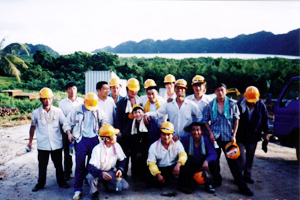
Project Cooperation
Source reliable project cooperation partners and manufacturers for complex B2B manufacturing, co-development, and turnkey solutions. Designed for procurement managers, brands, and large-scale importers seeking dedicated factory partnerships, joint ventures, and custom OEM production lines in Asia.
Engaging in complex manufacturing projects requires moving beyond transactional purchase orders into strategic project cooperation. Whether you are establishing a dedicated production line, co-developing a proprietary hardware system, or executing a turnkey manufacturing agreement, the success of the initiative hinges on rigorous partner vetting, clear intellectual property (IP) boundaries, and aligned engineering capabilities.
Structuring the Partnership: IP and Capital Expenditure
In strategic project cooperation, the boundaries of ownership must be established before any technical drawings are shared. A standard Non-Disclosure Agreement (NDA) is rarely sufficient when dealing with overseas manufacturers. Instead, a robust NNN agreement (Non-Disclosure, Non-Use, Non-Circumvention) drafted for the specific jurisdiction is the baseline.
Beyond IP, the allocation of Non-Recurring Engineering (NRE) costs and tooling ownership dictates the balance of power in the relationship. If the factory subsidizes the tooling, they will likely claim ownership of the molds and restrict your ability to move production. Paying for tooling upfront ensures portability and leverages better unit pricing.
Critical Contractual Elements for Joint Projects
- Jurisdiction-specific NNN (Non-Disclosure, Non-Use, Non-Circumvention) agreements
- Explicit tooling and mold ownership clauses, including extraction rights
- Detailed Bill of Materials (BOM) transparency and approved vendor lists (AVL) for sub-tier suppliers
- Clearly defined quality acceptance criteria (AQL levels) and defect liability
- Exit clauses detailing the transfer of technical files and physical assets
Structuring a long-term manufacturing partnership requires precision. Our team can help you align contracts, tooling ownership, and IP protection.
Discuss your projectAssessing Engineering and Operational Fit
Evaluating a partner for a multi-year project requires a different lens than vetting a supplier for off-the-shelf goods. You are assessing their engineering depth, financial stability, and capacity to scale.
Relying on self-reported capabilities or standard Alibaba profiles introduces unacceptable risk. Comprehensive factory audits are mandatory. Auditors must evaluate the facility's Quality Management System (e.g., ISO 9001, IATF 16949 for automotive), their in-house tooling capabilities, and the ratio of R&D engineers to production staff. A high engineering headcount indicates a facility capable of actual co-development rather than just build-to-print assembly.
The Co-Development Validation Cycle
When collaborating on a net-new product or a significant redesign, the project must pass through rigid validation gates to minimize defect rates at mass production. Effective product development with an overseas partner follows a strict EVT, DVT, and PVT framework.
Engineering Validation Testing (EVT)
Focuses on the core functionality of the design. Looks-like and works-like prototypes are created to ensure the fundamental engineering concepts are sound. Tooling is usually temporary or soft.
Design Validation Testing (DVT)
The product is manufactured using the intended mass-production materials and processes. Yields are low, but the output is subjected to rigorous environmental, regulatory, and drop testing.
Production Validation Testing (PVT)
A pilot run on the actual assembly line. This phase validates the manufacturing process, assembly times, and quality control procedures before scaling up.
Commercial Realities: Timelines, MOQs, and Pricing
Project cooperation is capital-intensive and requires a long-term view of return on investment. Lead times for joint ventures or complex turnkey setups are measured in months, not weeks.
Pricing structures in these agreements often involve amortizing initial setup costs over the first few production runs. Minimum Order Quantities (MOQs) are highly variable but are typically structured around the breakeven point of the raw material minimums and line-setup times.
| Project Phase | Capital Requirement | Typical Duration | Primary Deliverable |
|---|---|---|---|
| Concept & NRE | High (Tooling, R&D) | 2 to 4 months | Golden Sample & Tooling |
| Pilot Run (PVT) | Medium (Materials) | 1 to 2 months | Validated Assembly Line |
| Mass Production | Unit Cost (Volume) | Ongoing | Consistent Yield |
To maintain margins and ensure consistent delivery across the lifecycle of the project, robust supply chain management is required to coordinate the flow of raw materials, manage sub-tier suppliers, and optimize freight schedules.
Navigating NRE costs, tooling amortization, and multi-stage production schedules is complex. Let us help you structure a sustainable commercial agreement.
Speak to a sourcing expertFrequently Asked Questions
Executing a large-scale manufacturing project requires technical fluency, boots on the ground, and relentless oversight. By structuring your contracts correctly and enforcing strict validation gates, you can turn a capable factory into a true extension of your own operations.
Get Sourcing Help for Project Cooperation
Tell us your requirements and our experts will connect you with verified manufacturers.