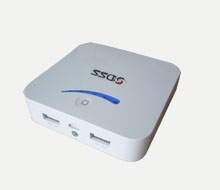
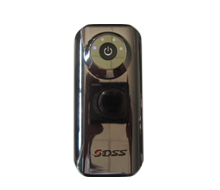
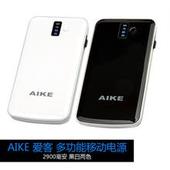
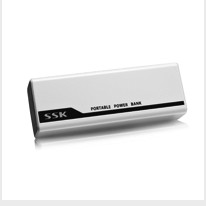
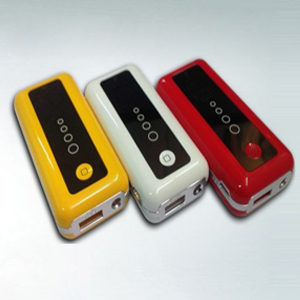
Power Banks & Power Stations
Source premium Power Banks & Power Stations from vetted suppliers and manufacturers. Designed for electronics importers, regional distributors, and consumer brands seeking reliable OEM/ODM production. We connect high-volume buyers with top-tier factories, ensuring strict quality control, certified safety standards, and competitive bulk pricing.
Sourcing portable power requires navigating a minefield of exaggerated capacities, substandard lithium cells, and stringent international shipping regulations. Whether you are procuring compact everyday carry power banks or high-capacity outdoor power stations, long-term commercial success depends on validating cell chemistry, Battery Management System (BMS) reliability, and factory compliance long before mass production begins.
Core Specifications & Cell Chemistry
The foundation of any power bank or power station is its cell chemistry and form factor. Buyers must specify the exact cell grade (Grade A vs. Grade B) and chemistry, as this dictates the product's lifespan, safety profile, and weight.
For standard power banks, factories typically utilize Lithium Polymer (Li-Po) pouch cells for slim form factors, or cylindrical Lithium-Ion cells (18650 or 21700) for high-capacity bricks. For larger power stations, Lithium Iron Phosphate (LiFePO4) has become the industry standard due to its superior thermal stability and cycle life.
| Chemistry / Form Factor | Typical Cycle Life | Primary Application | Key Advantage |
|---|---|---|---|
| Li-Po (Pouch) | 300 - 500 cycles | Slim Power Banks | Customizable shapes, lightweight |
| Li-Ion (18650/21700) | 500 - 800 cycles | High-Capacity Banks | High energy density, cost-effective |
| LiFePO4 (Prismatic/Cylindrical) | 2000 - 3500+ cycles | Power Stations | Exceptional thermal safety, longevity |
When defining specifications with a factory, always differentiate between nominal capacity (the total capacity of the internal cells, typically at 3.7V) and actual output capacity (what is delivered to the device at 5V or higher). A standard conversion efficiency is 85 to 90 percent; anything claiming near 100 percent efficiency is a red flag.
Manufacturing & Quality Control
The physical assembly of battery packs requires precision. Poor spot welding can lead to high internal resistance, while inadequate thermal management can cause catastrophic failure under heavy load. A critical component is the Battery Management System (BMS). The BMS must actively monitor voltage, current, and temperature, providing safeguards against overcharge, over-discharge, and short circuits.
The Grade B Cell Risk
Many low-cost suppliers achieve aggressive pricing by using recycled or Grade B cells. These cells exhibit higher internal resistance and rapid capacity degradation. Always specify 100 percent new Grade A cells in your manufacturing agreement.
Before committing to a supplier, verifying their production environment is essential. Look for automated cell sorting machines, climate-controlled storage, and dedicated aging rooms where completed packs are cycled before packaging. Conducting comprehensive Factory Audits ensures the facility has the technical capability and quality management systems (like ISO 9001) necessary for safe battery production.
Ensure your next battery shipment meets strict safety and performance standards with vetted factory partners.
Talk to our teamCompliance, Safety, & Testing
Lithium batteries are classified as Class 9 Dangerous Goods. Navigating the regulatory landscape is mandatory, not optional. Customs authorities and freight forwarders will reject shipments lacking proper documentation.
If you are importing into North America or Europe, your products must pass rigorous third-party testing. Leveraging professional Compliance & Testing services helps prevent costly border seizures or retail rejections.
Mandatory Battery Certifications & Reports
- UN38.3 & MSDS: Absolutely mandatory for any air or sea freight transport.
- UL 2056 / UL 2743: Critical safety standards for power banks and power stations in the US market.
- CE & RoHS: Required for the European Economic Area, covering electromagnetic compatibility and hazardous substances.
- FCC: Required for the US market to ensure acceptable levels of electromagnetic interference.
Pricing, MOQs, and Production Lead Times
Pricing in the battery sector is highly volatile, directly tied to the global commodities market for lithium, cobalt, and copper. When negotiating, understand that the battery cells account for 50 to 70 percent of the total Bill of Materials (BOM) cost.
Minimum Order Quantities (MOQs) vary significantly based on the level of customization. Off-the-shelf white-label designs require lower commitments, while full custom tooling requires higher volume to justify the setup costs. If you are developing a proprietary design, utilizing structured OEM/ODM Services ensures your intellectual property is protected while navigating the tooling phase.
Optimize your procurement strategy and negotiate better terms with verified battery manufacturers.
Get a free consultationFrequently Asked Questions
Executing a successful bulk order of power banks or power stations requires constant vigilance. The difference between a profitable product line and a costly recall usually comes down to what happens on the factory floor. Implementing rigorous Quality Control & Inspection prior to shipment is the only way to verify that the components you paid for are the ones actually inside the casing.
Get Sourcing Help for Power Banks & Power Stations
Tell us your requirements and our experts will connect you with verified manufacturers.