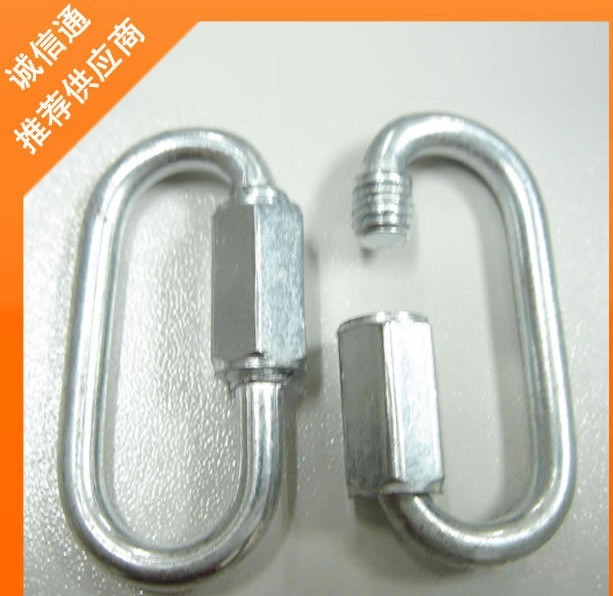
Pins
Source high-quality industrial pins in bulk from vetted manufacturers and suppliers across Asia. Built for importers, hardware distributors, and OEMs, our network delivers precision-engineered fasteners at scale. Whether you need custom OEM production or standard wholesale volumes, secure reliable pricing and consistent metallurgical quality.
Sourcing industrial pins in high volumes requires strict attention to metallurgical integrity and dimensional tolerances. Whether you are procuring dowel pins for precise mechanical alignment, spring pins for automated assembly lines, or heavy-duty clevis pins for agricultural machinery, inconsistent shear strength or poor finishing can derail an entire production run. Successful procurement relies on identifying factories with robust in-house heat treatment and rigorous dimensional quality control.
Critical Specifications for Industrial Pins
When negotiating with fastener manufacturers, vague specifications lead to unacceptable defect rates. Pins often serve as the primary shear-load bearing component or precise alignment tool in an assembly, making dimensional and material clarity non-negotiable.
You must define the exact tolerance band required. For precision dowel pins, specifying an m6 or h8 tolerance class (often requiring tolerances as tight as plus or minus 0.005mm) dictates the manufacturing method and heavily influences the unit cost.
| Material | Common Grades | Primary Application | Key Sourcing Consideration |
|---|---|---|---|
| Carbon Steel | 1022, 1045 | General fastening, clevis pins | Requires surface treatment for corrosion resistance |
| Alloy Steel | 4140, 4340 | High shear load applications | Must specify exact HRC hardness requirements |
| Stainless Steel | 304, 316, 420 | Marine, food-grade, medical | Verify passivation processes to prevent surface rust |
| Brass / Copper | C26000, C36000 | Electrical, low-friction pivots | Check for lead content compliance in regulated markets |
Need reliable manufacturers for precision fasteners? We vet suppliers to ensure your strict tolerance and metallurgical requirements are met.
Talk to our teamManufacturing Nuances: Where Quality is Won or Lost
The production of pins generally falls into two categories: cold heading for high-volume standard fasteners, and CNC machining (Swiss-style turning) for low-volume, highly complex, or extremely tight-tolerance custom pins.
The most critical phase for high-strength pins is heat treatment. Improper quenching or tempering leads to brittle pins that shatter under shear stress, or soft pins that deform. Furthermore, if the pins are electroplated (such as zinc plating for corrosion resistance), the factory must perform a baking process immediately after plating to prevent hydrogen embrittlement—a common cause of sudden, catastrophic failure in high-tensile fasteners.
Factory Floor Quality Verification
- Verify in-house heat treatment capabilities or audit their third-party metallurgical partner.
- Confirm the presence of optical sorting machines for high-volume zero-defect requirements.
- Check baking logs for electroplated high-tensile pins to ensure hydrogen embrittlement mitigation.
- Review destructive testing records (double shear testing) against your specified load ratings.
Relying on a factory's self-reported data is risky for critical fasteners. Implementing rigorous Quality Control & Inspection prior to shipment—including dimensional checks with micrometers, hardness testing, and salt-spray testing for finishes—is essential to protect your supply chain. Before committing to a large production run, conducting thorough Factory Audits ensures the supplier actually possesses the sorting and testing equipment they claim to have.
Buying Mechanics: MOQs, Lead Times, and Pricing Drivers
Because pins are relatively small, low-cost items, pricing is heavily driven by raw material costs, production speed, and economies of scale.
For standard, cold-headed pins, Minimum Order Quantities (MOQs) are typically calculated by weight (e.g., 500kg to 1,000kg per size) rather than piece count, which can translate to 50,000 to over 200,000 pieces depending on the pin's dimensions. Custom CNC-machined pins have much lower MOQs but carry a significantly higher unit cost due to the slower production cycle.
Tooling costs for custom cold-headed pins are generally low—often under a few hundred dollars—and manufacturers will frequently waive this fee for orders exceeding a certain volume threshold.
Streamline your fastener supply chain with consolidated shipping, verified quality control, and negotiated factory-direct pricing.
Get a free consultationFrequently Asked Questions
Securing a reliable supply of industrial pins means looking past unit cost and evaluating a manufacturer's metallurgical competence and quality assurance infrastructure. Taking a systematic approach to supplier vetting and production oversight ensures your assembly lines keep moving without costly fastener failures.
Get Sourcing Help for Pins
Tell us your requirements and our experts will connect you with verified manufacturers.