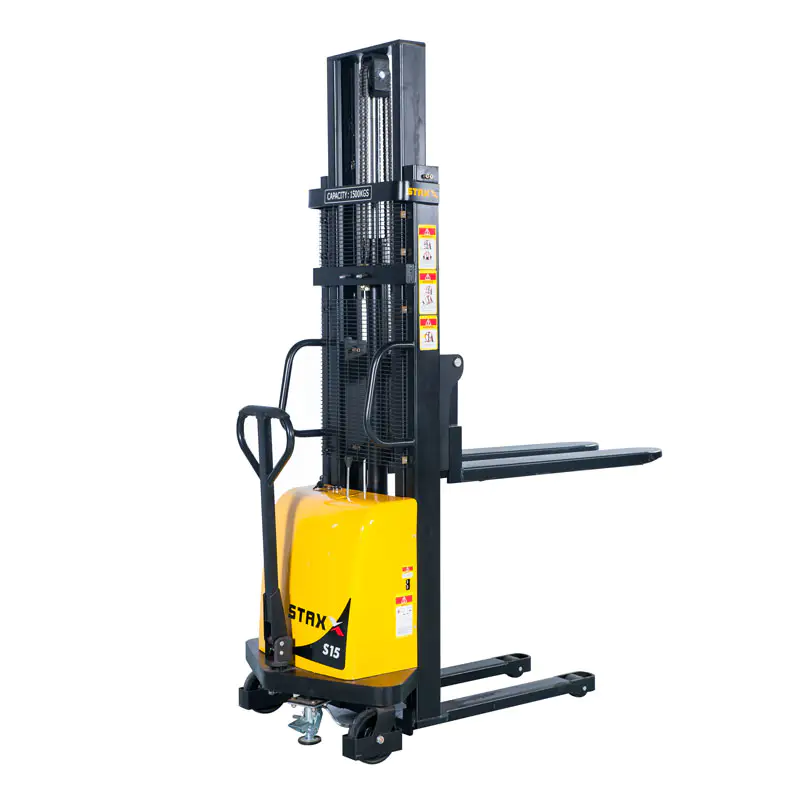
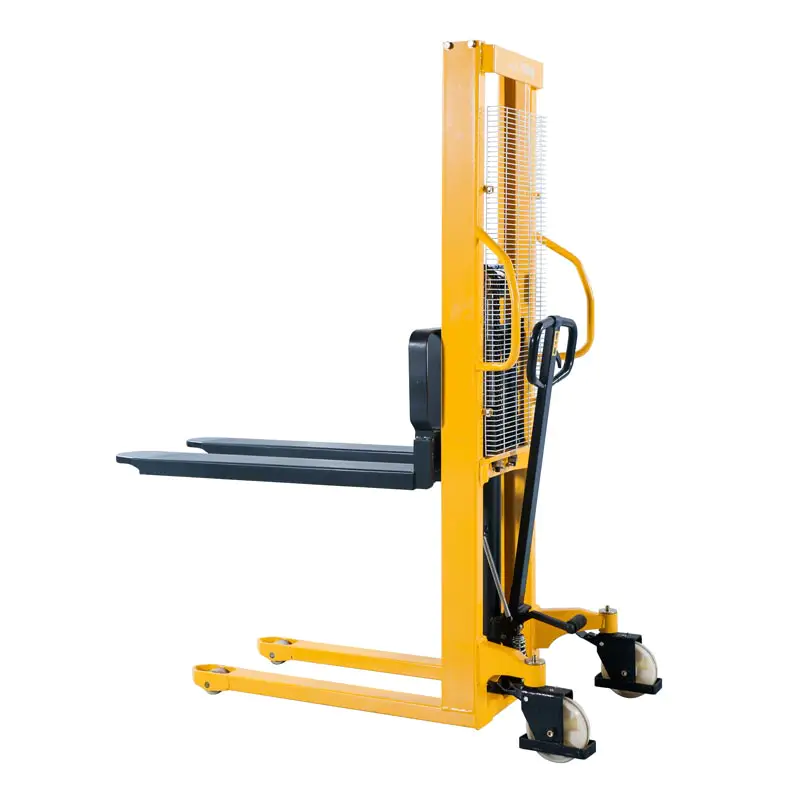
Piler, Stacker Trucks
Source premium piler and stacker trucks from vetted manufacturers and suppliers in China. Designed for importers, wholesalers, and material handling distributors, our wholesale network offers reliable manual, semi-electric, and fully electric stackers for bulk procurement and OEM production.
Sourcing industrial stackers requires navigating a fragmented supply base where outward appearance often masks substandard hydraulics, inferior mast steel, or outdated battery management systems. For volume importers and distributors, the challenge is identifying manufacturers capable of delivering consistent load stability and duty-cycle endurance without inflating costs through unnecessary over-engineering.
Core Specifications for OEM and Wholesale Orders
When negotiating with stacker truck factories, precision in your specification sheet dictates the lifespan of the equipment. Suppliers will default to standard domestic-market components unless you explicitly require export-grade alternatives.
| Component | Standard Specification | Premium / Heavy-Duty |
|---|---|---|
| Mast Material | Standard rolled steel | German Krupp C-channel or I-beam steel |
| Battery Technology | Lead-acid (requires maintenance) | Li-ion with integrated BMS (zero maintenance) |
| Electronic Controller | Domestic brand (e.g., Inmotion) | Curtis (USA) or Zapi (Italy) |
| Hydraulic Pump | Standard domestic pump | Bucher (Switzerland) or HPI |
Mast Deflection and Load Capacity
The most critical safety metric is the residual load capacity at maximum lift height. A 1.5-ton stacker cannot lift 1.5 tons to its maximum height of 4.5 meters; the capacity derates as the forks rise. Specify the exact derating curve you require. Insist on high-tensile steel for the mast to minimize deflection under heavy loads at maximum extension.
Need help verifying a supplier's engineering capabilities? We audit material handling factories to ensure their production matches your technical requirements.
Talk to our teamManufacturing Tolerances and Quality Control
The manufacturing hubs for material handling equipment in China are heavily concentrated in Zhejiang (Ningbo, Hangzhou) and Anhui provinces. While the supply chain is mature, quality control during assembly is where tier-one manufacturers separate themselves from tier-three assemblers.
Critical Factory Inspection Points
- Hydraulic Sealing: Verify that the factory tests cylinders under maximum static load for at least 24 hours to check for micro-leaks.
- Welding Standards: Ensure robotic welding is used on the chassis and mast; manual welding on load-bearing joints often leads to fatigue failure.
- Wiring Harnesses: Check that all electrical routing is shielded against pinch points in the mast mechanism.
- Brake Testing: Electromagnetic brakes must be tested on a standardized incline (typically 5 percent to 10 percent) fully loaded.
Relying solely on a factory's internal testing is a risk. Implementing independent Quality Control & Inspection prior to container loading ensures that lifting speeds, lowering valves, and safety overrides function exactly as specified. Furthermore, comprehensive Factory Audits can reveal whether a supplier actually machines their own chassis or merely assembles purchased parts.
Buying Mechanics: MOQ, Pricing, and Lead Times
Because stackers are high-value industrial vehicles, the procurement dynamics differ significantly from smaller consumer goods.
Pricing is highly sensitive to the cost of raw steel and the origin of the core components (batteries and controllers). Fully electric stackers with lithium-ion batteries and Curtis controllers will carry a premium, but they drastically reduce total cost of ownership for the end-user.
Because stackers are heavy and bulky, optimizing container space is vital. Many buyers opt to ship units with the forks or masts detached to maximize container yield. Coordinating this requires precise Shipping & Freight planning to ensure safe unloading and reassembly at the destination.
Looking to optimize your container loads and land your equipment safely? Let us manage the logistics and quality assurance for your next machinery order.
Get a free consultationFrequently Asked Questions
Securing reliable piler and stacker trucks requires looking past the spec sheet to validate the structural integrity and component origin of the machinery. By strictly controlling the bill of materials and enforcing rigorous pre-shipment load testing, importers can build a resilient, high-margin equipment catalog.
Get Sourcing Help for Piler, Stacker Trucks
Tell us your requirements and our experts will connect you with verified manufacturers.