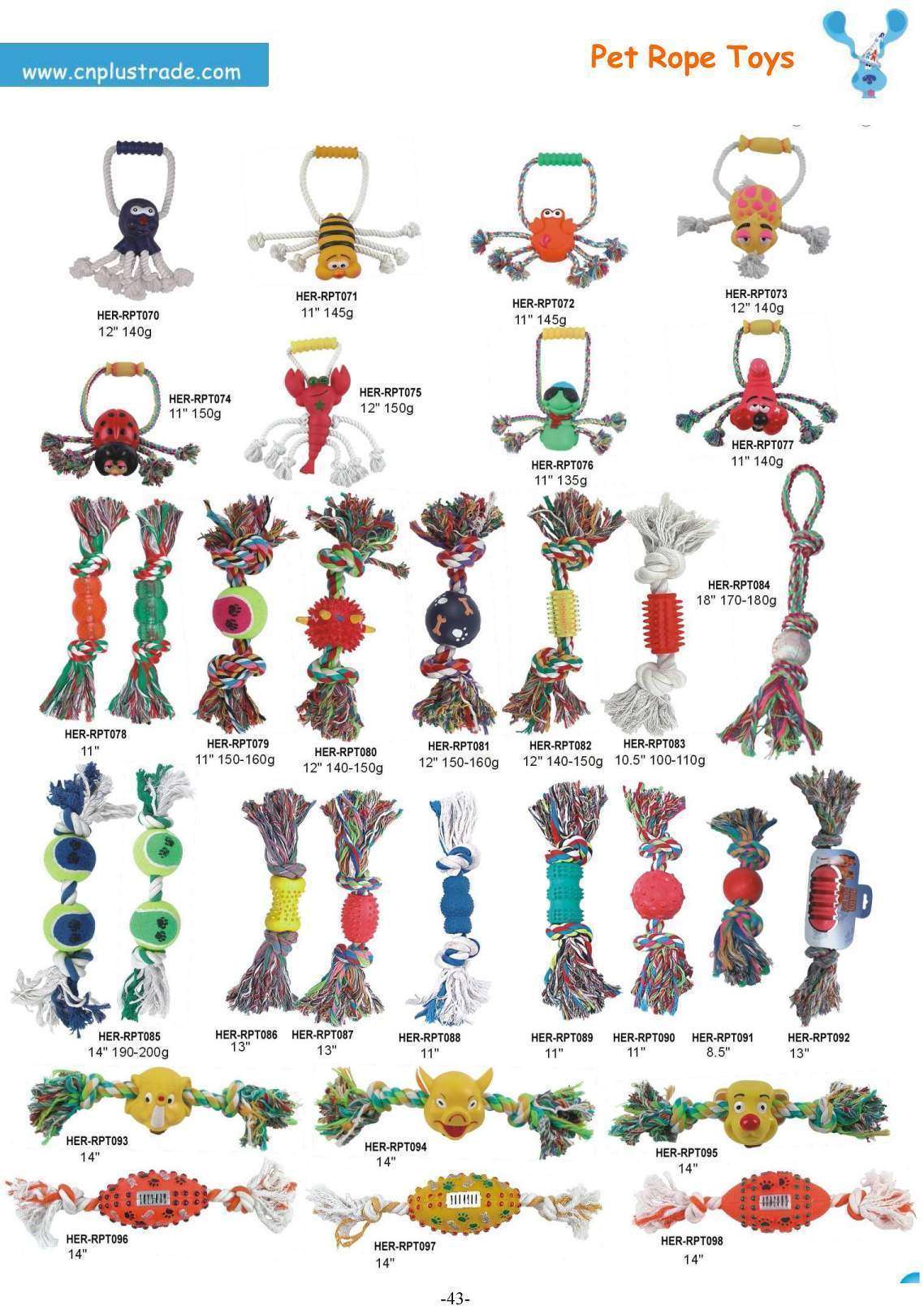
Pet Chew Toys
Source high-quality pet chew toys directly from vetted manufacturers and suppliers. Designed for importers, distributors, and pet brands seeking reliable bulk purchasing and OEM/private-label production. Ensure durability, safety compliance, and competitive pricing for your volume orders.
Sourcing pet chew toys at scale requires balancing aggressive durability requirements with strict non-toxicity standards. For brands and wholesalers, the difference between a successful, high-margin product line and a costly recall usually comes down to precise material selection, mold engineering, and rigorous factory-level oversight.
Material Specifications and Manufacturing
The core of any chew toy is its polymer composition. Manufacturers primarily utilize injection molding or vulcanization, depending on the base material. Specifying the correct material dictates not only the product's lifespan and safety but also your tooling costs and unit economics.
| Material | Bite Resistance | Tooling Cost | Ideal Application |
|---|---|---|---|
| TPR / TPE | Moderate | Low to Medium | Puppies, dental chews, moderate chewers |
| Natural Rubber | High | Medium | Aggressive chewers, treat-dispensing toys |
| Nylon (PA66) | Extreme | High | Power chewers, bone alternatives |
| Wood-Polymer Composite | High | Medium | Natural-feel sticks and bones |
When working with factories, you must specify the exact durometer (hardness) of the material. For TPR and natural rubber, this is measured on the Shore A scale (typically 50A to 80A for pet toys). For rigid nylon toys, the Shore D scale is used. Failing to specify the durometer often results in a product that is either too brittle, risking tooth fractures, or too soft, posing an immediate choking hazard.
Need help matching polymer specifications to your target retail price point? Let's discuss your product requirements.
Talk to our teamQuality Control and Safety Compliance
Pet chew toys are subjected to intense mechanical stress and prolonged contact with saliva. Consequently, chemical safety and physical integrity are paramount. Since pet toys lack a unified global regulatory framework, professional buyers typically default to child safety standards (such as EN71 in Europe or ASTM F963 in the US) or FDA guidelines for food-contact materials.
A robust Quality Control & Inspection protocol must be implemented at the factory level to catch defects before shipping.
Critical Factory QC Checks for Chew Toys
- Parting Line Inspection: Ensuring zero 'flash' (excess sharp plastic at the mold seam) that could cut gums.
- Tensile & Tear Testing: Verifying the toy can withstand specified pull-forces without fragmenting.
- Toxicity & Heavy Metals: Confirming raw materials pass REACH, RoHS, or EN71-3 testing protocols.
- Colorfastness: Checking that dyes do not leach when exposed to simulated saliva and friction.
- Squeaker Housing (if applicable): Ensuring internal noisemakers are securely embedded and cannot be dislodged.
To guarantee these standards are met, independent Compliance & Testing for phthalates, BPA, and lead should be conducted on production samples, not just the factory's golden sample.
OEM/ODM Customization and Tooling
Most brands sourcing chew toys in volume opt for OEM (custom designs) or ODM (private labeling existing factory molds). Customization goes beyond shape; it includes infusing scents (like beef or peanut butter) or integrating multiple materials (such as a hard nylon core with a softer TPR exterior).
Developing custom molds requires upfront investment. Steel molds, while more expensive than aluminum, are strictly necessary for high-volume injection molding of abrasive materials like glass-filled nylon. Partnering with a manufacturer capable of in-house 3D prototyping and mold flow analysis will significantly reduce your time to market. Engaging specialized OEM/ODM Services ensures your design files translate accurately into production-ready tooling.
Typical MOQs, Pricing, and Lead Times
Volume pricing for chew toys is highly dependent on the raw material market (especially for natural rubber) and the complexity of the mold (e.g., single-cavity vs. multi-cavity molds).
Keep in mind that dual-injection toys (two colors or two different materials molded together) will push both your MOQs and unit costs toward the higher end of the spectrum due to the specialized machinery required.
Evaluating factory quotes or struggling with high tooling costs? We can help you audit suppliers and negotiate better terms.
Get a free consultationFrequently Asked Questions
Sourcing chew toys that satisfy both aggressive chewers and strict safety requirements takes technical diligence. By controlling the polymer specs, auditing the mold quality, and enforcing strict pre-shipment inspections, buyers can build a highly profitable and safe product catalog.
Get Sourcing Help for Pet Chew Toys
Tell us your requirements and our experts will connect you with verified manufacturers.