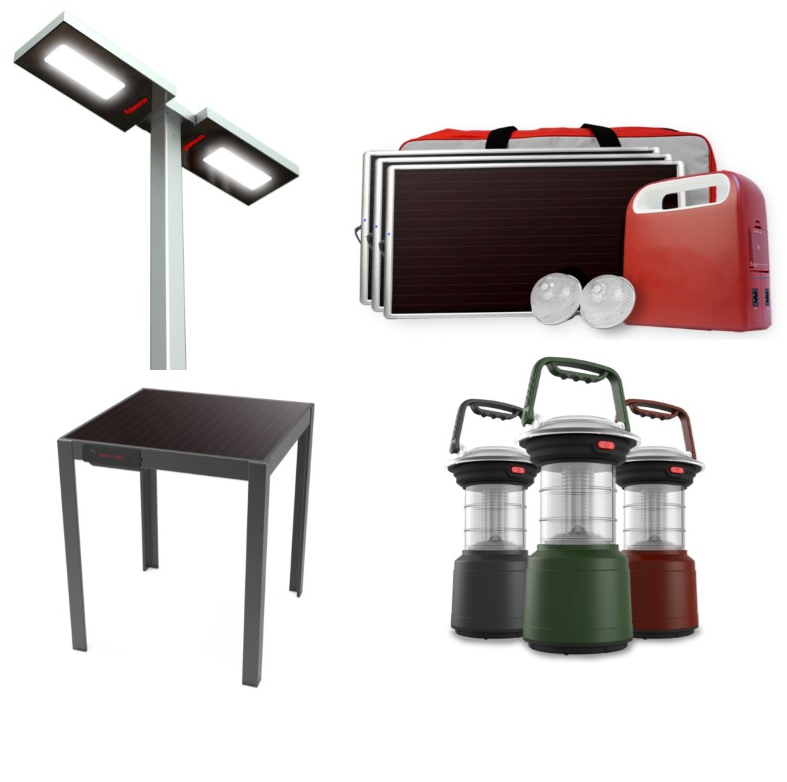
Other Solar Related Products
Source Other Solar Related Products from vetted manufacturers and suppliers. Designed for importers, wholesalers, and brands seeking OEM/ODM production, this category covers specialized solar applications and accessories. Find reliable factory partners for bulk orders with comprehensive quality and compliance support.
Sourcing niche and miscellaneous solar products—ranging from solar-powered consumer gadgets and outdoor utility devices to specialized industrial accessories—presents a unique supply chain challenge. The difficulty rarely lies in the solar technology itself, but rather in the integration. A supplier must competently marry photovoltaic components with disparate manufacturing disciplines, whether that involves injection-molded plastics for outdoor hardware, textiles for solar-integrated bags, or small-scale motors for ventilation systems.
Component Selection and Integration
When evaluating factories for specialized solar applications, the focus must be on how they balance the solar module, the energy storage, and the primary application. Many suppliers in this category operate essentially as assemblers, purchasing off-the-shelf solar panels and batteries to fit into their existing product molds.
To ensure long-term reliability, buyers must specify the exact materials used in the solar sub-assembly.
| Component | Standard Market Quality | Premium / OEM Quality |
|---|---|---|
| Solar Cell Encapsulation | Epoxy resin (prone to yellowing/hazing) | PET or ETFE lamination (high UV resistance) |
| Battery Chemistry | NiMH or standard Li-ion (shorter lifespan) | LiFePO4 (high cycle life, thermal stability) |
| Charge Controller | Basic diode protection | Dedicated IC with overcharge/discharge protection |
The encapsulation method for mini-solar panels is critical. Epoxy-coated panels are inexpensive but will degrade and cloud over within months of UV exposure, drastically reducing power output. For any outdoor product, specify PET or ETFE lamination in your technical agreements.
Struggling to find a factory that understands both solar integration and your specific product category? Let us help you identify the right manufacturing partner.
Talk to our teamQuality Control in Fragmented Solar Categories
Because miscellaneous solar products often fall into a gray area between electronics, hardware, and consumer goods, standard quality control protocols are frequently overlooked by factories. Implementing stringent Quality Control & Inspection is non-negotiable to prevent high defect rates upon arrival.
Critical Inspection Points for Niche Solar Products
- Waterproof sealing and IP rating verification (especially around panel edges and switches)
- Solder joint integrity between the solar module and the internal PCB
- Battery capacity verification (suppliers frequently overstate mAh ratings)
- UV resistance of the external housing (ABS vs. Polycarbonate)
- Real-world lux testing to verify charging current under simulated sunlight
Testing for market compliance is equally complex. Depending on the end product, you may need CE, RoHS, FCC, or specific battery safety certifications. Ensuring your supplier uses certified components before assembly saves significant headaches during Compliance & Testing.
Sourcing Dynamics: Assemblers vs. Specialists
The supply base for miscellaneous solar products is heavily concentrated in China's Guangdong province (Shenzhen, Dongguan) and Zhejiang province (Ningbo, Yiwu). Because these products are diverse, you will encounter two main types of suppliers:
- Dedicated Solar Application Factories: Focus entirely on small solar gadgets. They have strong supply chains for ETFE panels and lithium batteries but may have limited mold design capabilities for the physical product.
- Category Specialists: Excellent at manufacturing the base product (e.g., bags, hardware, plastics) but often lack deep electrical engineering expertise for efficient solar integration.
Conducting thorough Factory Audits is crucial to determine if a supplier actually manufactures the core components or merely snaps together parts from a dozen sub-suppliers.
Pricing is highly volatile and directly tied to the raw material costs of polysilicon and lithium. When negotiating, require an itemized Bill of Materials (BOM) that separates the cost of the solar panel, the battery, and the housing. This transparency prevents suppliers from secretly swapping in lower-grade batteries to pad their margins.
Need to verify a supplier's BOM or negotiate better terms for your custom solar product? Our sourcing experts are on the ground in Asia to protect your margins.
Get a free consultationFrequently Asked Questions
Successfully sourcing miscellaneous solar applications requires bridging the gap between standard manufacturing and specialized electronic integration. By strictly defining your BOM, insisting on UV-resistant materials, and verifying battery quality before mass production, you can eliminate the most common failure points. When you need on-the-ground expertise to manage this cross-disciplinary sourcing process, Merhein is here to coordinate the details and ensure your specifications are met.
Get Sourcing Help for Other Solar Related Products
Tell us your requirements and our experts will connect you with verified manufacturers.