Other Refrigerators & Freezers
Source specialty and other refrigerators and freezers directly from vetted manufacturers and wholesale suppliers. Designed for importers, distributors, and brands seeking reliable OEM/ODM production, this category covers specialized cooling equipment built to precise technical specifications and compliance standards.
Sourcing specialized refrigeration units requires a rigorous approach to thermal performance, energy efficiency, and component reliability. Because these units fall outside standard residential or commercial form factors, buyers must pay close attention to custom tooling requirements, compressor selection, and insulation density. A minor flaw in the foaming process or a poorly specified compressor can lead to high failure rates, warranty claims, and regulatory non-compliance in your target market.
Engineering Specifications for Specialty Refrigeration
When developing or sourcing non-standard refrigeration, the core components dictate both the unit's lifespan and its energy efficiency. Buyers must specify exactly what goes into the cabinet, rather than relying on a factory's default bill of materials.
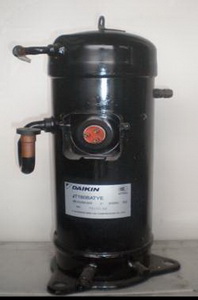
- Compressor Selection: The compressor is the heart of the system. While premium brands like Secop (formerly Danfoss) or Embraco offer proven reliability for high-end or medical applications, tier-one Chinese brands like Jiaxipera or Donper provide excellent cost-to-performance ratios for standard specialized units.
- Refrigerant Types: Global environmental regulations are phasing out older hydrofluorocarbons. Specify R600a (Isobutane) for smaller, energy-efficient units, or R290 (Propane) for larger systems requiring faster temperature pull-down.
- Insulation Integrity: High-density cyclopentane polyurethane foam is the standard. The critical metric is foam density and thickness; inadequate density leads to thermal bridging, forcing the compressor to overwork.
| Compressor Type | Primary Use Case | Cost Impact | Lifespan Expectancy |
|---|---|---|---|
| Premium Inverter (e.g., Secop) | High-precision, variable load | High | 10+ Years |
| Standard Fixed-Speed (Tier 1 Asian) | Consistent load, cost-sensitive | Medium | 5-8 Years |
| Generic/Unbranded | Budget promotional items | Low | 2-4 Years |
Need help verifying a factory's technical capabilities and component supply chain?
Talk to our teamManufacturing Tolerances and Quality Control
The manufacturing floor is where theoretical designs succeed or fail. In refrigeration, the two most critical failure points during assembly are the refrigerant circuitry and the cabinet foaming process.
Poor brazing between copper and aluminum tubing causes micro-leaks that may not manifest until the unit has been operating for months. Similarly, if the factory's foaming machines are not properly calibrated, voids can form inside the cabinet walls, leading to exterior condensation (sweating) and severe energy inefficiency.
To mitigate these risks, implement strict Quality Control & Inspection protocols at specific production milestones.
Critical Pre-Shipment Inspection Points
- Helium mass spectrometry testing for micro-leaks in the cooling circuit.
- Electrical safety tests: Hi-pot (high potential), earth continuity, and leakage current.
- Climate chamber testing: Verifying temperature pull-down times at maximum ambient temperatures.
- Visual inspection of cabinet seams for foam leakage or uneven panel alignment.
- Vibration testing for units intended for mobile or transit applications.
Compliance and Market Certifications
Refrigeration equipment is heavily regulated. Beyond basic electrical safety (CE, UL, ETL), units must often meet strict energy efficiency standards (such as DOE or Energy Star in the US, or ERP in Europe). If your specialized refrigerators are intended for medical, cosmetic, or food-contact use, additional certifications like FDA compliance for food-grade interior plastics or specific ISO 13485 standards for medical devices may apply.
Navigating these requirements is complex, and failing to secure the right documentation can result in customs seizures. Professional Compliance & Testing oversight ensures the factory's certifications are legitimate, current, and applicable to your specific product variant.
MOQs, Lead Times, and Tooling Costs
Pricing in the specialty refrigeration sector is highly dependent on your level of customization. Off-the-shelf designs with minor cosmetic changes carry lower minimums, while fully custom cabinet dimensions require expensive new injection molds and metal stamping dies.
If you are developing a completely new product, utilizing structured OEM/ODM Services can help you negotiate the amortization of tooling costs over your first few production runs, reducing your initial capital outlay.
Planning a custom refrigeration line? Let's discuss tooling, MOQs, and production timelines.
Get a free consultationFrequently Asked Questions
Sourcing non-standard refrigeration requires looking past the outer cabinet to understand the thermodynamic engineering inside. By specifying exact components, demanding rigorous leak testing, and ensuring strict regulatory compliance, buyers can secure reliable, high-performance units that protect their brand's reputation.
Get Sourcing Help for Other Refrigerators & Freezers
Tell us your requirements and our experts will connect you with verified manufacturers.