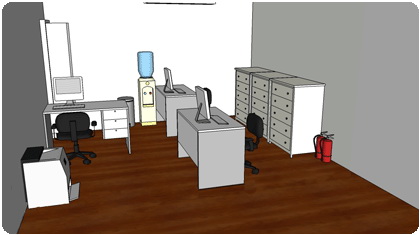
Other Office Furniture
Source bulk and custom Other Office Furniture directly from vetted manufacturers. Designed for importers, wholesalers, distributors, and brands seeking OEM/private-label production. Secure reliable supply chains for specialized workspace accessories and ancillary office fixtures.
Ancillary office furniture—encompassing ergonomic accessories, spatial dividers, acoustic solutions, and workspace organization systems—is critical for outfitting modern, agile work environments. Because this category spans a wide array of materials and manufacturing processes, sourcing it in volume requires managing diverse supply chains, from aluminum die-casting facilities to acoustic textile mills.
For high-volume buyers, the challenge lies in maintaining consistent tolerances, finish quality, and mechanical reliability across entirely different product classes, often requiring consolidation from multiple specialized factories.
Material and Manufacturing Specifications
The "other" category of office furniture is defined by its material diversity. Unlike standard casegoods or seating, these accessories require specific manufacturing competencies.
- Ergonomic Hardware (Monitor Arms, Sit-Stand Converters): Typically manufactured using die-cast aluminum alloys (such as ADC12) or cold-rolled steel. The critical component in adjustable hardware is the gas or mechanical spring. Commercial-grade units must be specified for a minimum of 50,000 actuation cycles.
- Acoustic and Privacy Solutions: Manufactured from PET (polyethylene terephthalate) felt or fabric-wrapped MDF. The defining specification is density (typically 1,300 to 1,900 grams per square meter for PET) and the Noise Reduction Coefficient (NRC), which should rate at 0.70 or higher for commercial applications.
- Organizational Accessories (CPU Holders, Cable Trays): Rely on sheet metal fabrication (stamping, laser cutting, and CNC bending) or ABS plastic injection molding. Steel components require a durable powder-coated finish, typically specified between 60 and 80 microns in thickness to resist scratching.
| Product Class | Primary Material | Critical Specification |
|---|---|---|
| Adjustable Hardware | Die-cast Aluminum / Steel | Spring cycle life (50k+ cycles) |
| Acoustic Dividers | PET Felt / Fabric | NRC rating (0.70+) & Density |
| Under-desk Storage | Cold-rolled Steel | Powder coat thickness (60-80μm) |
| Organizational Trays | ABS / Polycarbonate | Impact resistance & Tooling precision |
Managing multiple specialized factories for office accessories? Let us consolidate and vet your supply chain.
Talk to our teamQuality Control and Compliance Standards
Because these items interact directly with users and expensive IT equipment, mechanical failure is not an option. A poorly manufactured monitor arm can drop a heavy display, while a weak CPU holder can damage core hardware.
Implementing rigorous quality control & inspection at the factory level is essential before shipment.
Factory-Level Inspection Points for Ancillary Furniture
- Cycle Testing: Verify gas springs and hinges against BIFMA x5.5 standards for expected lifespan.
- Weight Capacity: Conduct static load testing at 150 percent of the stated maximum capacity for 24 hours.
- Finish Adhesion: Perform cross-hatch adhesion tests on powder-coated steel components.
- Acoustic Verification: Request third-party lab reports validating the NRC rating of PET materials.
- Dimensional Tolerance: Ensure VESA mounting plates and clamping mechanisms meet strict millimeter tolerances.
If you are importing into highly regulated markets, ensure your manufacturing partner can provide documentation for compliance & testing, particularly RoHS compliance for plastics and finishes, and Greenguard certification for low VOC emissions in acoustic panels.
Customization and OEM/ODM Production
Brands scaling in the B2B office supply sector often require custom designs to differentiate their catalog. Engaging in OEM/ODM services allows you to modify existing factory molds or develop entirely new tooling.
Tooling costs vary drastically by material. Plastic injection molds for cable management spines are relatively inexpensive and quick to produce. Conversely, die-cast molds for custom articulated aluminum arms require significant upfront capital and extended lead times (often 35 to 50 days just for mold development). When negotiating OEM agreements, clarify mold ownership and maintenance responsibilities in your initial contract.
MOQs, Pricing, and Lead Times
Pricing in this category is highly dependent on raw material indices (aluminum, steel, and petroleum for plastics) and the complexity of the internal mechanisms.
Factories specializing in office hardware often operate with higher MOQs for custom colors or finishes due to powder coating batch requirements. Partnering with an experienced product sourcing team can help you identify suppliers willing to negotiate pilot run MOQs without compromising on commercial-grade quality.
Need reliable pricing and vetted manufacturers for your next bulk order?
Get a free consultationFrequently Asked Questions
Successfully sourcing ancillary office furniture requires balancing mechanical precision with aesthetic consistency across diverse material classes. By rigorously vetting specialized manufacturers and enforcing strict quality control protocols, you can build a resilient catalog of high-margin workspace accessories.
Get Sourcing Help for Other Office Furniture
Tell us your requirements and our experts will connect you with verified manufacturers.