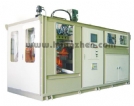
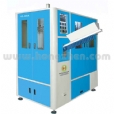
Other Light Industry Engineering
Source specialized Other Light Industry Engineering solutions from vetted Chinese suppliers and manufacturers. Designed for project managers, industrial importers, and procurement teams, this category provides access to custom equipment, processing lines, and contracting services for niche light manufacturing and OEM production facilities.
Sourcing specialized light industry engineering solutions—whether custom assembly lines, niche processing equipment, or auxiliary plant systems—requires moving beyond off-the-shelf equipment procurement. For these projects, you are buying a system's integration and performance just as much as the physical machinery. The primary sourcing challenge is distinguishing between true engineering contractors who design and build in-house, and trading companies that simply stitch together disparate, poorly integrated components.
Specifying Light Industry Engineering Projects
When procuring custom engineering solutions or complete light manufacturing lines, vague specifications inevitably lead to integration failures on the factory floor. Suppliers need precise operational parameters to engineer the right solution, select appropriate PLCs, and size pneumatic or hydraulic systems correctly.
Critical Engineering Specifications to Define
- Throughput and Capacity: Define exact units per hour/shift, including acceptable variance and peak load requirements.
- Automation and Control Systems: Specify preferred PLC brands (e.g., Siemens, Allen-Bradley, Mitsubishi) to ensure compatibility with your existing plant infrastructure.
- Utility Constraints: Detail available power (voltage/phase/Hz), compressed air capacity (bar/PSI), and cooling water availability.
- Footprint and Layout: Provide exact spatial dimensions, ceiling heights, and floor load-bearing capacities.
- Compliance and Safety: Outline required local standards (CE, UL, OSHA equivalents) and specific safety interlocks.
If your internal team lacks the bandwidth to fully vet a supplier's technical proposal against these specifications, utilizing professional product sourcing services can bridge the gap, ensuring the chosen contractor has a proven track record in your specific niche of light industry.
Struggling to verify if a Chinese engineering contractor can meet your exact technical specifications? Let our experts evaluate their capabilities.
Talk to our engineering sourcing teamEvaluating EPC Contractors vs. Equipment Manufacturers
In the Chinese market, you will encounter both direct equipment manufacturers and Engineering, Procurement, and Construction (EPC) contractors. Understanding their structural differences is crucial for project success.
| Supplier Profile | Core Strength | Primary Sourcing Risk |
|---|---|---|
| Direct Manufacturer | Deep expertise in specific machinery, lower base costs. | Poor integration of third-party systems; limited turnkey capability. |
| EPC Contractor | Complete system integration, single point of contact. | Subcontracting opacity; risk of inflated margins on standard equipment. |
To mitigate the risks associated with subcontracting opacity, rigorous factory audits are non-negotiable. An audit must evaluate not just their assembly floor, but their in-house engineering team, CAD capabilities, and historical project documentation.
The Importance of Factory Acceptance Testing (FAT)
Never Skip the FAT
For any engineered system, the Factory Acceptance Test (FAT) is your final leverage point before shipment. Once the equipment leaves the facility, rectifying integration errors or software bugs becomes exponentially more expensive and time-consuming.
A comprehensive FAT should simulate actual production conditions using your raw materials. It is highly recommended to deploy independent quality control and inspection teams to oversee the FAT, ensuring that throughput, safety interlocks, and continuous operation metrics meet the contract specifications before the balance payment is released.
Project Timelines, Milestones, and Pricing Reality
Unlike standard wholesale goods, light industry engineering projects operate on milestone-based timelines and payment structures. Lead times are heavily dependent on the degree of customization and the availability of specialized imported components (like specific servo motors or sensors).
Payment Structures: Standard terms rarely apply. A typical structure is 30% advance for engineering/procurement, 60% upon successful FAT, and 10% retained until Site Acceptance Testing (SAT) or after a specified warranty period.
Because these projects involve oversized, sensitive equipment, supply chain management must be integrated early. Heavy-lift shipping, flat-rack containers, and specialized crating (vacuum sealing for moisture protection) will significantly impact your landed costs and must be factored into the initial budget.
Planning a complex light industry engineering project? We can help you structure milestone payments, oversee the FAT, and manage the specialized logistics.
Get a project consultationFrequently Asked Questions
Executing a specialized light industry engineering project overseas is an exercise in risk management and technical oversight. Success requires treating the sourcing process not as a simple transaction, but as a closely monitored partnership where every specification, milestone, and test is independently verified before the equipment ever reaches the port.
Get Sourcing Help for Other Light Industry Engineering
Tell us your requirements and our experts will connect you with verified manufacturers.