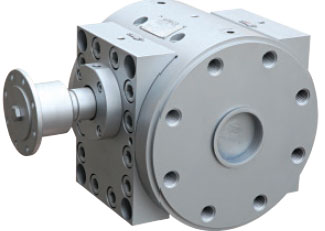
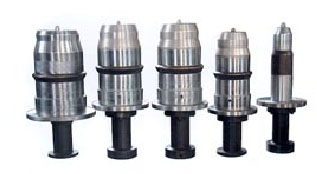
Other Hydraulic Parts
Source Other Hydraulic Parts directly from vetted manufacturers and suppliers in China and Asia. Designed for importers, industrial distributors, and brands requiring OEM production, our catalog connects you with high-volume wholesale partners capable of meeting strict fluid power standards and custom specifications.
Sourcing specialized hydraulic components—ranging from custom manifolds and heat exchangers to accumulators, reservoirs, and high-pressure filtration units—requires managing a highly fragmented supplier base. Because these parts often serve as the critical connective tissue or safety mechanisms within a fluid power system, the primary procurement challenge is ensuring that every secondary component matches the rigorous pressure, flow, and fluid compatibility standards of your primary pumps and cylinders.
Critical Specifications for Specialized Hydraulic Components
When procuring auxiliary hydraulic parts, standardizing your technical requirements across different manufacturers is essential to prevent system failures. Factories producing these components often specialize in either heavy machining (manifolds, blocks) or specialized assembly (accumulators, coolers), meaning your spec sheets must be tailored to the production method.
| Component Type | Key Material Specs | Critical Tolerances & Testing |
|---|---|---|
| Hydraulic Manifolds | 6061-T6 Aluminum or Ductile Iron | Internal cross-hole deburring, surface finish Ra under 0.8 |
| Accumulators | Carbon Steel or 316L Stainless Shells | Hydrostatic burst testing, NBR/FKM bladder integrity |
| Filtration Units | Micro-glass or Cellulose media | Beta ratio certification, collapse pressure rating |
| Heat Exchangers | Brazed Aluminum or Copper-Nickel | Thermal cycling resistance, pressure drop thresholds |
Fluid Compatibility and Seal Selection
A common failure point in auxiliary hydraulic parts is seal degradation due to incompatible hydraulic fluids. Ensure your supplier specifies the exact elastomer used. Standard mineral oils pair well with Nitrile (NBR), but systems utilizing synthetic fluids, phosphate esters, or operating at elevated temperatures require FKM (Viton) or EPDM seals.
Struggling to standardize specs across multiple hydraulic component suppliers? Let our engineering sourcing team help you consolidate and verify your requirements.
Talk to our teamManufacturing Quality and Factory Verification
The difference between a reliable hydraulic component manufacturer and a high-risk supplier usually comes down to their internal testing infrastructure and machining cleanliness.
The Threat of Machining Burrs
In custom machined components like hydraulic manifolds, internal intersecting holes are notoriously difficult to deburr. A single microscopic metal flake left inside a fluid gallery can dislodge under pressure, travel downstream, and destroy expensive proportional valves or pumps.
When evaluating a new factory, prioritize their adherence to fluid cleanliness standards (such as ISO 4406). Reliable suppliers will have dedicated ultrasonic cleaning stations and clean-room assembly environments. Because these capabilities are easy to claim but expensive to maintain, conducting rigorous Factory Audits is critical before placing high-volume OEM orders.
Essential Quality Control Checks
If you are importing in bulk, your pre-shipment Quality Control & Inspection protocols should go beyond basic visual checks and include:
- Hydrostatic pressure testing at 1.5x maximum working pressure to verify zero-leakage.
- Borescope inspections of internal galleries for intersecting hole burrs.
- Verification of thread profiles (NPT, BSPP, SAE) using calibrated go/no-go gauges.
- Material composition analysis (PMI) to confirm alloy grades, especially for high-pressure steel housings.
Pricing Drivers, MOQs, and Lead Times
Because "other" hydraulic parts encompass such a wide variety of manufacturing processes, production minimums and lead times vary significantly based on the component's complexity and the factory's tooling requirements.
Consolidating Your Supply Chain
Procurement managers often find themselves dealing with five different factories to source filters, manifolds, accumulators, coolers, and reservoirs. This fragmentation inflates communication overhead and drives up LCL (Less than Container Load) shipping costs. Utilizing professional Supply Chain Management allows you to consolidate production schedules across multiple specialized manufacturers, combining shipments to optimize freight costs and ensure all components arrive synchronized for final assembly.
Need to streamline your hydraulic parts procurement? We handle factory vetting, price negotiation, and order consolidation for complex B2B supply chains.
Get a free consultationFrequently Asked Questions
Successful procurement of auxiliary hydraulic components requires matching the specific part—whether it's a precision-machined block or a welded reservoir—to a factory that specializes in that exact manufacturing process, rather than relying on a generalist trading company. Rigorous vetting of their testing capabilities ensures your fluid power systems remain leak-free and reliable in the field.
Get Sourcing Help for Other Hydraulic Parts
Tell us your requirements and our experts will connect you with verified manufacturers.