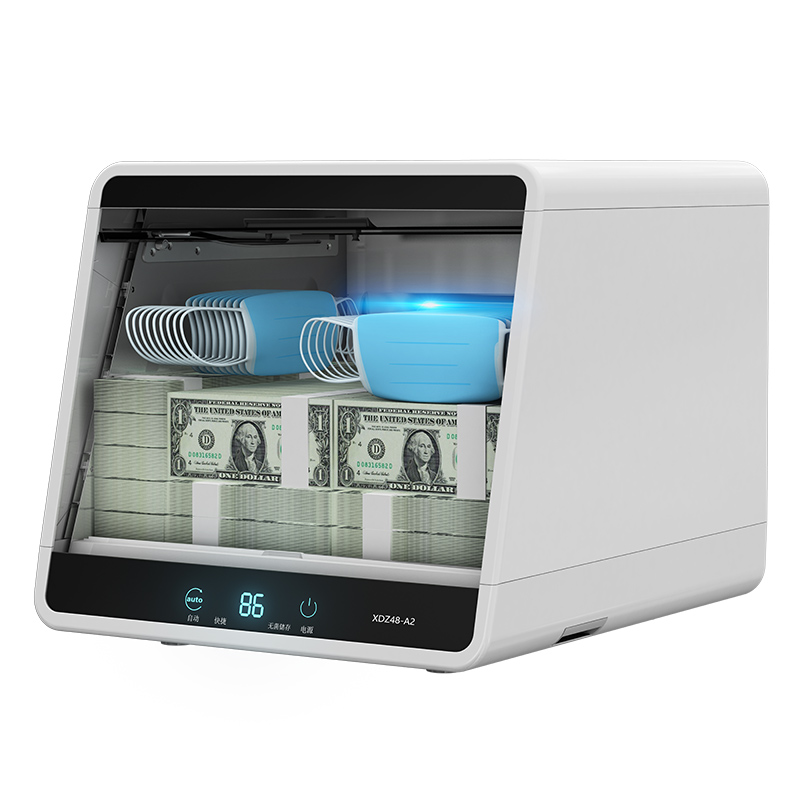
Other Financial Equipment
Source bulk and wholesale Other Financial Equipment from vetted manufacturers and suppliers. Designed for importers, distributors, and brands seeking OEM or private-label production, this selection covers specialized financial machinery built for precision, durability, and strict compliance in commercial banking environments.
Specialized financial hardware encompasses a broad range of niche devices—from secure document encoders and passbook printers to heavy-duty coin wrappers and smart deposit systems. These machines require absolute precision and durability. For procurement managers and distributors, sourcing these specialized units means identifying factories capable of consistent sensor calibration, robust mechanical assembly, and seamless software integration.
Critical Specifications for Financial Hardware
When evaluating factories, the baseline for acceptance is their ability to meet strict technical tolerances. Financial equipment relies heavily on accurate optical and magnetic sensors, high-torque motors, and secure data transmission.
Key Technical Specifications to Define
- Sensor Accuracy: Specify acceptable error rates (e.g., under 0.01 percent) for optical, IR, or magnetic sensors.
- Mechanical Durability (MTBF): Demand clear Mean Time Between Failures data for stepper motors and moving parts.
- Connectivity & Integration: Ensure compatibility with standard banking protocols (RS232, RJ11, USB, or TCP/IP) and availability of SDKs/APIs.
- Power Supply Stability: Require switching power supplies capable of handling voltage fluctuations without interrupting critical transactions.
If you are developing proprietary hardware or localizing interfaces for specific regional markets, engaging a factory with strong engineering capabilities is essential. Utilizing professional OEM/ODM Services ensures that custom firmware, localized language displays, and unique housing designs are integrated seamlessly at the factory level.
Navigating specialized financial hardware factories requires on-the-ground expertise. Let us handle the factory vetting and technical negotiations to secure your supply chain.
Talk to our teamManufacturing and Quality Control Standards
The reliability of financial equipment is won or lost during PCB assembly and sensor calibration. A factory's internal testing protocols must be rigorous. Relying solely on final product testing often leads to high defect rates upon arrival.
Component Sourcing & SMT
Verify that the factory uses high-grade capacitors and ICs during Surface Mount Technology (SMT) processes to prevent premature board failure.
Sensor Calibration
In-line calibration of optical and magnetic sensors using standardized test media to ensure consistent read rates.
Burn-in Testing
Continuous operation testing (typically 24 to 48 hours) under load to identify early motor or power supply failures.
Firmware Verification
Flashing and testing the specific firmware version required for your target market's currency or document standards.
To mitigate risks, implementing independent Quality Control & Inspection before shipment is non-negotiable. Inspectors should verify sensor accuracy, mechanical alignment, and firmware stability using your specific use-case parameters.
Evaluating Supplier Capabilities
Not all factories producing financial equipment operate at the same tier. The difference between a standard consumer-grade assembler and a commercial-grade manufacturer lies in component selection and testing infrastructure.
| Component | Standard Assembler | Commercial-Grade Manufacturer |
|---|---|---|
| Motor Type | Standard DC motors | Heavy-duty stepper motors |
| Housing Material | Thin ABS plastic | Reinforced ABS or cold-rolled steel |
| Sensor Array | Basic IR sensors | Multi-spectrum (IR, UV, MG) arrays |
| Testing Protocol | Batch sampling only | 100 percent burn-in and calibration |
Before committing to a high-volume order or a complex OEM project, verifying these capabilities firsthand is critical. Conducting comprehensive Factory Audits will reveal whether a supplier has the necessary ISO 9001 certifications, proper ESD (electrostatic discharge) protections on the assembly line, and the engineering depth to support long-term production.
Pricing, MOQ, and Lead Times
Pricing for specialized financial equipment fluctuates based on component costs (especially semiconductors and specialized sensors) and the level of customization required.
When negotiating terms, factor in the cost of mandatory certifications (CE, FCC, RoHS) required for your target market. Factories quoting prices significantly below the market average are often cutting corners on sensor quality or substituting cheaper internal components.
Need to lock in volume pricing without compromising on sensor accuracy or mechanical reliability? Discuss your procurement strategy with our sourcing specialists.
Get a free consultationFrequently Asked Questions
Sourcing specialized financial equipment requires a deep understanding of electro-mechanical manufacturing and stringent quality oversight. By partnering with vetted factories and maintaining strict control over specifications and testing, you can build a reliable supply chain that meets the exacting demands of the financial sector.
Get Sourcing Help for Other Financial Equipment
Tell us your requirements and our experts will connect you with verified manufacturers.