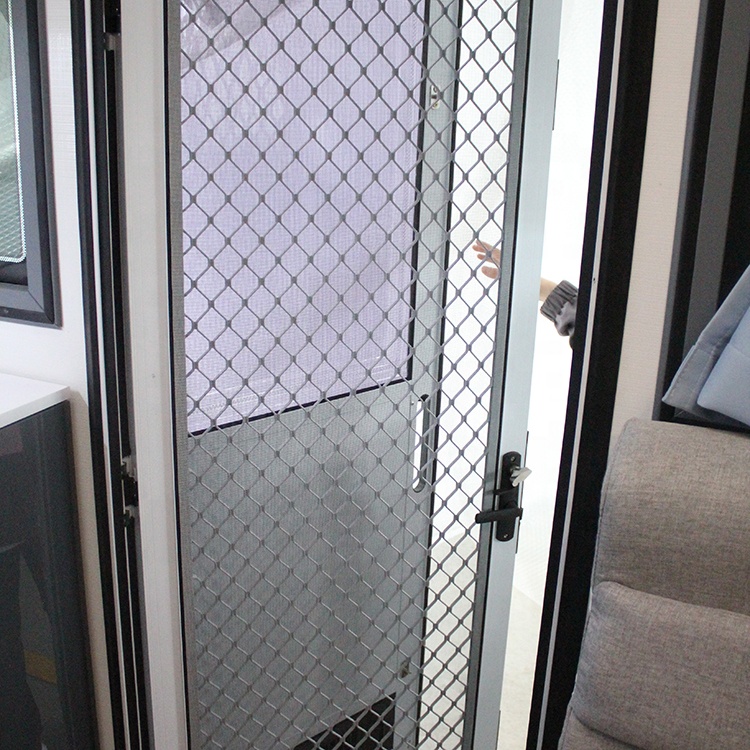
Other Doors
Source specialized and custom Other Doors in bulk from vetted manufacturers and suppliers. Designed for importers, wholesalers, and commercial procurement teams, this category covers non-standard, specialty, and OEM door production. Secure reliable factory pricing and dependable manufacturing for your niche construction requirements.
Sourcing specialty and non-standard doors—whether for cleanrooms, cold storage, acoustic isolation, or architectural hidden flush systems—presents a unique procurement challenge. Unlike standard residential or commercial doors where volume and basic material costs drive the market, "other doors" require stringent specification adherence. The primary risk is engaging a standard door manufacturer who claims they can handle specialty requirements but ultimately outsources the core technical components or fails to meet the necessary performance thresholds.
To successfully procure specialty doors in volume, buyers must focus heavily on the factory's engineering capabilities, infill material consistency, and niche compliance testing.
Defining Specifications for Niche Door Production
When moving beyond standard interior or exterior doors, the bill of materials (BOM) becomes significantly more complex. You are no longer just specifying veneer thickness or core type; you are specifying performance metrics.
Depending on the application, your manufacturing agreement must explicitly detail:
- Infill Density and Composition: For acoustic or thermal doors, the density of the polyurethane (PU) foam, mineral wool, or specialized honeycomb core dictates performance. Specify the exact density (e.g., kg/m3) rather than just the material name.
- Surface Treatment and Cladding: Cleanroom and medical doors require anti-bacterial coatings or high-grade stainless steel (304 or 316) that can withstand harsh chemical washdowns without degrading.
- Hardware Compatibility: Specialty doors often require proprietary hardware (e.g., heavy-duty pivot hinges for lead-lined doors, or hermetic seals for cleanrooms). Ensure the factory has the precise CNC routing capabilities to prep the doors for your specific hardware, or source the hardware locally and ship it to the factory for pre-installation.
Need to verify a factory's technical capability for custom door production? Let our engineers review your specifications and match you with the right manufacturer.
Talk to our teamVerifying Factory Capability and Quality Control
Many suppliers listed as specialty door manufacturers are actually trading companies or standard door factories attempting to secure higher-margin orders. Relying on basic ISO 9001 certificates is insufficient. You need to verify their specific production lines and testing equipment. Conducting thorough Factory Audits is critical before tooling or bulk production begins.
Key Quality Control Checkpoints
When implementing Quality Control & Inspection for specialty doors, standard visual checks must be supplemented with performance verification:
Specialty Door Inspection Protocol
- Core integrity verification (ultrasonic or physical cross-sectioning to check for voids in PU foam or lead lining).
- Seal and gasket compression testing for hermetic or acoustic applications.
- Coating thickness and adhesion testing (cross-hatch test) for industrial or cleanroom doors.
- Dimensional tolerance checks, particularly for hidden/flush doors where frame gaps must be exact (often tolerances are tight, under 1.5mm).
If your market requires specific certifications (like UL fire ratings, STC acoustic ratings, or hygiene certifications), ensure the factory's existing test reports match the exact BOM you are ordering. If you are modifying the design, you will need new Compliance & Testing conducted by a recognized third-party lab.
Production Realities: MOQs, Tooling, and Lead Times
Because "other doors" often involve custom dimensions, specialized materials, and unique frame profiles, the manufacturing dynamics differ from standard door production. If you are leveraging OEM/ODM Services to develop a proprietary door system, expect tooling costs for custom aluminum extrusion profiles or specific stamping molds.
Pricing in this category is highly volatile and entirely dependent on the performance spec. A standard steel door might cost a fraction of a hermetically sealed medical door, even if they look similar on a line card. Always tie your target price to a fully detailed BOM, not just a product photo.
| Capability | Standard Door Factory | Specialty Door Manufacturer |
|---|---|---|
| Engineering Support | Basic CAD for dimensions | Full 3D modeling, thermal/acoustic simulations |
| Core Materials | Standard honeycomb, particle board | High-density PU, lead-lined, acoustic composites |
| Hardware Prep | Standard locksets and hinges | Complex routing for hermetic seals, heavy-duty pivots |
Struggling to negotiate pricing and MOQs for a custom door project? We can help structure your supplier agreements to protect your margins.
Get a free consultationFrequently Asked Questions
Sourcing non-standard and specialty doors requires moving past generic supplier catalogs and focusing strictly on engineering capabilities and material verification. By clearly defining performance metrics and rigorously auditing production lines, buyers can successfully secure complex door systems at competitive manufacturing rates.
Get Sourcing Help for Other Doors
Tell us your requirements and our experts will connect you with verified manufacturers.