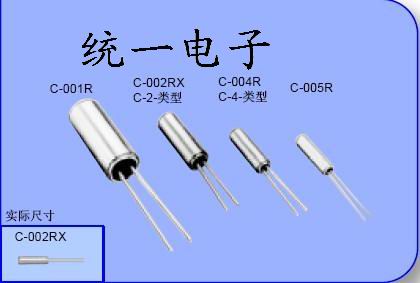
Oscillators
Source high-performance oscillators from vetted suppliers and manufacturers in China and across Asia. Designed for importers, distributors, and electronics brands requiring reliable OEM production in bulk. Secure competitive wholesale pricing, strict quality control, and scalable supply for your component procurement.
Oscillators act as the heartbeat of modern electronics, dictating timing precision across telecommunications infrastructure, industrial controls, and consumer devices. Sourcing these active components in volume requires navigating a complex matrix of frequency stability, phase noise requirements, and package miniaturization. A minor deviation in temperature compensation or jitter performance on the factory floor can cascade into system-wide failures for your end product.
Securing a reliable supply chain means vetting manufacturers not just for their catalog, but for their cleanroom standards, quartz blank processing capabilities, and rigorous testing protocols.
Critical Specifications for Your BOM
When communicating requirements to a factory, standardizing your Bill of Materials (BOM) prevents costly miscommunications. Oscillators are highly application-specific, and omitting a single parameter can result in receiving reels of unusable components.
Essential Oscillator Specifications to Define
- Nominal Frequency: Specify exact required frequency (e.g., 25.000000 MHz).
- Frequency Stability: Total allowed deviation in ppm (parts per million) or ppb (parts per billion), inclusive of temperature and initial tolerance.
- Operating Temperature Range: Commercial (0 to 70°C), Industrial (-40 to 85°C), or Automotive (-40 to 125°C).
- Output Logic: CMOS, HCMOS, LVPECL, LVDS, or Clipped Sine Wave.
- Supply Voltage (Vdd): Typically 1.8V, 2.5V, or 3.3V. Specify allowable variance.
- Package Size: Standard SMD dimensions (e.g., 7050, 5032, 3225, 2520, 2016, 1612).
- Phase Jitter: Maximum allowable RMS jitter (typically in picoseconds or femtoseconds) for high-speed data applications.
Manufacturing Tolerances and Factory Capabilities
The reliability of an oscillator is heavily dependent on the manufacturing environment. The encapsulation of the quartz resonator and the integrated ASIC must occur in strict cleanroom conditions to prevent particulate contamination, which directly impacts long-term aging and frequency drift.
When evaluating suppliers, it is critical to verify their automated wire bonding and seam sealing processes. High-end manufacturers will utilize vacuum or nitrogen-filled sealing environments. Relying on comprehensive factory audits before placing high-volume orders ensures the facility actually possesses the testing infrastructure—such as precision frequency counters and thermal chambers—claimed on their profile.
| Parameter | Standard Clock (SPXO) | Temperature Compensated (TCXO) |
|---|---|---|
| Typical Stability | ±20 to ±100 ppm | ±0.5 to ±2.5 ppm |
| Primary Application | Microcontrollers, Consumer Tech | GPS, Wireless Communications |
| Manufacturing Complexity | Moderate | High (Requires thermal profiling) |
| Cost Driver | Package miniaturization | ASIC compensation network |
Quality Control and Reliability Testing
Because oscillators are active components, post-production testing is non-negotiable. A factory's yield rate directly impacts your unit cost and lead time.
Initial Frequency Calibration
Every unit must be tested at room temperature to ensure it meets the base frequency tolerance before packaging.
Thermal Cycling
Units are subjected to their full rated temperature extremes to verify the stability curve, particularly critical for TCXOs and OCXOs.
Accelerated Aging
Sample batches undergo high-temperature bakes to predict the frequency shift over the first year of operation.
Tape and Reel Inspection
Verifying pin-1 orientation and coplanarity before sealing the carrier tape for automated pick-and-place assembly.
Implementing independent quality control prior to container loading catches batch-level defects—such as improper sealing or out-of-spec jitter—before they reach your assembly lines.
Ensure your oscillator shipments meet strict ppm tolerances with our on-the-ground engineering and inspection support.
Talk to our teamWholesale Pricing, MOQs, and Lead Times
Procuring oscillators at scale requires understanding how packaging and precision drive the economics of your order.
Minimum Order Quantities (MOQs)
Oscillators are almost universally supplied on tape and reel for automated SMT assembly. Therefore, MOQs are dictated by reel sizes. For larger packages (like 7050), a reel typically holds 1,000 pieces. For miniaturized packages (like 2520 or 2016), reels hold 3,000 pieces. Factories will rarely break a reel for wholesale pricing, making 1,000 to 3,000 pieces the standard entry point.
Pricing Drivers
Prices fluctuate based on three main factors:
- Stability Requirements: Tight tolerances (under 10 ppm) require more time in thermal calibration, increasing cost.
- Miniaturization: As package sizes drop from 3225 to 1612, manufacturing difficulty increases, commanding a premium.
- Output Type: Differential outputs (LVPECL/LVDS) for high-frequency networking applications are significantly more expensive than standard CMOS outputs.
Lead Times
Standard frequencies (e.g., 25MHz, 27MHz, 50MHz) in common packages often have lead times of 6 to 8 weeks. However, custom frequencies or high-stability TCXOs require dedicated quartz cutting and prolonged thermal profiling, pushing lead times to 12 to 16 weeks or more. Partnering with an expert in product sourcing helps secure capacity and negotiate favorable terms with tier-one component foundries.
Navigate volatile component lead times and secure competitive pricing for your next production run.
Get a free consultationBuyer FAQ
Managing Component Supply Chains
Sourcing oscillators in bulk is an exercise in risk management. A single out-of-spec batch can halt your entire PCB assembly process. Success requires moving beyond transactional purchasing to establish rigorous factory vetting, clear technical communication, and strict pre-shipment testing. By proactively managing these variables, procurement teams can secure reliable, high-performance timing components that keep production lines running smoothly.
Get Sourcing Help for Oscillators
Tell us your requirements and our experts will connect you with verified manufacturers.