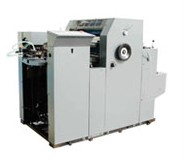
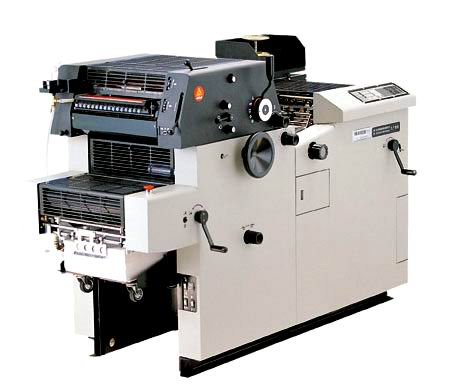
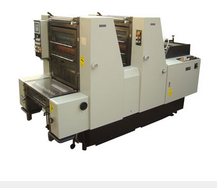
Offset Printers
Source high-performance offset printers from vetted manufacturers and suppliers across Asia. Tailored for commercial equipment distributors, importers, and procurement managers seeking reliable factory-direct sourcing or custom OEM production, ensuring precision engineering and competitive wholesale pricing.
Sourcing commercial offset printers requires navigating a complex landscape of heavy machinery manufacturing. Because these presses dictate the production capacity and print quality of end-users, the stakes for registration accuracy, cylinder durability, and automation reliability are exceptionally high. Selecting the right factory means looking past surface specifications to evaluate their machining tolerances, component sourcing, and assembly protocols.
Key Specifications and Press Configurations
When negotiating with manufacturers, your technical requirements must be explicit. Factories often build to order, meaning the baseline model is merely a starting point.
| Specification | Standard Commercial | High-Volume Packaging |
|---|---|---|
| Format Size | A3 to A2 | A1 to B0 |
| Color Stations | 1 to 4 colors | 4 to 8+ colors (plus coating) |
| Operating Speed | 8,000 to 12,000 sph | 15,000 to 18,000+ sph |
| Automation | Manual plate loading, basic console | Fully automatic plate changing, CIP3/CIP4 |
Beyond format and speed, scrutinize the dampening system (continuous alcohol vs. conventional) and the ink control console. Advanced presses rely on CIP3/CIP4 integration to preset ink keys, significantly reducing make-ready times. If you are importing these machines for distribution, ensuring the factory integrates globally recognized electronics (such as Siemens or Omron PLCs) is critical for long-term serviceability.
Evaluating offset press manufacturers requires deep technical vetting. Let our team handle the factory qualification process.
Speak to an expertManufacturing Tolerances and Quality Control
The core of any offset printer lies in its cylinders—plate, blanket, and impression. The machining precision of these components dictates dot reproduction and registration accuracy.
A reliable manufacturer machines their own cast iron frames and cylinders in-house using high-precision CNC centers, rather than outsourcing to third-party foundries with loose quality control. When conducting factory audits, verify the factory's dynamic balancing equipment for cylinders. Imbalance at high speeds causes vibration, leading to doubling and slur in the printed output.
Critical Inspection Points for Offset Presses
- Cylinder runout tolerances (must be measured in microns)
- Frame rigidity and vibration dampening during peak-speed operation
- Bearing quality (insist on premium brands like SKF or NSK for critical zones)
- Feeder head stability across various paper weights (e.g., 40gsm to 400gsm)
- Electrical compliance and safety interlocks (CE/UL standards)
Relying solely on a factory's final test run is risky. Comprehensive quality control and inspection should include verification of the machine's geometric alignment before the outer housing is attached, and a multi-hour continuous run test at maximum rated speed to monitor bearing temperatures and registration consistency.
Pricing, MOQs, and Lead Times
Heavy commercial printing equipment operates on entirely different sourcing mechanics compared to standard commercial goods.
Pricing is heavily influenced by the number of printing units, the degree of automation, and the origin of critical sub-components. A four-color A2 press with manual controls will sit at the lower end of the spectrum, while a highly automated B1 press with inline aqueous coating and European PLCs will command a premium.
Because these machines are oversized and delicate, shipping and freight logistics must be planned concurrently with production. Specialized crating, anti-corrosion vacuum sealing, and flat-rack containers or customized heavy-lift shipping solutions are often required.
Need accurate pricing and lead times for commercial offset presses? We manage the end-to-end procurement and logistics.
Get a sourcing quoteFrequently Asked Questions
Successfully sourcing offset printers is about managing total cost of ownership, not just the FOB price. A machine that saves you capital upfront but suffers from poor registration or frequent downtime will rapidly erode margins. Focusing on factory machining capabilities, component provenance, and rigorous pre-shipment testing ensures your investment performs reliably on the pressroom floor. If you need dedicated support navigating this complex category, our sourcing engineers are ready to assist.
Get Sourcing Help for Offset Printers
Tell us your requirements and our experts will connect you with verified manufacturers.