Networking Storage
Source high-performance Networking Storage from vetted suppliers and manufacturers in China. Designed for IT distributors, system integrators, and brands looking for reliable OEM/ODM production, our network-attached storage solutions offer scalable capacity and enterprise-grade reliability for bulk procurement.
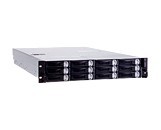
Networking storage hardware requires precise integration between the mainboard chipset, storage backplane, and power delivery system. Whether you are sourcing barebone desktop enclosures for SMBs or high-density rackmount arrays for enterprise deployments, the manufacturing margin for error is razor-thin. Poor thermal management or backplane signal degradation directly translates to catastrophic data loss for the end user, making rigorous supplier selection critical.
Critical Hardware Specifications for OEM/ODM Buyers
When specifying networking storage for private label or custom integration, the chassis and mainboard dictate the product tier. The core decisions revolve around CPU architecture, memory expandability (including ECC support for enterprise models), and the network interface.
| Architecture | Target Application | Power Efficiency | Cost Profile |
|---|---|---|---|
| ARM-Based | Entry-level / Home Office | High | Economical |
| x86-Based (Intel/AMD) | SMB / Enterprise / Virtualization | Moderate | Premium |
Beyond the processor, modern storage devices increasingly require NVMe M.2 slots for SSD caching alongside traditional SATA III bays. Specifying the correct PCIe lane allocation on the mainboard is essential to ensure these caching drives do not bottleneck the 10GbE or 2.5GbE network controllers.
Need help matching hardware specs to your target market? We can align your requirements with capable manufacturers.
Talk to our teamManufacturing Tolerances and Quality Control
The physical assembly of networking storage devices is heavily concentrated in the Shenzhen and Dongguan regions. While PCB fabrication is highly automated, the integration of the SATA/SAS backplane and power supply requires rigorous oversight. A failure in the power delivery system can cause voltage spikes, instantly destroying populated drives.
Partnering with factories that understand thermal dynamics is non-negotiable. Drives packed tightly in a 4-bay or 8-bay chassis generate significant heat, and the enclosure must be designed for optimal airflow without excessive fan noise. Implementing stringent Quality Control & Inspection during production ensures these tolerances are met.
Critical Factory Inspection Points
- Backplane Soldering: Check for cold joints that cause intermittent drive disconnects.
- PSU Ripple Testing: Ensure clean power delivery under full drive-spin-up load.
- Thermal Chamber Validation: Verify chassis airflow prevents drives from exceeding 45°C under load.
- EMI Shielding: Confirm compliance with FCC/CE emission standards, especially in metal enclosures.
If you are utilizing OEM/ODM Services for a custom chassis, ensure the factory has in-house tooling capabilities or a tightly integrated partner, as chassis vibration can severely impact mechanical hard drive lifespans.
Firmware Integration and IP Ownership
Hardware is only half the equation in networking storage. Many suppliers offer barebones hardware with basic, open-source Linux-based firmware, while others provide robust, proprietary OS environments with GUI management, RAID configuration, and cloud backup integrations.
When negotiating with a supplier, you must clarify firmware IP ownership, licensing fees, and the roadmap for OTA (Over-The-Air) security updates. Relying on a factory's proprietary software without a clear maintenance agreement leaves your brand vulnerable to unpatched security exploits down the line.
Pricing, MOQs, and Production Lead Times
Sourcing networking storage requires navigating fluctuating chipset costs and minimum order quantities dictated by chassis tooling and PCB runs.
- Minimum Order Quantities (MOQ): Standard off-the-shelf enclosures usually start at 500 units. If you require custom chassis tooling or bespoke front-panel designs, expect MOQs to rise to 1,000 to 3,000 units to amortize the injection molding or metal stamping costs.
- Pricing Drivers: The primary cost centers are the CPU, the network controller ICs, and the power supply. Upgrading a base model from 1GbE to 10GbE requires not just a different controller, but often a higher-tier CPU to handle the throughput, significantly altering the unit cost.
- Lead Times: Typical production runs take 45 to 60 days. However, global IC shortages or custom PCB fabrication can push this to 90 days.
Optimize your supply chain and negotiate better terms with vetted storage manufacturers.
Get a free consultationFrequently Asked Questions
Successful networking storage sourcing hinges on aligning hardware stability with a reliable supply chain. By prioritizing thermal design, backplane integrity, and clean power delivery, you protect your brand from costly RMAs and field failures. Focus on the engineering tolerances, and let experienced partners handle the factory-floor execution.
Get Sourcing Help for Networking Storage
Tell us your requirements and our experts will connect you with verified manufacturers.