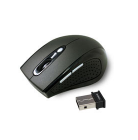
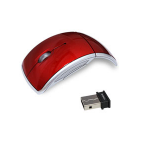
Mouse
Source reliable, high-performance computer mice from vetted suppliers and manufacturers across Asia. Designed for electronics importers, wholesale distributors, and brands seeking competitive OEM and private-label production, our network delivers scalable volumes, rigorous quality control, and direct factory pricing.
Sourcing computer mice at scale requires navigating a highly fragmented supplier base where the difference between a premium peripheral and a high-return-rate liability comes down to internal component selection and assembly tolerances. For volume buyers, success depends on strictly defining technical specifications and ensuring the factory actually uses the agreed-upon microswitches, sensors, and microcontrollers during mass production.
Critical Component Selection for Bulk Orders
The external shell of a mouse is easily replicated, but the internal bill of materials (BOM) dictates performance, longevity, and cost. When negotiating with manufacturers, you must specify the exact brand and model of critical internal components.
- Sensors: The optical or laser sensor is the heart of the device. PixArt is the industry standard for gaming and high-performance mice, while cheaper, unbranded sensors are common in budget office models. Specify the required DPI (Dots Per Inch) range, IPS (Inches Per Second) tracking speed, and polling rate.
- Microswitches: Switch lifespan is a primary quality metric. Omron and Huano are standard for high-durability applications, offering lifespans from 10 million up to 80 million clicks. Optical switches are increasingly popular to eliminate double-clicking issues caused by mechanical debounce degradation.
- Microcontrollers (MCU): The MCU handles the translation of sensor data and click actuation to the PC. For wireless models, the MCU often integrates Bluetooth or 2.4GHz RF capabilities. Nordic and Broadcom chips are preferred for low-latency wireless performance.
| Specification | Standard Office Mouse | Premium Gaming Mouse |
|---|---|---|
| Sensor Type | Generic Optical (up to 1600 DPI) | PixArt Optical (up to 25,000+ DPI) |
| Switch Lifespan | 3 to 5 million clicks | 50 to 80 million clicks (Mechanical/Optical) |
| Polling Rate | 125 Hz | 1000 Hz to 4000 Hz |
| Connectivity | Wired USB or Basic 2.4GHz | Ultra-low latency 2.4GHz / Wired Hybrid |
Need help verifying component authenticity and securing reliable BOMs before mass production?
Talk to our teamManufacturing Tolerances and Quality Control
Injection molding precision and PCB assembly quality separate top-tier factories from budget assemblers. Poor molding leads to pre-travel or post-travel in the main buttons, shell creaking, and uneven glide. Furthermore, improper soldering on the PCB can lead to premature failure of the scroll wheel encoder or side buttons.
Implementing rigorous quality control and inspection protocols is non-negotiable.
Key Pre-Shipment Inspection Points
- Click Latency & Actuation Force: Verify uniform actuation force across left and right clicks.
- Scroll Wheel Encoder: Check for distinct steps and absence of reverse scrolling/ghosting.
- Shell Integrity: Inspect for plastic flashing, uneven gaps, and creaking under pressure.
- Glide Test: Ensure PTFE (Teflon) feet are applied flat and track smoothly on standard surfaces.
- Battery Safety (Wireless): Verify CE/FCC/RoHS compliance and proper battery thermal protection.
OEM/ODM Customization Pathways
Most factories offer two distinct pathways for buyers. White-labeling an existing factory mold (ODM) is the fastest route to market, allowing for custom colors, surface finishes (such as UV coating or rubberization), and logo printing.
For brands looking to develop a unique ergonomic shape or proprietary feature set, custom tooling (OEM) is required. This involves significant upfront investment in plastic injection molds. Engaging expert OEM/ODM services ensures that the 3D CAD designs translate effectively into manufacturable molds with optimal draft angles and structural integrity.
Typical MOQs, Pricing Drivers, and Lead Times
Pricing in this category is highly elastic, driven entirely by the BOM and customization level. A basic wired office mouse can cost under two dollars per unit, while a flagship wireless gaming mouse with a top-tier sensor and lightweight magnesium alloy shell can exceed twenty-five dollars in manufacturing costs.
Before committing to tooling or a large deposit, conducting thorough factory audits is essential to verify the supplier's production capacity, quality management systems (ISO 9001), and financial stability.
Optimize your unit costs, manage tooling, and streamline your supply chain with Merhein.
Get a free consultationFrequently Asked Questions
Securing a reliable supply of computer peripherals requires looking past the external design and scrutinizing the factory's supply chain for internal components. By locking down the BOM, enforcing strict assembly tolerances, and auditing the production line, volume buyers can maintain consistent quality and protect their brand reputation.
Get Sourcing Help for Mouse
Tell us your requirements and our experts will connect you with verified manufacturers.