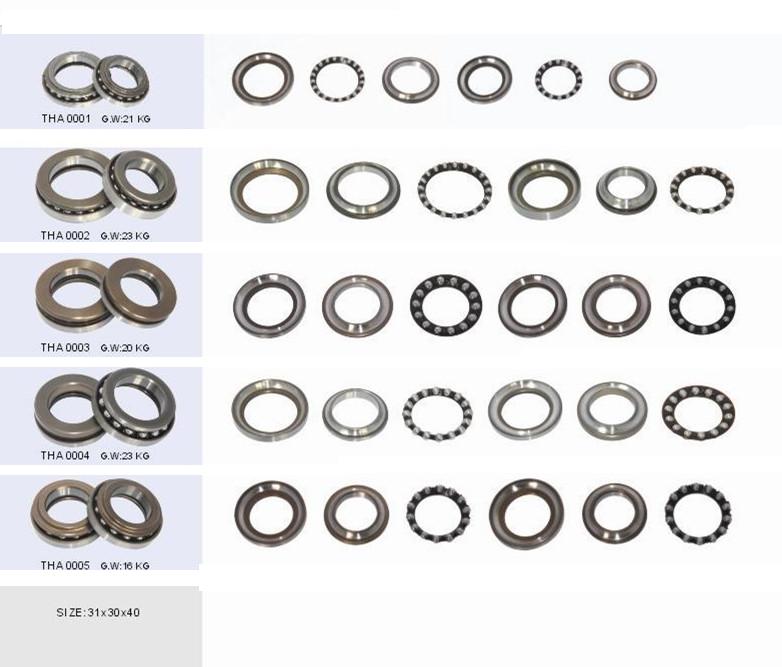
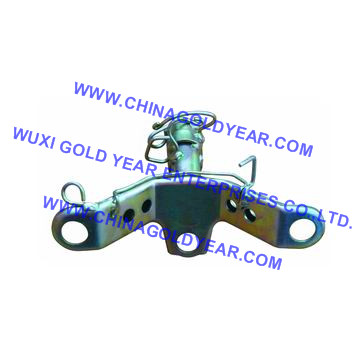
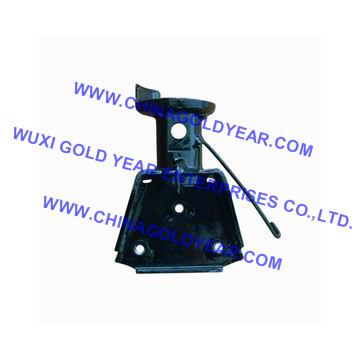
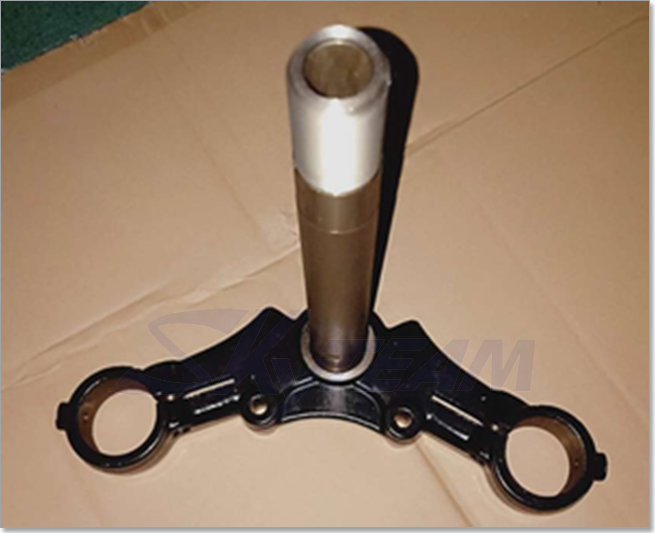
Motorcycle Steering
Source premium wholesale motorcycle steering components directly from vetted manufacturers and suppliers. Designed for importers, distributors, and brands seeking reliable OEM and aftermarket production, our network delivers precision-engineered parts built for safety, performance, and volume scalability.
Sourcing motorcycle steering assemblies at volume requires balancing strict safety tolerances with cost-effective manufacturing. Because these are critical control components, a failure in a triple tree, steering stem, or handlebar riser can result in catastrophic accidents. For bulk buyers, the primary challenge is ensuring that the factory's material claims and machining tolerances remain consistent from the first sample to the ten-thousandth unit.
Material Selection and Manufacturing Methods
The structural integrity of steering components relies entirely on the raw materials and how they are processed. Most high-performance aftermarket parts are machined from billet aluminum, while mass-market OEM replacements often utilize forging or casting.
When specifying requirements to a factory, clarity on the exact material grade and temper is non-negotiable. Merely requesting "aluminum" will often result in inferior, easily deformed alloys.
| Manufacturing Method | Typical Materials | Best Application | Tooling & Setup |
|---|---|---|---|
| CNC Machined Billet | 6061-T6, 7075-T6 Aluminum | Premium aftermarket, custom designs | Low tooling cost, high unit cost |
| Forged | Carbon Steel, High-grade Aluminum | High-stress OEM replacements | High tooling cost, low unit cost at volume |
| Die-Cast | A380 Aluminum, Zinc alloys | Low-cc commuter bikes, budget parts | Very high tooling cost, lowest unit cost |
If you are developing proprietary designs, utilizing professional OEM/ODM services ensures your CAD files are properly translated into manufacturing instructions that account for the factory's specific machine capabilities.
Need help finding a factory capable of tight-tolerance CNC machining?
Talk to our teamCritical Quality Control Checkpoints
Steering parts are notorious for hidden defects. A triple tree might look perfect after anodizing, but if the bearing seats are machined out of tolerance, the steering will bind or exhibit dangerous play.
To prevent this, rigorous quality control and inspection must be implemented both during production (in-line) and before shipment. Relying solely on the factory's internal QC reports for safety-critical components is a significant risk.
Essential Steering Component Inspections
- Bearing Seat Tolerances: Must be verified with go/no-go gauges to ensure a press-fit within microns.
- Thread Pitch Accuracy: Stem nuts and riser bolts require exact thread engagement to prevent stripping under torque.
- Material Verification: Spectrometer testing to confirm the exact alloy composition (e.g., verifying 7075 vs 6061).
- Heat Treatment Validation: Hardness testing (Rockwell or Brinell) to confirm T6 or T4 tempering processes were successful.
- Non-Destructive Testing (NDT): Ultrasonic or X-ray inspection for cast and forged parts to detect internal voids or micro-fractures.
If a supplier balks at third-party inspections or cannot provide material certificates, it is a strong indicator they lack the process control required for this product category. Conducting thorough factory audits prior to placing a deposit will reveal whether a supplier actually has the specialized CMM (Coordinate Measuring Machine) equipment necessary to verify these tolerances.
Production Economics: MOQs, Pricing, and Lead Times
Understanding the realistic economic drivers of steering component manufacturing helps in negotiating better terms and planning your supply chain.
Prices are heavily dependent on raw material costs (particularly aluminum index prices) and machine time. A complex, multi-axis CNC machined steering damper bracket will cost significantly more in machine time than a simple turned steering stem.
Tooling costs for custom forged or cast parts can range from a few thousand dollars to well over ten thousand, depending on complexity. Ensure your contract clearly stipulates who owns the molds and tooling once production is complete.
Looking to optimize your landed costs and manage supplier MOQs?
Get a free consultationFrequently Asked Questions
Sourcing motorcycle steering parts is ultimately an exercise in risk management. Success depends less on finding the lowest per-unit price and more on verifying the supplier's engineering capabilities and commitment to strict, repeatable tolerances.
Get Sourcing Help for Motorcycle Steering
Tell us your requirements and our experts will connect you with verified manufacturers.