Motorcycle & ATV Trailers
Source high-quality motorcycle & ATV trailers from vetted suppliers and manufacturers across Asia. Designed for importers, distributors, and brands looking for reliable wholesale purchasing or custom OEM/private-label production. Secure competitive pricing and reliable volume manufacturing for your transportation equipment needs.
Sourcing motorcycle and ATV trailers in volume requires balancing structural integrity with cost-effective freight. Because you are importing large, mostly empty structures, optimizing container yield is just as critical as the manufacturing quality of the trailer itself. Buyers must navigate varying regional road compliance standards while ensuring factories maintain strict tolerances in chassis alignment, weld strength, and surface treatment.
Structural Specifications and Material Selection
The foundation of any reliable powersports trailer is its frame and axle configuration. Factories generally specialize in either aluminum extrusion or steel fabrication; rarely does one facility excel at both due to the distinct welding environments required.
| Frame Material | Weight/Payload Ratio | Corrosion Resistance | Cost Tier |
|---|---|---|---|
| Extruded Aluminum | Excellent | High (Natural oxide layer) | Premium |
| Hot-Dip Galvanized Steel | Moderate | High (Zinc coated) | Standard |
| Powder-Coated Steel | Moderate | Low (Prone to chipping) | Economy |
Beyond the frame, axle selection dictates the ride quality and payload capacity (GVWR).
- Torsion Axles: Provide independent suspension and a smoother ride, reducing bounce when the trailer is unloaded. They are preferred for premium aluminum motorcycle trailers.
- Leaf Spring Axles: Highly durable, easier to maintain, and standard on utility and heavy-duty ATV trailers.
Manufacturing Tolerances and Quality Control
Trailer manufacturing is heavily reliant on manual or semi-automated welding. Inconsistent heat control during production can lead to warped chassis, causing uneven tire wear and poor tracking at highway speeds.
Critical Factory Floor Checks
- Weld Penetration: Especially critical on aluminum frames where porosity can compromise structural joints.
- Chassis Squareness: Diagonal measurements must match within millimeter tolerances before axles are mounted.
- Galvanization Thickness: For steel trailers, hot-dip zinc coatings should meet ISO 1461 standards.
- Wiring Harness Routing: Wires must be run through protective conduits or grommeted frame holes to prevent chafing.
Verifying these tolerances requires strict Quality Control & Inspection protocols. Pre-shipment inspections should include dynamic load testing and verification of all lighting and electrical systems. If you are developing a custom chassis, running comprehensive Factory Audits prior to tooling investment is non-negotiable to confirm the supplier's welding certifications and production capacity.
Need help auditing trailer manufacturers for welding standards and production capacity?
Talk to our teamRoad Compliance and Homologation
Trailers are classified as on-road vehicles, meaning they are subject to strict national transportation regulations. A supplier's ability to weld a good frame does not guarantee they hold the necessary administrative credentials for your market.
- North America (DOT/NHTSA): The manufacturer must be registered with the NHTSA and possess a WMI (World Manufacturer Identifier) code to issue valid VINs. All lighting, reflectors, tires, and couplers must be DOT-certified.
- Europe (Type Approval): Trailers must meet Whole Vehicle Type Approval (WVTA) or National Small Series Type Approval (NSSTA), requiring E-mark certification on all critical components.
Navigating these regulatory hurdles often requires dedicated Compliance & Testing support to ensure your shipments are not impounded at customs.
Buying Mechanics: MOQs, Lead Times, and Freight
Shipping fully assembled trailers internationally is financially unviable due to the massive volume of wasted container space. Importers must work with suppliers to optimize the shipping format.
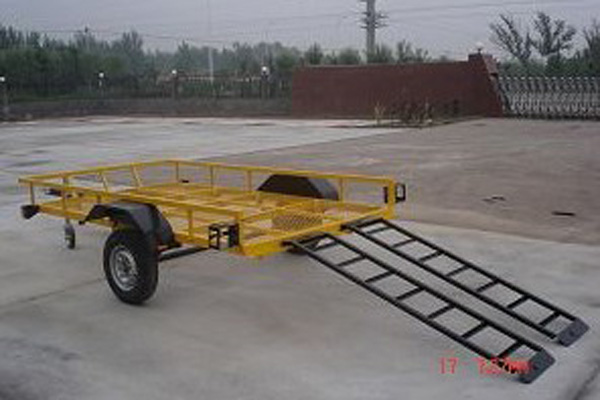
Most volume orders are shipped SKD (Semi-Knocked Down). In this format, the main chassis is pre-welded, but axles, wheels, fenders, and ramps are detached and packed flat. This requires the importer or distributor to handle final assembly, but it can increase container yield by over 300 percent compared to roll-on/roll-off fully assembled shipping.
When engaging OEM/ODM Services for new designs, engineers must factor this SKD requirement into the initial CAD modeling, ensuring bolt-on components are robust and easy to assemble domestically.
Looking to optimize container yields and negotiate better trailer pricing?
Get a free consultationFrequently Asked Questions
Sourcing motorcycle and ATV trailers at scale is an exercise in logistics optimization and regulatory compliance. Success requires partnering with manufacturers who not only fabricate durable frames but also engineer their products for high-density shipping and seamless local homologation.
Get Sourcing Help for Motorcycle & ATV Trailers
Tell us your requirements and our experts will connect you with verified manufacturers.