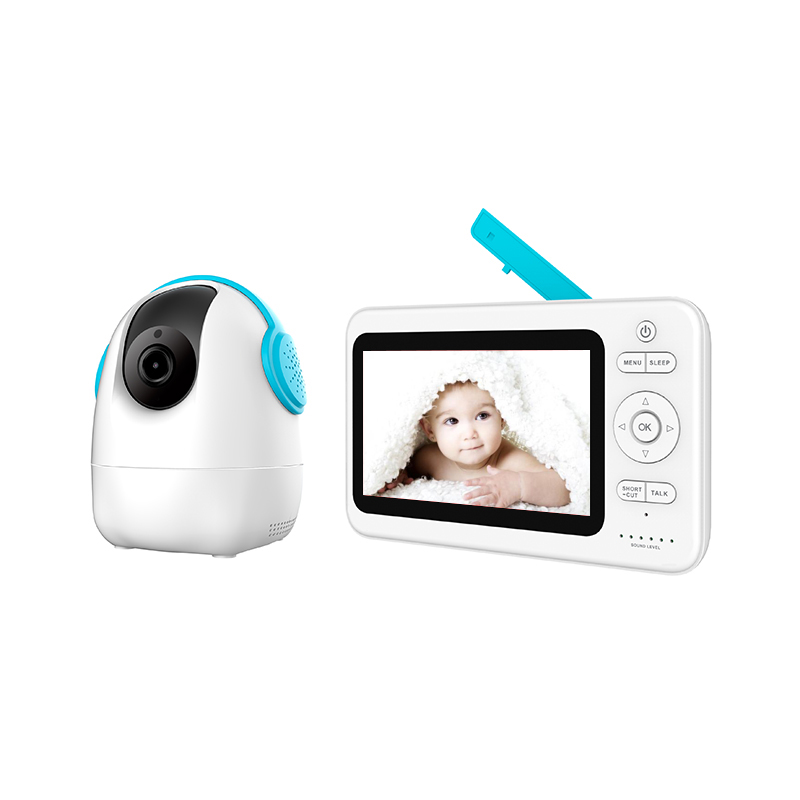
Monitors
Source high-quality monitors in bulk directly from vetted manufacturers and assembly factories in Asia. Designed for importers, distributors, procurement managers, and brands seeking reliable OEM/ODM production, this page connects you with factory-direct solutions for commercial, consumer, and specialized display panels.
The global supply chain for monitors is heavily concentrated in Guangdong province, specifically Shenzhen and Dongguan. Sourcing monitors at volume is rarely a matter of buying a finished product off a shelf; it requires navigating a complex ecosystem of primary panel manufacturers, mainboard designers, and final assembly factories. Your success depends on strictly defining panel grades, controlling the Bill of Materials (BOM), and implementing rigorous testing protocols on the assembly line.
Panel Selection and BOM Drivers
The LCD or OLED panel itself accounts for 60 to 70 percent of a monitor's total manufacturing cost. Most assembly factories do not manufacture panels; they purchase them from major fabricators (like BOE, AUO, LG Display, or CSOT) either as "open cell" (requiring the factory to add the backlight module) or as complete modules.
When negotiating with a supplier, you must specify the exact panel technology and performance metrics required for your target market.
| Panel Technology | Color Accuracy | Contrast Ratio | Primary Use Case |
|---|---|---|---|
| IPS (In-Plane Switching) | Excellent (High sRGB/DCI-P3) | Standard (1000:1) | Professional work, general consumer |
| VA (Vertical Alignment) | Good | High (3000:1 or more) | Media consumption, dark room environments |
| TN (Twisted Nematic) | Poor to Average | Standard | Budget models, legacy high-refresh-rate |
Beyond the panel type, your specification sheet must explicitly state resolution, refresh rate, color gamut coverage, and peak brightness (measured in nits or cd/m²). Leaving these specifications ambiguous allows the factory to source cheaper, lower-tier components for your production run.
Need help securing A-grade panels and auditing assembly factories? Connect with our sourcing engineers.
Talk to our teamQuality Control and Panel Grading
The most common trap in monitor sourcing is panel grading. There is no universal, legally binding standard for what constitutes an "A+" or "A" grade panel; it varies by manufacturer. Generally, an A+ panel should have zero dead or stuck pixels, while an A grade might allow up to three defective pixels depending on their location.
Unscrupulous suppliers may quote you based on A+ panels but assemble your units using A- or B grade panels to increase their margin. Implementing strict Quality Control & Inspection before the goods leave the factory is non-negotiable.
Critical Factory QC Checks for Monitors
- Pixel Defect Mapping: Verification of dead, stuck, or hot pixels against the agreed-upon grade standard.
- Backlight Bleed & Uniformity: Testing in a dark room environment to ensure edge-lit or direct-lit backlights do not show excessive blooming.
- Aging Test (Burn-in): Running the monitors continuously for 4 to 12 hours at elevated temperatures to catch early mainboard or power supply failures.
- Port Functionality: Testing all HDMI, DisplayPort, and USB-C inputs for signal integrity and correct EDID handshaking.
- Drop & Vibration Testing: Ensuring the internal chassis and retail packaging can withstand international freight.
OEM/ODM Customization Strategies
If you are building a private-label brand, you will utilize OEM/ODM Services to differentiate your product. The chassis (housing) is the primary area for customization.
Using a "public mold" (an existing chassis design owned by the factory) keeps upfront costs low and accelerates time to market. However, your product will look identical to competitors using the same factory. Developing a "private mold" requires investing in custom tooling for the plastic injection and metal stamping. This requires a higher initial investment but provides complete ownership of the industrial design.
Additionally, OSD (On-Screen Display) firmware customization—including your brand's boot logo, menu color scheme, and specific feature tuning (like overdrive settings for response time)—should be negotiated early in the product development phase.
Pricing, MOQs, and Lead Times
Because monitor assembly relies on the availability of panels and driver ICs, pricing and lead times are highly sensitive to global semiconductor supply chains. Quotes are typically valid for a very short window (often 7 to 14 days) due to fluctuating panel spot prices.
Discuss your volume requirements and get realistic pricing forecasts for your next order.
Get a free consultationCompliance and Certification
Monitors are highly regulated electronic devices. Importing them without the correct certifications will result in customs seizures. You must ensure the factory can provide valid test reports, or you must arrange independent Compliance & Testing.
Key certifications include FCC (for the US market), CE and RoHS (for the EU), and energy efficiency standards like Energy Star. Be aware that power adapters (whether internal or external "bricks") require their own safety certifications, such as UL or ETL for North America.
Successfully sourcing monitors requires deep technical vigilance, from securing the right panel grades to auditing the factory's cleanroom and aging facilities. By controlling the BOM and enforcing strict quality standards, you can build a highly profitable display lineup.
Get Sourcing Help for Monitors
Tell us your requirements and our experts will connect you with verified manufacturers.