Metal Slabs
Source high-quality metal slabs directly from vetted manufacturers and wholesale suppliers. Built for industrial procurement managers, distributors, and importers looking to buy in bulk, our network ensures reliable metallurgical properties and dimensional accuracy for your downstream processing needs.
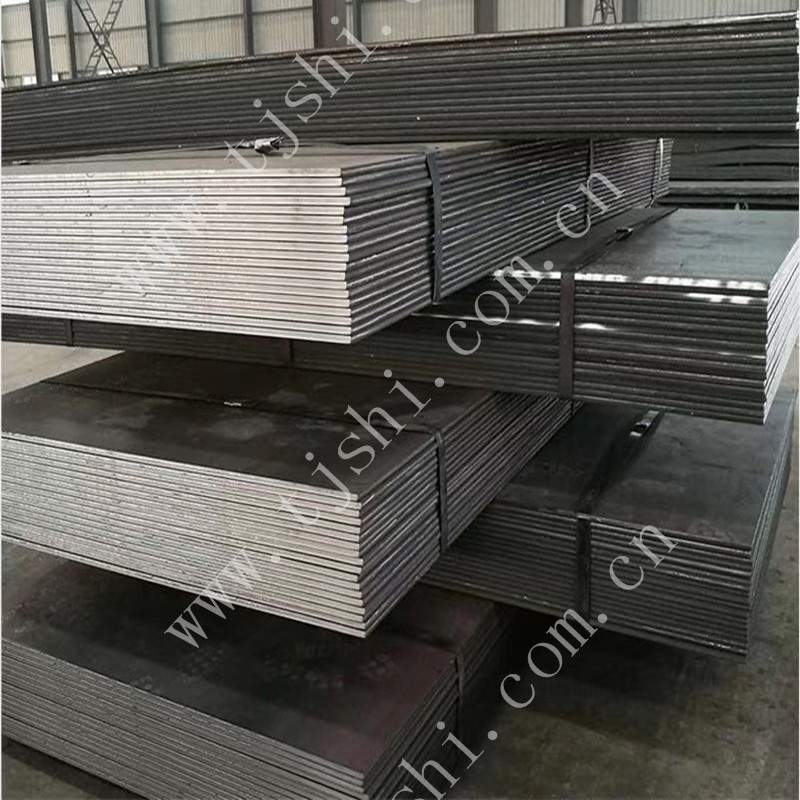
Metal slabs are the critical semi-finished feedstock for downstream rolling mills, destined to become plates, sheets, and coils. Because they dictate the structural integrity and surface quality of the final rolled product, sourcing them in bulk is an exercise in rigorous metallurgical control. Purchasing at scale requires aligning with mills that maintain strict chemistry tolerances, advanced continuous casting capabilities, and transparent testing protocols.
Continuous Casting vs. Ingot Casting
The primary manufacturing method dictates the slab's internal homogeneity and yield. While ingot casting is still used for certain specialty heavy plates or highly alloyed grades, continuous casting (CC) is the industry standard for commercial metal slabs, offering superior dimensional consistency and lower energy costs.
| Casting Method | Internal Structure | Typical Application | Yield Efficiency |
|---|---|---|---|
| Continuous Casting | Highly uniform, minimal segregation | Commercial sheets, standard plates, coils | Excellent (minimal cropping required) |
| Ingot Casting | Prone to center segregation and piping | Ultra-heavy plates, specialized forgings | Lower (requires significant top/bottom cropping) |
When evaluating a new mill, it is critical to verify their casting equipment and process controls. Conducting thorough factory audits ensures the supplier has the necessary ladle metallurgy facilities and continuous casting machines to meet your specific grade requirements.
Need to verify a mill's casting capabilities before placing a bulk order? Our engineers can audit the facility on your behalf.
Talk to our teamSpecifying Metal Slabs: Beyond the Alloy
Ordering metal slabs requires precise specification to ensure compatibility with your rolling mill or downstream processing equipment.
- Dimensional Tolerances: Specify exact thickness, width, and length. Thickness typically ranges from 150mm to 350mm, while widths can exceed 2000mm. Tight tolerances prevent feeding issues during the initial rolling passes.
- Chemistry and Heat Size: The chemical composition must be uniform throughout the heat. You must specify allowable maximums for tramp elements (like sulfur and phosphorus in steel slabs), which can cause hot shortness or cracking during rolling.
- Surface Conditioning: Slabs often develop surface defects like oscillation marks, transverse cracks, or heavy scale during casting. Specify the required surface conditioning—such as scarfing or grinding—prior to shipment.
Quality Control and Defect Prevention
A slab's internal and surface quality directly impacts the rejection rate of the finished rolled product. Catching defects at the slab stage is vastly cheaper than discovering them after rolling.
Critical Slab Inspection Points
- Ultrasonic Testing (UT) to detect internal voids, piping, or non-metallic inclusions.
- Surface inspection for longitudinal and transverse cracking.
- Verification of slab geometry (checking for rhomboidity or bulging).
- Review of the Mill Test Certificate (MTC) EN 10204 3.1 or 3.2 for chemical analysis.
- Confirmation of proper surface conditioning (scarfing depth and coverage).
Implementing robust quality control and inspection prior to loading is essential. If a batch of slabs contains excessive internal porosity, it will fail during the reduction process, resulting in massive material and operational losses.
Buying Mechanics: MOQs, Pricing, and Logistics
Purchasing metal slabs is a heavy-industrial transaction. Pricing is generally tied to global commodity indices (such as the LME for non-ferrous, or regional hot-rolled indices for steel) plus a conversion premium based on the specific alloy and conditioning required.
Because a single slab can weigh upwards of 20 metric tons, logistics represent a significant portion of the landed cost. Slabs are typically shipped via breakbulk vessels rather than standard containers due to concentrated floor loading limits. Coordinating this requires specialized shipping and freight expertise to secure competitive charter rates and handle port-side heavy lifting.
Struggling with high breakbulk freight costs or rigid mill MOQs? Let us optimize your heavy-industrial supply chain.
Get a free consultationFrequently Asked Questions
Securing a reliable supply of metal slabs requires deep metallurgical knowledge and the operational leverage to hold massive industrial mills accountable. By focusing on stringent pre-shipment testing and optimized heavy freight logistics, buyers can protect their downstream yields and land materials at a competitive total cost.
Get Sourcing Help for Metal Slabs
Tell us your requirements and our experts will connect you with verified manufacturers.