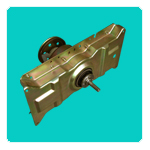
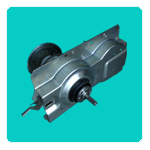
Machinery Engine Parts
Source high-quality machinery engine parts from vetted manufacturers and suppliers. Designed for importers, distributors, and brands requiring reliable bulk supply or custom OEM production, our network delivers precision-engineered components for industrial applications at competitive wholesale prices.
Sourcing machinery engine parts at scale requires strict adherence to dimensional tolerances, material specifications, and thermal stability requirements. Whether you are procuring aftermarket replacements or developing custom components for heavy industrial equipment, the margin for error is zero. A single casting flaw, improper heat treatment, or machining deviation in a critical component can lead to premature wear or catastrophic engine failure.
Success in this category depends on identifying manufacturing partners with the right metallurgical expertise, advanced CNC machining capabilities, and rigorous internal quality management systems.
Material Selection and Production Methods
The performance of engine parts—such as cylinder heads, engine blocks, connecting rods, and crankshafts—is dictated by the raw materials and the primary forming processes used. Factories typically specialize in either casting (iron, aluminum alloys) or forging (high-strength steel), followed by precision secondary machining.
| Process | Typical Applications | Material Focus | Tooling Cost |
|---|---|---|---|
| Sand/Die Casting | Engine blocks, cylinder heads, housings | Cast iron (HT250), Aluminum (A356) | Moderate to High |
| Closed-Die Forging | Crankshafts, connecting rods, camshafts | Carbon steel, Alloy steel (4340) | Very High |
| Powder Metallurgy | Gears, sprockets, valve seats | Sintered steel alloys | High |
| Billet Machining | Low-volume custom parts, performance pistons | Forged aluminum or steel blanks | Low (No molds required) |
When developing custom components through OEM/ODM Services, specifying the exact grade of material and the required heat treatment (such as induction hardening or nitriding) is critical. Factories must be able to provide material test reports (MTRs) to prove chemical composition and mechanical properties before mass production begins.
Need a reliable manufacturing partner capable of holding tight tolerances for your custom engine components?
Get a free consultationFactory Verification and Quality Control
Not all machining facilities have the environmental controls or metrology equipment required for engine-grade precision. Validating a supplier's capabilities before committing to tooling is essential. Comprehensive Factory Audits should focus on the supplier's in-house testing equipment, scrap rates, and adherence to ISO 9001 or IATF 16949 standards.
Critical Quality Control Checkpoints
- Coordinate Measuring Machine (CMM) verification for dimensional accuracy and geometric tolerances.
- Non-Destructive Testing (NDT) such as magnetic particle or ultrasonic inspection to detect subsurface cracks in cast or forged parts.
- Hardness testing (Rockwell or Brinell) post-heat treatment to verify surface durability.
- Surface finish (Ra) measurement for critical friction surfaces like cylinder bores and bearing journals.
- Dynamic balancing for rotating assemblies like crankshafts and flywheels.
Implementing rigorous Quality Control & Inspection protocols at the pre-shipment stage prevents out-of-spec batches from entering your supply chain. Relying solely on the factory's internal QC data for critical engine components is a high-risk strategy.
Sourcing Mechanics: MOQs, Tooling, and Lead Times
Procurement in the machinery engine parts sector is heavily influenced by tooling requirements and production setup times. Standard aftermarket parts often have lower barriers to entry, while custom OEM components require significant upfront investment in molds and dies.
Pricing is directly tied to raw material commodity indices (steel, aluminum, iron), machining complexity, and the required surface treatments. Buyers should lock in material specifications early and clarify whether tooling costs are amortized over the production run or paid upfront.
Looking for accurate tooling estimates and production pricing for your engine parts supply chain?
Talk to our teamFrequently Asked Questions
Navigating the complexities of industrial engine part manufacturing requires deep technical oversight and a reliable factory network. Protecting your brand's reputation means ensuring every component meets exact specifications before it leaves the facility. If you are looking to streamline your procurement process, our team is ready to manage the technical and logistical heavy lifting.
Get Sourcing Help for Machinery Engine Parts
Tell us your requirements and our experts will connect you with verified manufacturers.