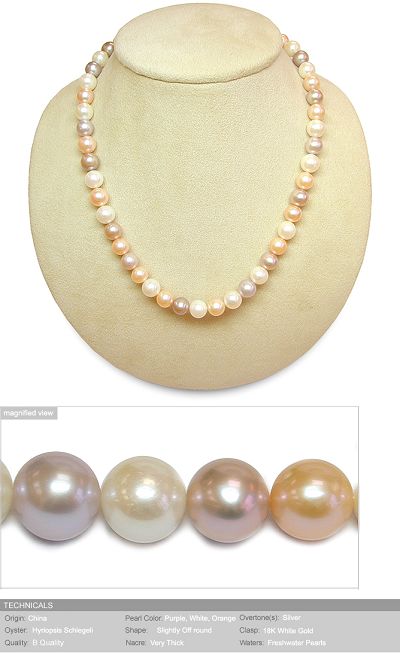
Loose Pearls
Source wholesale Loose Pearls directly from vetted suppliers and manufacturers. Designed for jewelry importers, wholesalers, distributors, and brands requiring reliable bulk supply, our network offers consistent grading, competitive pricing, and secure sourcing for all commercial pearl varieties.
Sourcing loose pearls in bulk requires navigating a complex, highly fragmented market where subjective grading systems and inconsistent lot matching can quickly erode your margins. Whether you are procuring commercial-grade freshwater pearls for fashion jewelry or premium saltwater cultured pearls for fine jewelry collections, securing consistent quality at scale demands rigorous supplier vetting and precise specification management.
Defining Pearl Specifications and Grading Standards
Because the pearl industry lacks a single, universally enforced grading standard, relying solely on supplier-assigned letter grades (such as AAA or AAAA) is a major sourcing risk. A "AAA" from a trading company may only equate to an "A" from a primary processor. Buyers must define their requirements using objective, measurable criteria.
The Grading Trap
Never issue purchase orders based strictly on letter grades. Always specify the exact acceptable parameters for size tolerance, nacre thickness, surface blemish percentage, and luster quality in your supplier agreements.
When negotiating with pearl farms and processors, define your lots based on the following physical attributes:
- Size Tolerance: Measured in millimeters, typically graded in 0.5mm increments (e.g., 7.0mm to 7.5mm). Tighter tolerances command higher premiums.
- Surface Quality: Expressed as a percentage of the pearl's surface free from defects (spots, bumps, wrinkles). High commercial grades typically require over 90 percent clean surfaces.
- Shape: Ranging from perfectly round (most expensive) to near-round, button, drop, oval, and baroque.
- Luster: The sharpness of the light reflection. This is heavily dependent on nacre thickness and processing techniques.
| Attribute | Commercial Grade | Premium Grade |
|---|---|---|
| Size Tolerance | 1.0mm variance per lot | 0.5mm variance per lot |
| Surface Cleanliness | 70 to 80 percent clean | Over 95 percent clean |
| Shape Consistency | Near-round / Off-round | Perfectly round |
| Drill Hole | Standard 0.8mm, minor chipping | Clean edges, exact centering |
Struggling with inconsistent pearl grading from overseas suppliers? Let us help you standardize your quality requirements and find reliable processors.
Talk to our sourcing teamProcessing, Treatments, and Quality Control
Raw pearls undergo extensive processing before they are ready for jewelry manufacturing. Almost all commercial freshwater pearls are bleached to remove organic conchiolin spots, then polished to enhance luster. Colored pearls (like black or vibrant fashion colors) are routinely dyed or irradiated.
The risk for bulk buyers lies in over-processing. Harsh chemical bleaching can weaken the nacre, leading to brittle pearls that crack during drilling or wear. Partnering with a reliable factory through dedicated Product Sourcing ensures you are buying from processors who use stable, industry-standard treatments rather than aggressive chemicals that degrade the pearl's structural integrity.
Critical Inspection Points for Loose Pearls
Catching defects before shipment is vital, as returning loose pearls internationally is often cost-prohibitive. Implementing professional Quality Control & Inspection at the factory level ensures your lots match your approved samples.
Pre-Shipment Pearl Inspection Checklist
- Verify size distribution using precision sieves to ensure adherence to the 0.5mm tolerance.
- Inspect drill holes under magnification for edge chipping or off-center drilling.
- Check lot color matching under standardized daylight-equivalent lighting (5000K to 6500K).
- Test dyed lots for colorfastness to ensure treatments will not bleed or fade.
- Assess nacre thickness (particularly for saltwater varieties) to prevent premature peeling.
Bulk Pricing, MOQs, and Supply Chain Realities
The pricing structure for loose pearls depends heavily on the grade, variety, and the tier of the supplier you are dealing with. Direct access to primary processors (those who buy raw harvests directly from farms) yields the best margins, but these factories often require higher Minimum Order Quantities (MOQs).
To ensure you are dealing with a capable processor rather than a multi-tier trader, conducting Factory Audits is highly recommended. This verifies their processing capacity, sorting accuracy, and financial stability.
Need to optimize your supply chain for bulk pearl procurement? Speak with our experts about supplier verification and pricing negotiations.
Get a free consultationFrequently Asked Questions
Successfully importing loose pearls requires moving past subjective supplier grades and establishing strict, measurable quality parameters. By partnering with vetted processors and enforcing rigorous pre-shipment inspections, you can secure consistent, high-quality inventory that protects your brand's reputation and bottom line.
Get Sourcing Help for Loose Pearls
Tell us your requirements and our experts will connect you with verified manufacturers.